United Airlines loves to talk up its Polaris business class: Saks Fifth Avenue bedding, Therabody amenity kits, caviar in the new Studio suites. What it never says is what any of it costs per passenger. No filing or press release breaks down the numbers, so any estimate has to be pieced together from resale prices and industry logic — which is exactly what a recent analysis set out to do.
The starting point is a distinction most travellers never think about: reusable versus consumable. Those plush duvets, two pillows (United is the only US airline offering two in business class) and mattress pads look expensive, but they're airline assets. They're collected, laundered and reused across hundreds of flights, so the real per-passenger cost is mostly washing, handling and slow depreciation — not the retail value printed on a Saks label.
The amenity kit is the clearest clue because it's one of the few things passengers actually take home. Sealed Polaris kits regularly sell on secondary marketplaces for around $12 to $14, and United's bulk purchasing contracts almost certainly mean it pays less than that. In other words, the branded skincare and reusable cross-body bag feel premium but barely dent the budget.
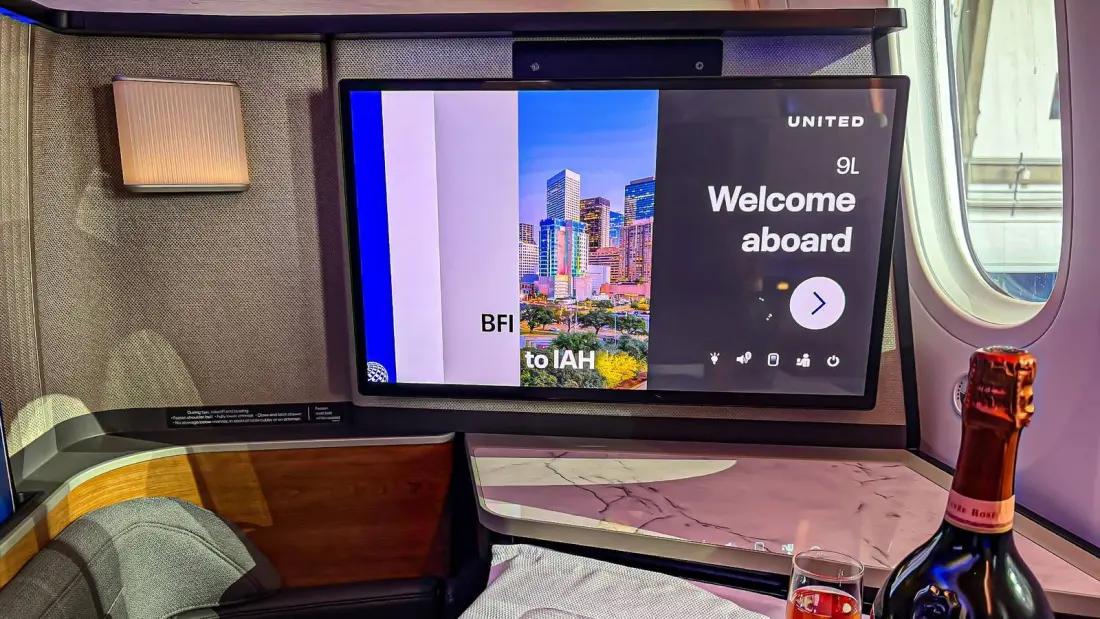
Catering is where the real money likely goes. Multi-course meals, premium wines and Champagne vary by route and flight length, and the new Polaris Studio product pushes costs further — think an Ossetra caviar amuse-bouche served with Laurent-Perrier Cuvée Rosé. There's no single per-head figure because a passenger in a standard seat on one route may consume far less than someone in a Studio suite on another.
United's own pricing reveals how it values the extras, even if that's not the same as cost. Base Polaris fares strip out lounge access, a gap estimated at roughly $150 to $300 in perceived value given the restaurant-style dining, shower suites and daybeds at hubs like Newark and San Francisco. On the Singapore-to-San Francisco 787-9 route, a Polaris Studio suite has been offered for about $499 more than a standard Polaris seat. These are willingness-to-pay signals, not procurement costs — but they're the closest public window into the economics.
Most telling of all: United is now testing whether to hand out amenity kits on request, presented on a tray rather than pre-placed at every seat. With thousands of long-haul flights a year, even a small drop in uptake adds up. The airline investing heavily in Polaris is simultaneously auditing it.
For travellers, the practical upshot is straightforward. The bedding and kit you're taking home cost United relatively little — the dining and Champagne are where the value really sits, so eat and drink well onboard. If lounge access matters to you, check whether you're booking a Base Polaris fare before assuming it's included. And if you're eyeing Polaris Studio, that ~$499 premium buys genuine privacy and upgraded service, and may be the best-documented value split in the cabin. — Simple Flying