
Free first-class upgrades are quietly disappearing. Airlines have realised that comfort is something travellers will pay for, not something they need to be bribed with, and the value of points keeps sliding year after year. That's the blunt assessment of Matador Network editor Tim Wenger, who has spent a decade testing rewards strategies — and landed on a simple one: stop collecting points across multiple airlines and go all-in on a single program.
Wenger's argument is aimed at the frequent-but-not-obsessive flyer. If you're taking two trips a year, none of this matters much — grab the cheapest fare and pocket whatever miles appear. But once you're in the air monthly, the maths changes. Unless you're flying upwards of ten flight segments a month, he says, juggling programs and chasing sign-up bonuses is wasted effort. Concentrated loyalty earns real perks; scattered loyalty earns nothing.
His system is straightforward. Pick the airline that dominates your home airport — if your city is a hub, that decides it. Join the program and get its entry- or mid-level credit card, usually costing between $0 and $150 a year. Then fly that airline and its partners almost exclusively, and burn most of your points annually, since airlines routinely devalue them. Hoarding 300,000 miles looks impressive but is worth less than points you've actually spent.
The numbers back up why he favours airline miles over hotel points: airline miles average roughly 1.2 to 1.4 cents each, while hotel points sit around 0.5 to 0.7 cents. Airline programs also throw in extras like rideshare credits, dining bonuses and Global Entry fee coverage, which easily cancel out a modest card fee.
Wenger lives in Palisade, Colorado, and routes every trip through Denver — a major United hub — via Grand Junction Regional Airport. That extra leg to Denver isn't just dead time: United counts individual flight segments toward tier status, so the two extra segments per trip accelerate his progress to Silver (and possibly Gold for 2027). He puts most spending over $20 on his MileagePlus Explorer card, including recurring bills, adding a few thousand points monthly — up to 15,000 in heavy months. The annual haul: around 150,000 points, worth roughly $1,500 to $2,000, plus a free checked bag, priority boarding and a couple of lounge passes.
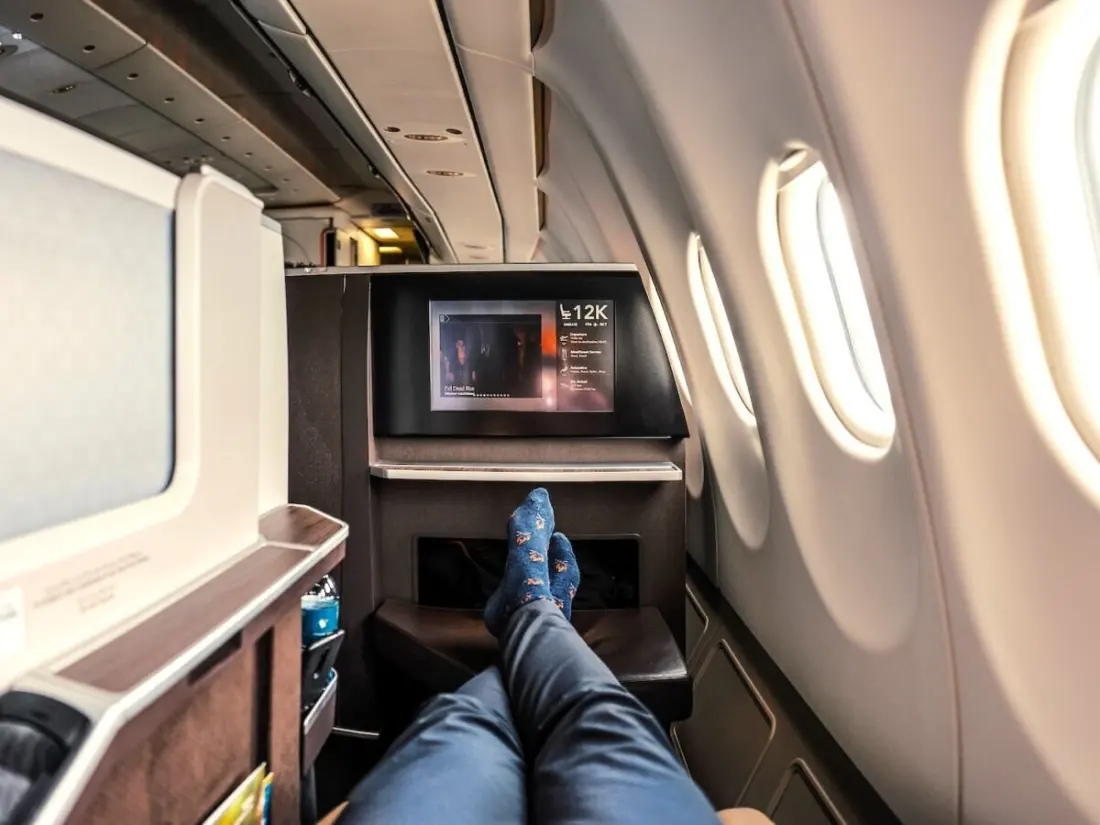
The payoff moment came on a San Francisco to Istanbul flight, where stacked points got him into Turkish Airlines business class — a Star Alliance partner — for a fraction of the cash fare. That upgrade only worked because a decade of loyalty sat in one account rather than being spread thin across three.
One caveat he stresses: pay the card balance in full every month. Interest charges will eat any rewards value instantly. He also recently ditched his $550 Chase Sapphire Reserve when the fee jumped to $795, doubling down instead on the single-airline approach.
For anyone flying regularly from a hub-served airport, the lesson is simple: depth beats breadth in airline loyalty, and your points are worth more spent this year than saved for next.