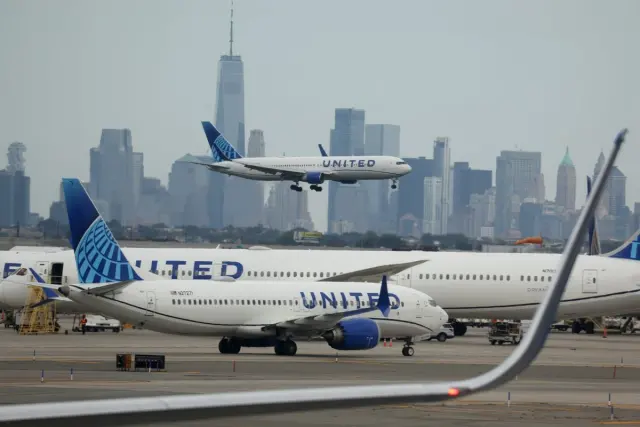
That sudden drop in speed during descent isn't an engine problem or a divert mid-air it's usually just the FAA's 250-knot rule kicking in. Every commercial aircraft in US airspace must fly below 250 knots under 10,000 feet, with a 10-knot margin on either side. Pilots plan for it well in advance, so by the time you feel the brakes come off, it's routine.
The rule sits on top of published arrival procedures called STARs, which are pre-set routes into major airports with their own altitude and speed constraints. Crews can decelerate gradually using reduced thrust or more abruptly with spoilers and speedbrakes, which is why some flights ease below the limit while others feel like a sharp step down. Controllers can waive the speeds published on a STAR, but they cannot waive the 250-knot restriction itself only pilots can exceed it on their own authority, and usually only when a heavy, fully loaded jet needs to fly faster than its clean wing speed allows.
Why does the limit exist? Safety margins, mostly. Big swept-wing airliners get sluggish at low speeds and are notoriously hard to recover from a stall the Air France 447 tragedy showed just how much altitude that can cost. Slower arrivals also help controllers manage the swarm of aircraft converging on busy airports like Heathrow, where holding patterns and speed assignments are common. On departures, the equation flips: planes climbing near maximum weight often need to exceed 250 knots for performance reasons, and ATC routinely approves it.
There are extra layers lower down. Aircraft under Class B airspace (the upside-down wedding-cake zones around major airports), within four nautical miles of Class C or D airspace, or below 2,500 feet face a stricter 200-knot cap, though that mainly affects light aircraft rather than airliners. And once established on final approach, crews aim for a stable speed near VREF about 1.3 times the stall speed in landing config with flaps out and full configuration by roughly 500 feet, or a go-around is mandatory.
For travellers, the takeaway is simple: mid-flight slowdowns, especially under 10,000 feet, are textbook procedure, not trouble. If your flight breaks its descent and levels off a couple of times, that's sequencing into a busy airport. The pattern is near-universal in the US, and similar low-altitude speed limits apply in much of the world, so you'll notice it on flights from Tokyo to Frankfurt too.
Why Your Plane Slows Down Below 10,000 Feet: The FAA's 250-Knot Rule Explained

Originally reported by
Simple Flying.
This is an independent curation by click.holiday — see the source for the full story.
Drafted by our editorial model from the source above and checked automatically for accuracy against it and for originality. How we work
aviation
faa
flights
air traffic control
flying explained