
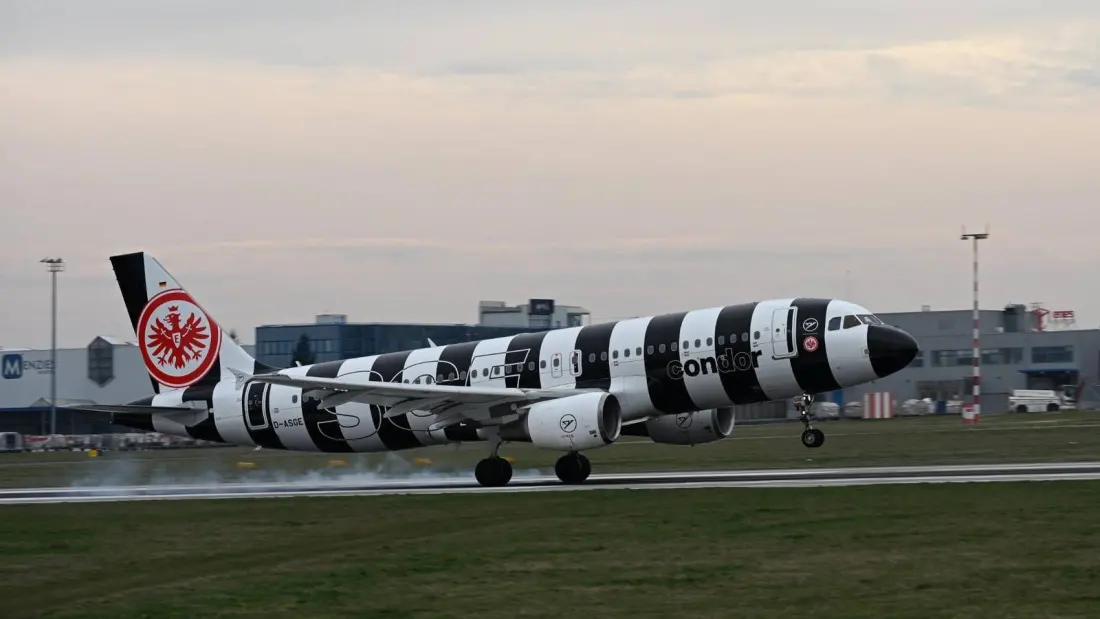
Imagine being seconds from touchdown, then told to go around. That's what happened to Condor flight DE1809 on the night of September 11, when its Airbus A320 descended to just 875 feet on final approach to Frankfurt Airport as the clock hit midnight — and air traffic control, bound by Germany's strict night-flight curfew, could not clear it to land. The plane broke off the approach and diverted to Cologne, stranding more than 180 passengers at the wrong airport in the middle of the night.
The flight from Olbia in Sardinia was doomed before it ever left the gate. Departure had slipped by more than two hours, and the jet didn't take off until 10:39 PM. With Frankfurt's extended curfew window closing at midnight, Condor needed a flight time of 1 hour and 21 minutes — three minutes faster than the quickest this route has ever flown on public record. In other words, dispatch sent the plane on a flight it could not, by any measurable standard, make on time.
So why gamble? Money. If Condor had cancelled in Olbia or postponed until morning, EU261 rules would have obliged the airline to cover hotels, meals and transport for the full aircraft load of passengers and crew, while also knocking out the next morning's rotations with the plane stuck in Italy. By flying anyway, the airline faced the same outcome whether it made it or not — but a slim chance of success meant a chance of paying nothing. That logic, critics argue, puts the burden of a risky corporate bet squarely on travellers.
There's a silver lining, though, and it matters for anyone who has been on the wrong end of a delayed flight. By getting passengers onto German soil — even at Cologne, a few hours' bus ride from Frankfurt — Condor arguably spared them the worst financial hit. Stranded overnight in a tourist town like Olbia, families could easily have burned hundreds of euros on inflated hotel and food prices, and clawing that back from an airline through the compensation process is a slow, frustrating grind. A miserable late-night coach ride home beats an unpaid resort bill.
The case also highlights something every traveller to or through Germany should know: Frankfurt's night curfew is genuinely enforced, down to the second, even when a go-around and diversion create more noise than a gentle landing ever would. Tight connections, delayed departures and late-evening arrivals into FRA carry real risk of exactly this scenario. If you're booking a late flight into Frankfurt, it's worth checking the scheduled arrival time against the 11:00 PM curfew — and knowing your diversion options if things slip.
For passengers, the practical takeaway is to know your rights under EU261 before you fly: cancellation entitles you to care and compensation, but out-of-pocket costs beyond that require receipts, patience and persistence. DE1809's near-miss is a neat illustration of how airline incentives and passenger protection still don't quite line up — and how the people in row 30 pay for the gap.