Late summer in Provence, and actress-turned-olive-farmer Carol Drinkwater is watching her trees heavy with plump fruit — and bracing for a tiny enemy. The olive fly usually invades in midsummer, but recent scorching temperatures have pushed it back to early autumn, when cooler weather lets females lay larvae inside ripening olives. The result: fruit rots and drops, and the harvest shrinks. Most growers reach for chemical sprays, but Drinkwater, who spent two decades' worth of research travelling the Mediterranean for the olive tree's history, prefers something far stranger — and far kinder.
Her secret comes from Sicily, where a small band of farmers developed what's known as the 'sardine method'. Fellow producers laughed at them at first, but the results convinced everyone. Instead of pesticides, they hang plastic water bottles from their olive branches, each containing water and a submerged Mediterranean sardine. It sounds absurd, yet it deters the fly without poisoning anything.
The technique is genuinely simple to replicate. Cut a one-litre plastic bottle in half and keep the bottom portion. Poke two small holes either side of the lip, thread green garden wire through for a handle, fill with water, drop in a sardine, and hang it from the tree. Drinkwater's old, gnarled trees need four bottles each — which adds up fast. Her local fishmonger greets her with 'Bonjour Madame, two hundred sardines are in the cooler waiting for you!' while family and friends spend days prepping the bottle collection she's been stockpiling since spring. Her only rule: save enough sardines for that evening's barbecue.
The method isn't quite as effective as toxic sprays, she admits, but it respects nature and keeps the fruit clean. And that's the trade-off more small growers — and curious travellers — are willing to make.
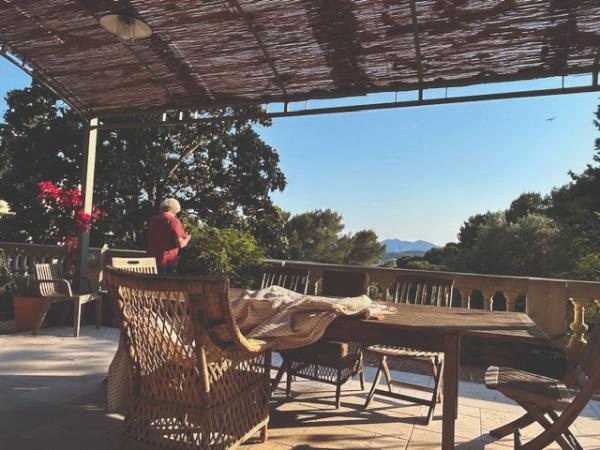
It's a charming slice of Provençal life, but there are takeaways here for visitors too. Late summer in the south of France is a genuinely lovely window: days a touch cooler, evenings long and starlit, meals eaten outdoors under pergolas draped in bougainvillea, jasmine and orange trumpet flowers. Drinkwater describes barbecues of herb sausages and fresh fish with garlic-dressed Mediterranean salads and chilled rosé — a menu any village market in the Var can help you replicate. If you're driving the inland roads in autumn, you'll pass olive groves dotted with these odd hanging bottles; now you know what they are. Local olive oil, harvested in these very weeks, makes for one of the region's best edible souvenirs. And if you want to sample the life first-hand, the Var countryside around towns like Lorgues or Cotignac is an easy detour from the coast, with farm gates and markets selling the season's oil straight from the press.
It may be a fishy business, but it's proof that some of travel's best discoveries are the strange, homegrown solutions you only hear about from the people who live there.
Original reporting: France Today