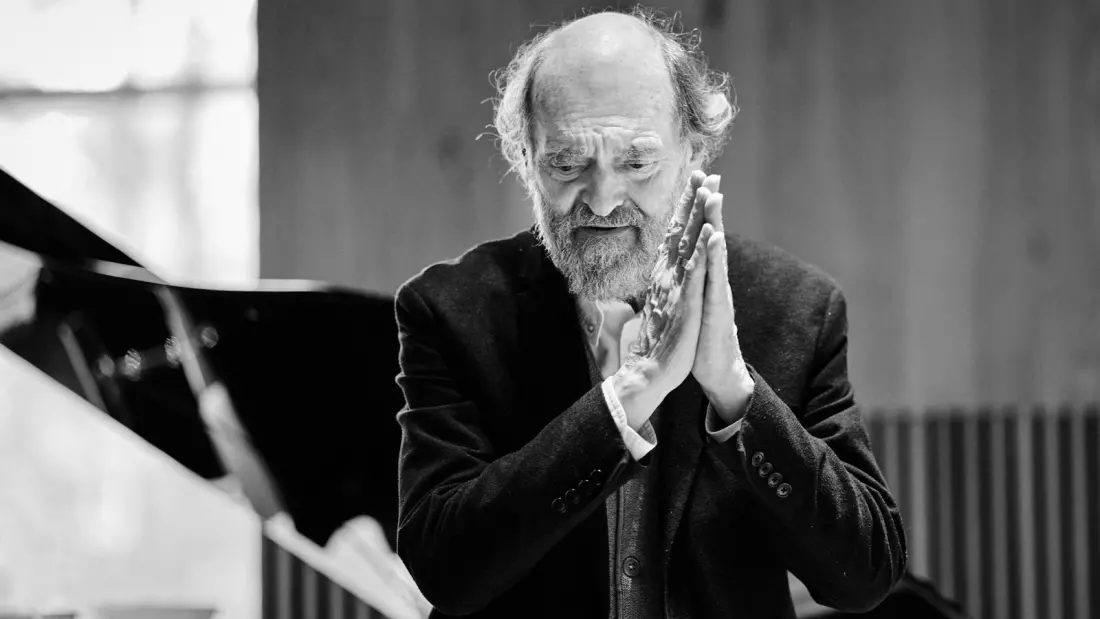
Estonia's best-known cultural export isn't a dish or a building — it's a sound. Arvo Pärt, born 11 September 1935 in the small central Estonian town of Paide, turns 90 this year, and his sparse, meditative music has spent years at the top of the global charts for most-performed living classical composers. For anyone visiting Estonia, his story doubles as an unusual route through the country itself.
Pärt grew up in Rakvere, a modest town in northern Estonia, where Soviet deportations to Siberia touched his own family. As a boy he would cycle to the town's central square on Fridays, circling a loudspeaker fixed to a post while live classical concerts crackled through it. A sculpture of a boy with a bicycle now stands on that same square as a nod to those evenings — a small, easy stop for anyone passing through on the way to the Lahemaa coast.
His career unfolded against the pressures of Soviet rule. Early works like "Nekrolog" (1960) drew praise and suspicion in turn, and a stint as a sound engineer at Estonian Radio in Tallinn sharpened the ear that would later define him. Around 1968 he hit a creative wall, turned to early church music for inspiration, and nearly gave up composing altogether. Then, in February 1976, a short piano piece called "Für Alina" arrived — the first flowering of tintinnabuli, the bell-like style now inseparable from his name.
The turning point for his global reach came from a chance car radio listen. In 1980 Manfred Eicher, founder of Munich-based ECM Records, heard Pärt's music, pulled over, and decided he had to release it. Pärt had just left the Soviet Union for Vienna; the 1984 ECM album "Tabula Rasa" made him famous far beyond Estonia, its music famously comforting listeners in all manner of circumstances — American press stories even told of young AIDS patients in a refugee centre playing it on repeat. Today his works are performed everywhere from Italy to Brazil to the US.
Why does this matter to travellers? Because Pärt's Estonia is a quietly rewarding theme for a trip. Tallinn, where he studied and lived in an outer housing estate before emigrating, holds concerts of his music year-round, and the Estonian capital's medieval churches are a fitting backdrop for sound built on silence. Rakvere and Paide are easy detours by bus or car from Tallinn, both small towns with more character than their size suggests. And in a country where choral singing is a national institution — Estonia's song festivals drew hundreds of thousands even under occupation — understanding Pärt is a way of understanding why music sits so close to the centre of Estonian identity.
Whether you come for the 90th-birthday commemorations or simply want a soundtrack for a Baltic trip, Pärt's story shows how one man's search for clarity, faith and quiet survived occupation, exile and fashion — and ended up speaking to listeners everywhere.