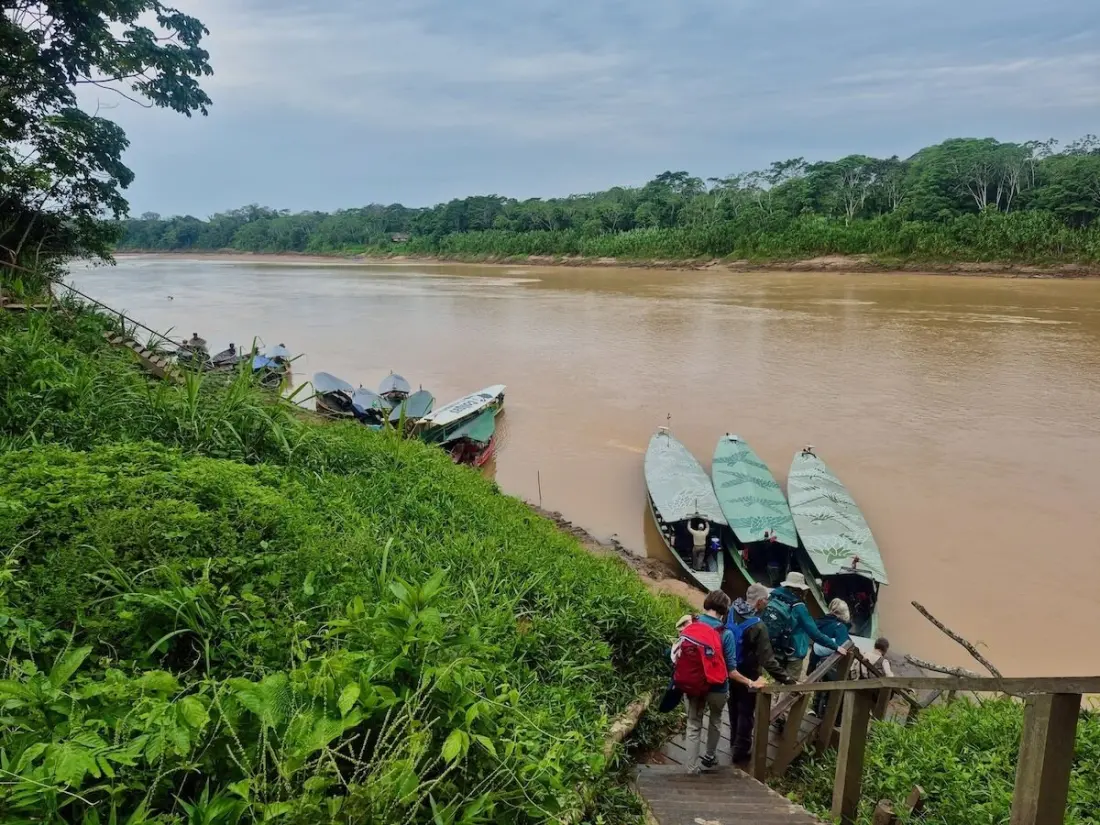
Tambopata Research Center doesn't look like a typical Amazon lodge. Yes, there are jungle bungalows deep in Peru's Tambopata Nature Reserve — but there's also an active biology lab, and by late morning it belongs to the guests.
Every day around 11 AM, a trio of resident researchers hands over their workspace to curious travellers. Biologists like Aracely Yarasca and Alejandra Chumbimune spend their own hours mounting moth specimens collected by visitors the night before — small samples that feed into conservation data — and analysing audio recordings of the eight primate species that live in this remote stretch of rainforest. If you've ever wanted to see how field science actually works, this is about as hands-on as an Amazon stay gets.
The setup is unusual by design. TRC opened in 1989 as a macaw conservation project, and science remains the core of its identity. It's run by Rainforest Expeditions, a Peruvian-owned company that operates two other ecotourism lodges in the reserve, with a fourth on the way. Guests don't just watch research happen — they help collect it. Travellers gather moth specimens in jars during evening activities, then see them processed the next morning in the lab they've just walked into.
The macaws are the headline act. TRC sits near clay licks where big, loud scarlet macaws and their cousins gather to eat mineral-rich clay — and the lodge's rate includes a breakfast date with these birds, the self-appointed ambassadors of the Amazon. Decades of macaw monitoring here have shaped how conservationists understand the species across the region, so that parrot-filled breakfast carries genuine scientific weight behind it.
For travellers, the appeal is straightforward: instead of a passive wildlife-viewing stay, you're contributing to something. Your moth jars and primate audio add up to real conservation intel. It suits travellers who want depth over luxury — TRC is deep in the reserve, so reaching it takes commitment, and the reward is a slice of Amazon rainforest far from the day-trip crowds, shared with the people actively working to protect it.