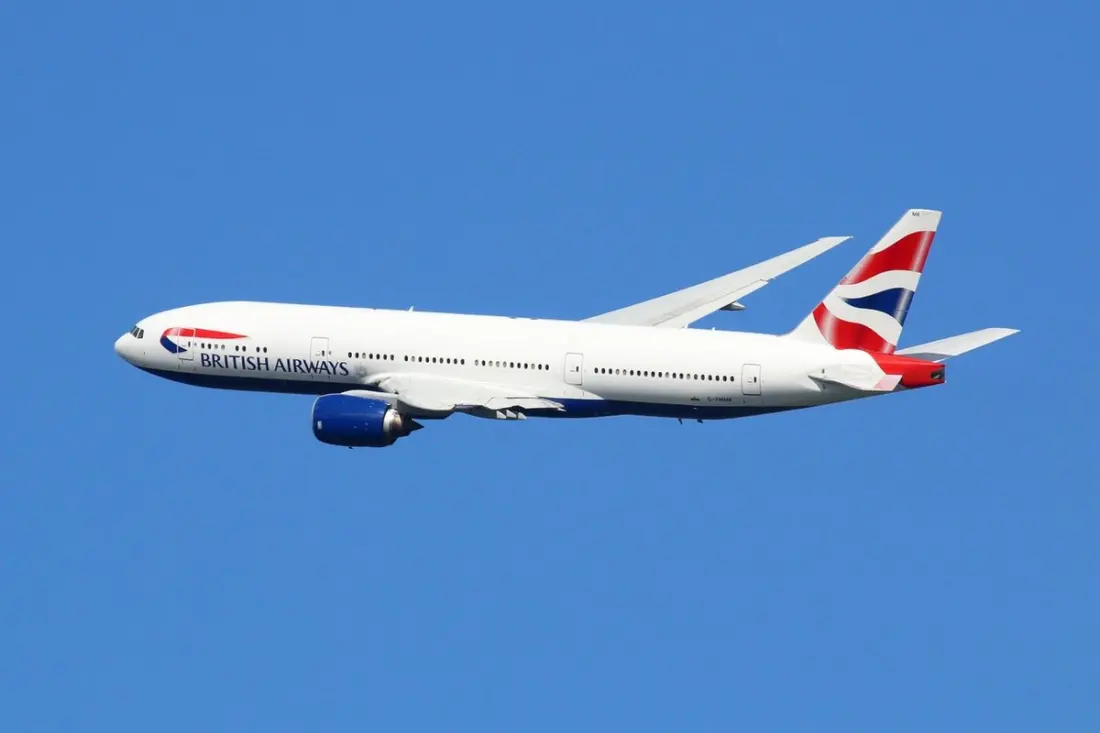
A British Airways flight bound for Chicago issued a general emergency signal and made an unplanned return to London on Monday after a rapid descent left passengers reaching for oxygen masks.
Flight BA295, a Boeing 777-200, left Heathrow at 12.14pm for the roughly nine-hour hop to Chicago O'Hare. About an hour in, while over Ireland, the aircraft dropped from its cruising altitude of 37,000 feet down to 9,000 feet within minutes and transmitted a squawk 7700 — the transponder code for a general emergency. Tracking data from FlightAware shows the plane then looped back over Ireland and headed for home.
Passengers described oxygen masks dropping from the ceiling after a spell of sudden turbulence. One traveller, Tom Nicholls, told the Mirror that the descent itself didn't feel especially steep, but that the masks triggered a moment of confusion on board — including a couple who couldn't reach theirs before the captain confirmed the plane was already below 10,000 feet, where masks are no longer necessary.
A sharp descent to low altitude like this usually points to a cabin depressurisation, as aviation outlet AirLive noted, but British Airways has only described the cause as a "technical issue" and hasn't confirmed what actually went wrong. Before landing, the aircraft spent time in a holding pattern over the Bristol Channel, between Pembrokeshire and North Devon — a standard move to burn off fuel so the plane touches down at a safe weight. It landed back at Heathrow at 5.03pm, with everyone disembarking normally.
The flight was subsequently cancelled, and BA said most passengers were rebooked onto a departure the following day. A spokesperson reiterated that safety comes first and praised the pilots' handling of the return.
For anyone flying long-haul this matters in a couple of small ways. First, the system worked: masks deployed, the crew descended quickly, and the plane landed safely — a reassuring example of standard procedure doing its job. Second, it's a reminder that diversions and cancellations happen even on major carriers, so it pays to know your rights (in the UK, UK261 rules cover compensation and rebooking for disruptions) and to keep essentials like medication and chargers in your hand luggage rather than checked bags. If your flight is cancelled after an incident like this, contact the airline immediately about rebooking — as BA did here within hours — and keep receipts for any extra costs you incur.
The airline has not said what the technical fault was, or whether the aircraft has returned to service.
Credit: The Independent Travel