
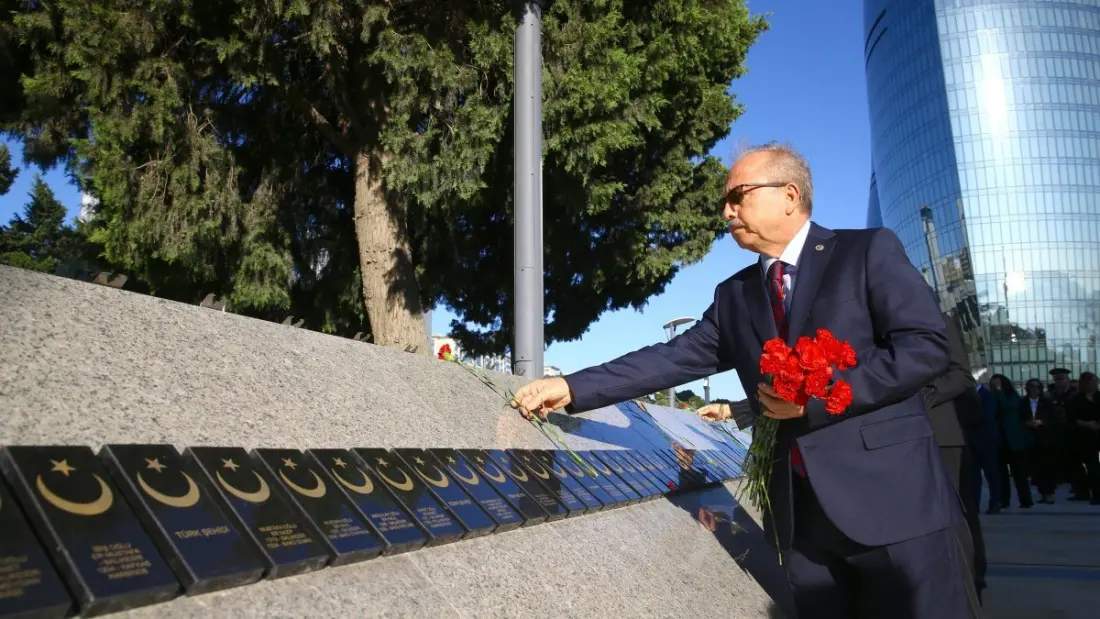
Flowers were laid at a monument in Baku this week to mark 108 years since the Azerbaijani capital was liberated on September 15, 1918 — an episode that still shapes how Türkiye and Azerbaijan see each other, and one that any visitor to Baku will bump into in some form.
The story goes back to June 1918, when newly independent Azerbaijan asked the Ottoman Empire for help against advancing Bolshevik and Armenian forces. Ottoman Minister of War Enver Pasha gave the job to his brother Nuri Pasha, a seasoned officer who had previously organised Libyan resistance against Italian and British forces. Nuri assembled the Caucasian Islamic Army from several units, including infantry and artillery regiments pulled from the Palestinian front of the First World War, and added around 1,000 reinforcements from the Azerbaijani Corps.
After 30 hours of fighting, the roughly 12,000-strong force took Baku on September 15, 1918. The army stayed two months before the Ottoman war defeat and subsequent armistice forced its troops back within the empire's remaining borders. Even so, the campaign is credited in Azerbaijan with helping preserve the country's territorial integrity, and Nuri Pasha remains a honoured figure — his memorial drew Turkish Ambassador Birol Akgün, who wrote that the young commander became the architect of the bond between the two nations.
That history is not just ceremonial. Akgün linked the 1918 campaign to the Shusha Declaration of 2021, signed by Presidents Erdoğan and Aliyev, which formalised the modern alliance between the two countries, and to Azerbaijan's recovery of Karabakh. President Erdoğan issued his own message marking the anniversary.
For travellers, the takeaway is simple: you can't really understand Baku — its monuments, street names and museum displays — without knowing this story. The Nuri Pasha memorial where Tuesday's commemorations took place is worth a stop, and the city's history reaches much further back than 1918, from its UNESCO-listed Old City to its oil-boom architecture. The shared Türkiye-Azerbaijan identity you notice in language, food and flags along the boulevard has its founding chapter here.