The vampire connection is, frankly, the shakiest thing about Romania. Guides will tell you straight up there's no birth record proving Vlad the Impaler was born in the handsome house in Sighisoara where the plaques claim he was. Yet the country that has leaned on this tenuous legend remains one of Eastern Europe's most under-visited gems — and right now, you can explore its medieval citadels without fighting a single crowd.
That was the experience on an 11-day Intrepid Travel Premium tour from Belgrade to Bucharest. In Sighisoara, a UNESCO-listed citadel in the heart of Transylvania, cobbled lanes, defensive towers and centuries-old houses would be overrun anywhere else in Europe come September. Here, locals admit there are whole months when nobody shows up.
The historical depth is staggering. Sibiu, one of seven walled citadels founded by 12th-century Saxon settlers, has an Old Town of 17th-century homes whose steep roofs are punctuated by eerie eye-like ventilation holes. At Sarmizegetusa Regia, the former capital of the Dacian kingdom hidden in a beech forest, you can walk a first-century limestone ceremonial road and pass only a handful of other visitors in an hour. Alba Iulia's vast seven-cornered fortress spans 1,800 years of building, and it was here in December 1918 that modern Romania was unified.
More recent history is raw. In Timisoara, where 13 ethnic communities celebrate each other's festivals (expect two Christmases and an Easter fair lasting up to six weeks), around 100 people died in the five-day December 1989 revolution that ended Nicolae Ceausescu's regime. Bullet holes still pock the buildings.
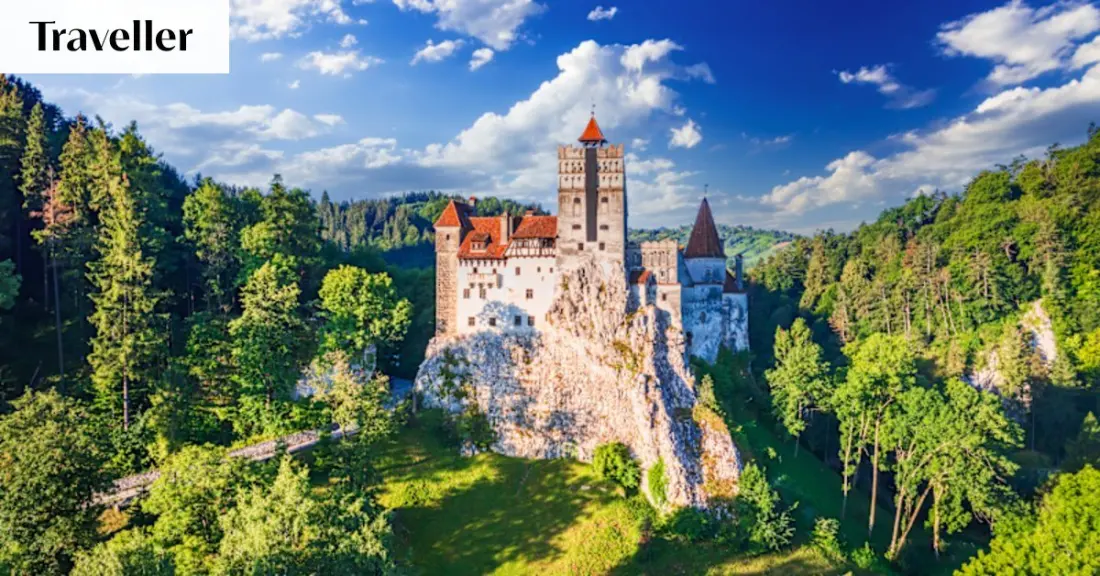
Then there's the wonderfully strange: Salina Turda, a disused salt mine turned underground theme park with a Ferris wheel, mini golf and rowboats on a subterranean lake. Bran Castle, sold as Dracula's home, is surrounded by tacky souvenir stalls but offers a genuinely good tour that spends more time on its royal residence era than on vampires. Peles Castle, commissioned in 1873, packs Neo-Renaissance, Florentine and Ottoman interiors into one of Europe's most striking royal residences.
Practical perks: Romania never adopted the euro, so it's affordable — pizza and a local red in Sibiu's historic centre runs about $22. Speaking of wine, the local feteasca neagra reds are reliably good, and sparkling Rhein Extra from Azuga costs roughly $5 a glass. Food outside the cities is hearty rather than fancy — stews, grilled sausages, plenty of sour cream — with comically large portions.
For travellers who want history, castles and living culture without the queues, Romania delivers almost everything Western Europe sells, at a fraction of the price and the crowds. Go before mass tourism figures it out.