
Brazil is not one destination but eight or nine pretending to be. The country spans 8.5 million square kilometres and six biomes, and a new guide from ecotourism platform PlanetaEXO skips the obvious city-and-coast itinerary in favour of national parks, wetlands and islands where the scenery itself is the reason to go.
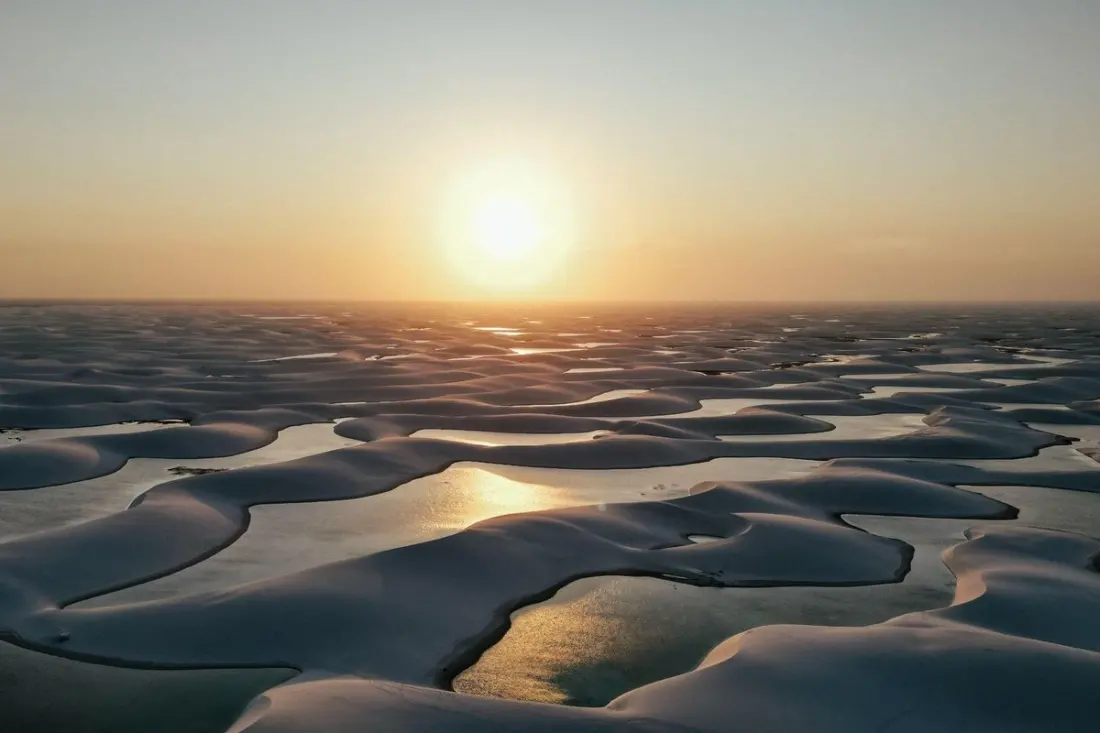
The most surreal of the lot is Lençóis Maranhenses, a 155,000-hectare park in Maranhão that looks like a desert but gets around 1,600 mm of rain a year. That water pools between wind-blown dunes up to 40 metres high, creating thousands of swimmable freshwater lagoons from roughly January to June that hold on until September. UNESCO added the park to its World Heritage list in 2024. Fly into São Luís, then continue to Barreirinhas.
For wildlife, the Pantanal beats even the Amazon for sheer visibility: the world's largest tropical wetland has open fields rather than dense canopy, and the Northern Pantanal near Porto Jofre has the highest jaguar density on Earth. Dry season, July to October, is when river sightings become routine. Capybaras, giant otters, tapirs and macaws come as standard. Gateways are Cuiabá in the north and Campo Grande in the south, with snorkelling-famous Bonito three hours from the latter.
The Amazon itself remains a boat trip, not a road trip. Around Manaus you can watch the dark Rio Negro and sandy Solimões run side by side for six kilometres without mixing at the Meeting of Waters, and choose your season: flood months (May–July) let you paddle into the canopy, while the dry season (September–November) brings land trails and better animal spotting.
Foz do Iguaçu needs little introduction — around 275 drops stretching nearly 2.7 km, with the Devil's Throat canyon plunging 80 metres. The Brazilian side delivers the panorama; the Argentinian side puts you on top of the water. August to November balances flow with thinner crowds.
Further off the standard route, Itacaré in southern Bahia keeps its Atlantic Forest standing right down to the sand, so beach access means a walk under canopy — and the surf gets heavier the further you go, from Concha to Prainha. Chapada Diamantina National Park, also in Bahia, is home to the Vale do Pati, widely called Brazil's best trek: three to five days walking between roadless farmhouses where you sleep in locals' homes. In Tocantins, Jalapão's fervedouros are sand-bottomed springs where upward pressure keeps you floating upright — you literally cannot sink.
Finally, Fernando de Noronha, a 21-island volcanic archipelago 545 km off Pernambuco, has the country's clearest water — up to 40 metres of visibility — plus a resident spinner dolphin colony at Baía dos Golfinhos. It's strictly capped for visitor numbers and charges an environmental preservation fee, so book ahead.
Who's this for? Anyone who's done Rio and wants the other Brazil: trekkers, divers, wildlife photographers and slow travellers. The practical takeaway is that timing matters enormously here — lagoons, water levels and trail conditions all run on their own calendars, so pick your region first and your month second.