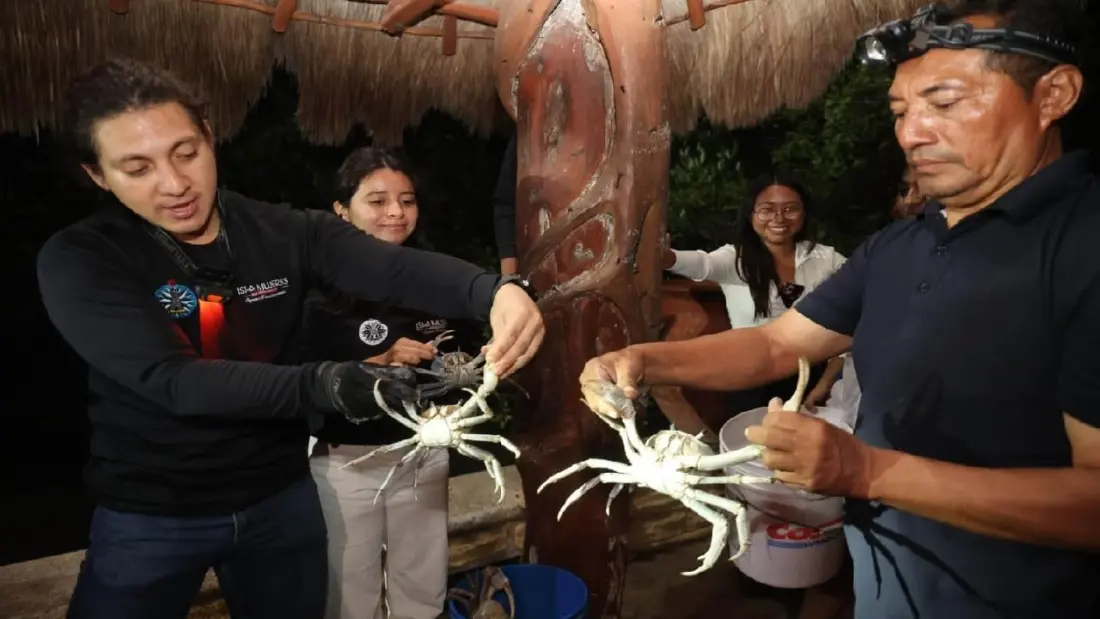
Every year, blue crabs on Isla Mujeres make a risky dash to the coast to release millions of fertilized eggs into the sea — and this year, more than 100 of them got an assist from locals. Over four days, volunteers, families and municipal staff took part in the Blue Crab Rescue and Protection initiative, a programme run by the island's municipal government, scooping up crabs and helping them safely reach the water.
The effort focused on two spots where crabs most often come unstuck: Chacmochuch Lagoon on the mainland side and the Sac Bajo road on the island itself. Roads and traffic are the main hazards during the migration, particularly for egg-carrying females making their way to the coastal zone to complete their reproductive cycle.
Edwin Novelo Ríos, the municipality's Director of Historic and Ecological Parks, said the programme wrapped up successfully thanks to strong turnout from the island community. Beyond the crabs themselves, the goal is to build a local culture of protecting the island's ecosystems — something the mayor has publicly backed.
For visitors, this is a nice example of the quieter side of Isla Mujeres. Most people come for the beaches, snorkelling off Playa Norte, or a day trip from Cancún, but the island and its surrounding lagoons support real wildlife worth respecting. If you're there during crab season, drive slowly near the coast at night, and don't be surprised to see locals ferrying crabs to the shoreline — it's a community tradition, not a photo op. Similar crab migrations happen elsewhere in Quintana Roo too, so the same courtesy applies across the Riviera Maya.
Why it matters: responsible-travel moments like this are easy to join or at least not disrupt. Give the crabs space, follow any signage near the lagoon, and you'll be doing your bit for a species that depends on a safe crossing to keep its numbers up.