
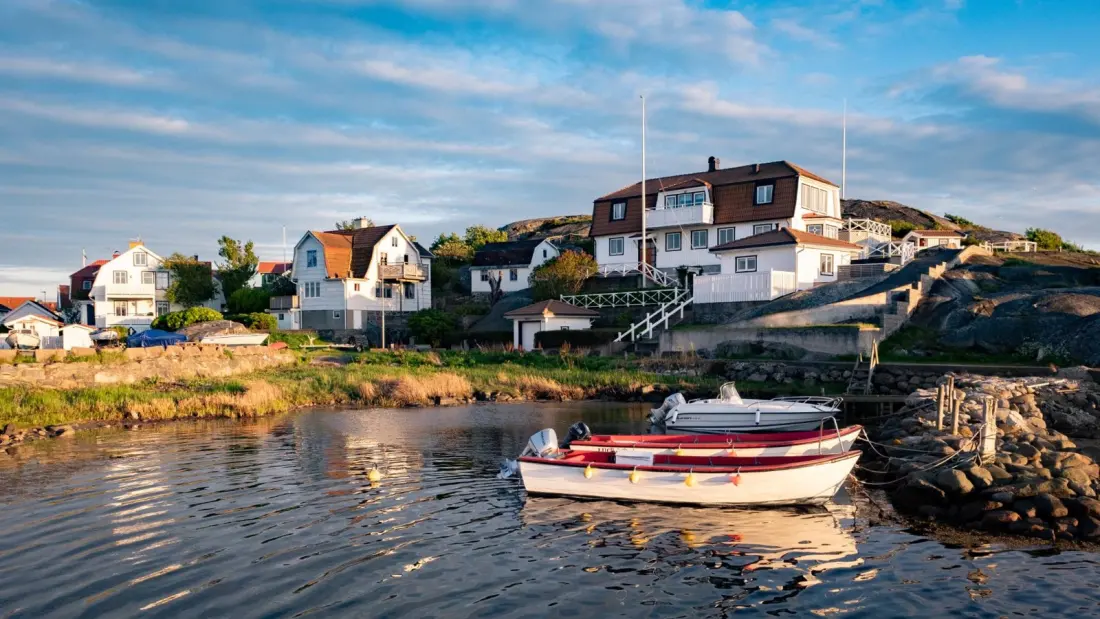
There are no cars on Vrångö. Three kilometres long and half a kilometre wide, the southernmost inhabited island of the Gothenburg archipelago has a bike rack and a couple of electric golf buggies and nothing else in the way of transport. That single fact sets the pace for everything that follows.
Reaching it is part of the slow-down. You start in Gothenburg, possibly detouring through Alingsås — the town that styles itself Sweden's fika capital, with a bakery heritage to match — before boarding a ferry that threads around 20 main islands and hundreds of granite islets and skerries. Locals recall that the winter seas used to freeze hard enough for islanders to skate to the mainland; the ice hasn't appeared in 20 or 30 years, and fewer people now live out here year-round. Most of the colourful clapboard houses serve as weekend retreats for Gothenburg residents.
Vrångö's highest point tops out at about 50 metres, where a small maroon pilot house once served the navigators who guided boats past the rocky bay. From there you can look down on the island's only settlement, whitewashed and low-rise, and hear almost nothing at all.
The island's rhythm is perhaps best understood through fika — the twice-daily coffee-and-cake pause that Swedes treat as a state of mind rather than a snack. At Kajkanten, a guesthouse on the far side of the island, host Harkan serves cinnamon buns in the afternoon sun, and lingering stops feeling indulgent and starts feeling compulsory.
Food here comes straight from the shoreline. Karolina Martinson, a former artist turned seaweed diver and chef, has spent over 15 years diving these waters and now leads a sustainability push around eating what the coast provides: sugar kelp, Irish moss, gutweed and dulse, plus wildflowers like sea campion, which tastes remarkably like fresh peas. In a hands-on session, visitors chop vegetables into cider-softened kelp for a Thai-style salad, knead kelp into flatbreads cooked over open fire, and finish with 'dulse de leche' — seaweed-infused panna cotta. Seaweed is genuinely nutritious stuff, rich in iodine, potassium, calcium, magnesium and iron, and the future of these fishing-era communities may well depend on it as shorelines warm and fish stocks shift.
The closing ritual is Harkan's 'relaxation raft', a floating harbour setup with sauna, jacuzzi and changing rooms. In the weeks before midsummer, the light lingers long enough that you can sit in intense sauna heat, plunge into the cold sea, and still catch embers of sunset on the horizon as herons and seabirds call across the rocks.
For burnt-out travellers, this is the point: a trip you could technically do in a long weekend, but which only works if you surrender to island time. Vrångö suits anyone craving fresh air, communal meals and a reset that doesn't require hiking boots or an itinerary — just an appetite for cinnamon buns and kelp. It's reachable on Intrepid's Taste of Scandinavia small-group trip, which also covers Denmark and Norway, though independent travellers can hop the same public ferries from Gothenburg.