
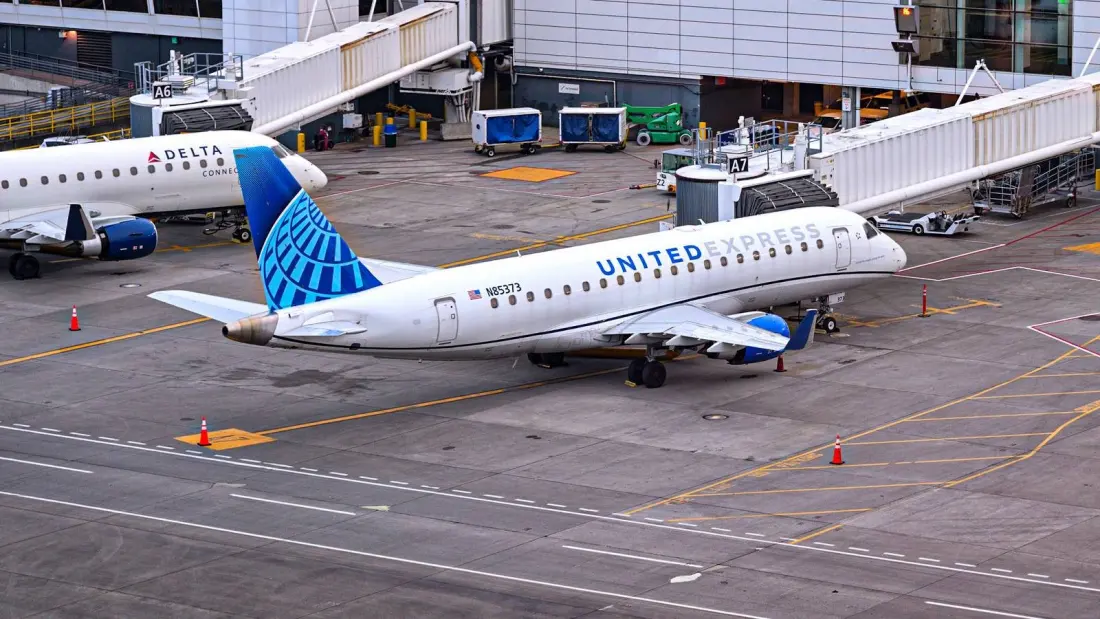
A federal limit on flights at Chicago O'Hare has pushed United Airlines to delay ten planned routes to smaller Midwestern communities until late 2027, while the airline simultaneously rolls out a dozen new services aimed squarely at leisure travellers.
The cause is a scheduling cap the FAA imposed after airlines planned more than 3,080 peak-day flights for summer 2026 — a 14.9% jump on the previous year that regulators judged would bring severe delays. The order holds O'Hare to 2,708 daily operations between 6am and midnight, split into half-hour slots of 30 to 84 movements. It was originally due to lapse in October 2026, but the FAA has now extended it through October 30, 2027, because O'Hare's ongoing ORDNext construction will keep disrupting taxiways and gates through next summer.
That extension forced United's hand. The deferred routes are classic regional spokes: Bloomington-Normal and Champaign-Urbana in Illinois; Kalamazoo, Lansing and Marquette in Michigan; La Crosse and Central Wisconsin; Tri-Cities in Tennessee; Erie in Pennsylvania; and Rochester in Minnesota. For residents, the appeal was simple — one-stop access to United's global network without driving to a bigger airport. Now they wait.
In their place, United has added 12 new domestic routes during 2026: Santa Barbara, Monterey, Cody, Idaho Falls, St. George, Santa Fe, Lancaster, Lynchburg, Clarksburg, Kearney, Shreveport and Owensboro, launching progressively from March through December. The pattern is deliberate. Under a fixed ceiling, every takeoff or landing is a scarce asset, so a 50-seat regional jet serving mostly connecting traffic competes badly against a leisure route where travellers will pay a premium for nonstop access in peak season.
United has also shrunk its overall schedule — planned third-quarter daily departures at O'Hare dropped from about 780 to roughly 650 — and is swapping bigger aircraft onto existing routes so it can carry more people without using more slots. That improves efficiency but means fewer departure choices, and it hurts small markets that need frequency rather than a bigger plane once a day.
The cap also sharpens the United–American rivalry at O'Hare, since both hubs must operate under the same airport-wide limit and slots are allocated from historical schedules. Walking away from a route now risks losing the operating rights to restore it later, which makes every timetable decision a long-term chess move.
Why it matters for travellers: if you live near one of the ten deferred markets, don't plan on those nonstops before November 2027. If you're flying from Chicago to the national parks or the Southwest, you have more nonstop options than ever. And expect generally fuller flights out of O'Hare for the next year, even where the number of departures hasn't changed.