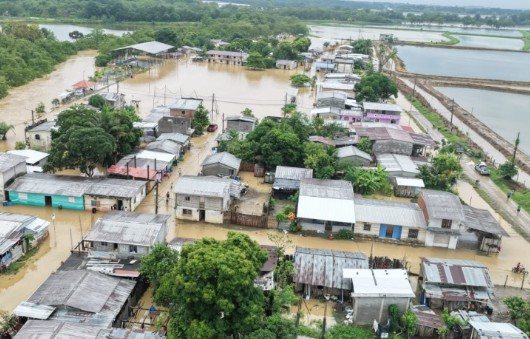
Ecuador's Pacific coast is dealing with some of the worst flooding it has seen in years. The National Emergency Operations Committee has declared a state of emergency in the Muisne and Eloy Alfaro cantons of Esmeraldas Province after two straight weeks of heavy rain left rivers overflowing across the region.
The numbers are stark. Around 2,500 families — more than 7,500 people — are affected in those two cantons alone, with 400 families facing severe losses of homes, crops and livestock. In the San Gregorio and Cabo San Francisco parishes, seven homes were washed away entirely, and the local municipal association calls the flooding there the worst ever recorded. Relief is arriving, but slowly: with highways underwater, food and water are being delivered by boat, and there aren't enough boats to go around.
Esmeraldas isn't alone. Flooding is reported in Manabi, Los Rios, Guayas, Santa Elena and El Oro provinces as well, and Risk Management officials put the national toll at roughly 40,000 people seriously affected, with about 4,000 homeless. Sixteen rivers were above flood stage in coastal provinces as of Monday.
The economic damage is piling up too. Ecuador's two largest sugarcane mills suspended operations after thousands of hectares of cane in Guayas ended up under as much as three feet of water, idling 3,600 workers. Banana, rice and coca harvests have largely stopped, and shrimp farmers — a cornerstone of the coastal economy — report production down 10% in a week as flooded ponds become contaminated.
The bigger concern for anyone with travel plans: officials warn this may only be the start. El Niño conditions are just beginning, and meteorologists expect the heavy rains to continue until February.
Why it matters to travellers: Esmeraldas is a popular domestic beach getaway and the gateway to surf towns like Mompiche and Same, while Manabi draws visitors to Canoa and Puerto Lopez. If you have a trip booked to Ecuador's northern or central coast in the coming weeks, expect washed-out roads, disrupted bus routes and limited services in affected cantons. Inland destinations like Quito and Cuenca, and the southern highlands generally, sit well above the flood zone and remain largely unaffected. Anyone travelling to the coast before February should monitor COE announcements, build in buffer time for overland journeys, and consider rebooking beach stays in the hardest-hit cantons until the situation stabilises.