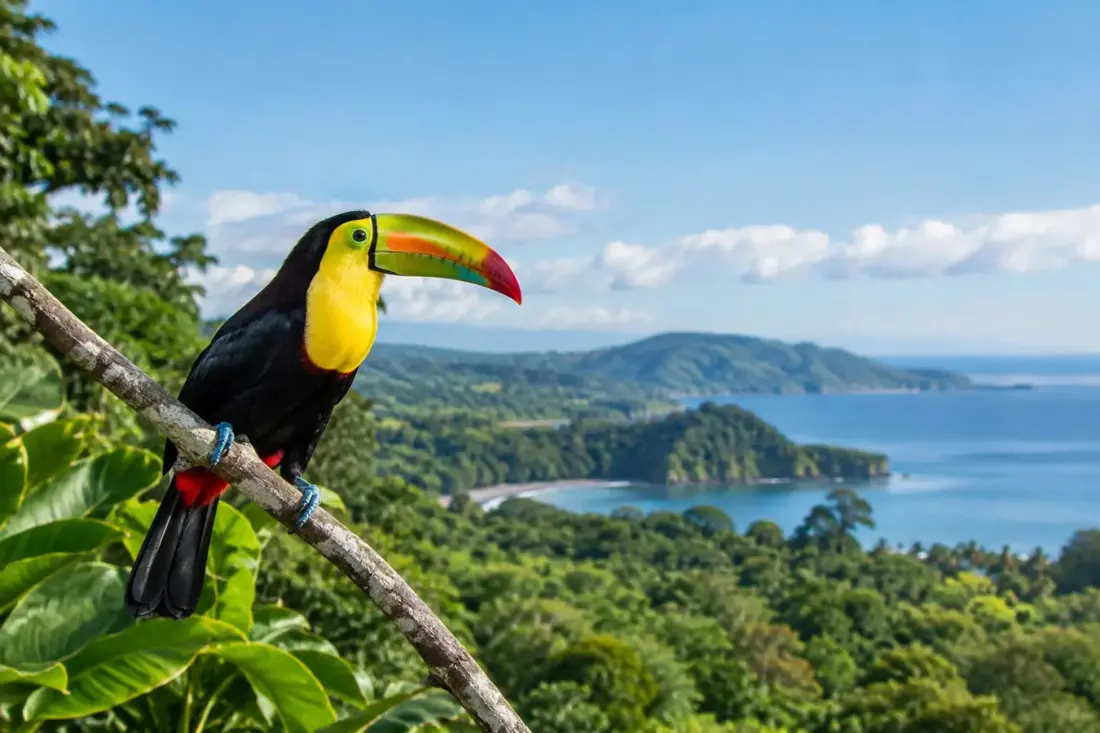
Scarlet macaws over the canopy, howler monkeys in the distance, cicadas filling in the gaps: the Osa Peninsula at dawn is the Costa Rica most travellers imagine before they book. What the postcard doesn't show is how much work keeps it that way.
For a small country, Costa Rica's environmental record is huge. Roughly a quarter of the national territory sits inside parks, reserves and refuges, and forest cover — once gutted by cattle ranching and farming — has made a striking recovery. The core idea behind the model is simple: a standing forest can be worth more than cleared land. Payment programmes reward landowners for keeping trees in the ground, paying for the cleaner water, carbon storage and habitat those forests provide.
But the tricky bit is what happens between the parks. A jaguar doesn't read boundary signs. Private farms, riverbanks, wetlands and forest corridors decide whether wildlife can actually move around, which is why sprawl matters so much. In fast-growing beach towns, tourism pays the bills — jobs, guides, restaurants — but badly planned construction fragments habitat, strains water supplies and sends sediment into rivers and reefs. Development isn't the enemy; ignoring a place's carrying capacity is.
The green reputation is deserved, yet not spotless. Illegal hunting, wildlife trafficking, overfishing, plastic pollution and warming seas are all live problems, and climate volatility is making dry seasons feel longer. Even well-meaning visitors can love a place to death: eroded trails at overloaded waterfalls, beachfront lighting confusing turtle hatchlings, cleared lots cutting off the monkey routes overhead.
For travellers, the difference between nature tourism and genuine conservation travel comes down to a few habits. Skip the sloth selfie and any tour promising guaranteed contact with wild animals — baiting, handling and crowding are red flags. Stay on marked trails, never feed wildlife (yes, even the coatis that have learned to beg), refill a bottle instead of stacking single-use plastic, and book operators who can explain their practices in plain terms rather than leaning on vague green slogans. Quieter boats that keep their distance from dolphins usually beat close encounters.
Anyone thinking of buying property — foreigners can own in most of the country — should treat due diligence as essential, not a formality. A forested lot may hide seasonal waterways, protected trees or slopes that shouldn't be cut. Coastal land adds setback rules, drainage and mangrove concerns. In dry Guanacaste, a big lawn and pool can be an awkward ask during a hard dry season; native landscaping is usually the smarter and better-looking choice. And remember that conservation extends offshore: mangroves are fish nurseries and storm buffers, and cutting them for a quick build ripples far beyond one parcel.
The most durable protection, though, is economic. When local guides, family lodges and community projects make a living from intact nature, conservation stops being an imposed rule and becomes shared interest. Ask a lodge what happens to its wastewater and waste, hire guides who know the landscape, and spend where the benefits stay local. Small choices, multiplied across thousands of visitors, are a big part of what keeps this country wild.
Why it matters: Costa Rica is a masterclass in how tourism and conservation can reinforce each other — and a warning about what happens when growth outruns planning. Ideal for wildlife lovers, slow travellers and anyone eyeing a longer stay.