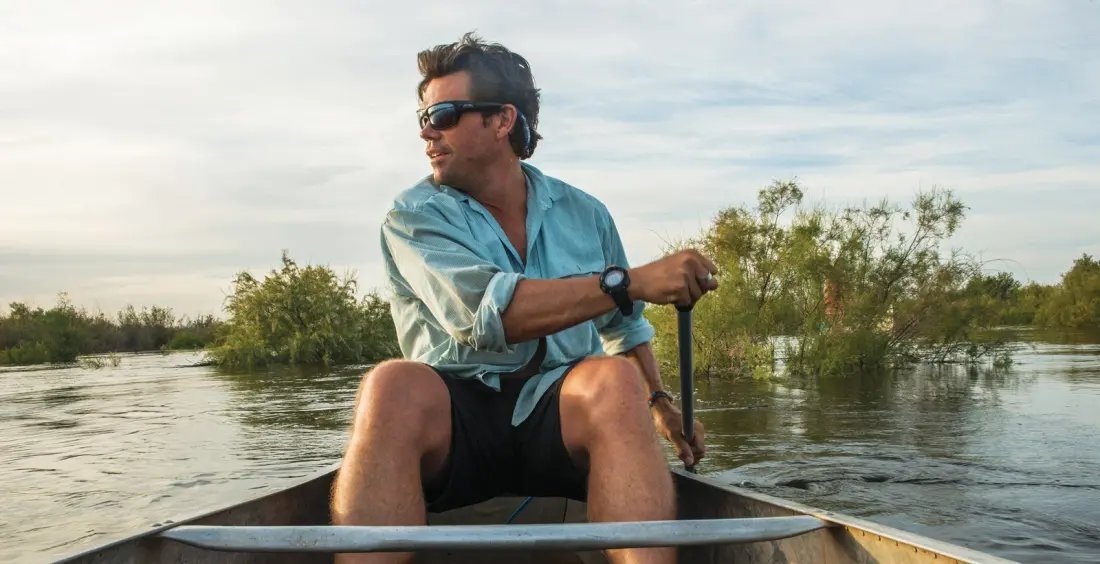
When photographer Pete McBride followed the Colorado River to its end, he didn't find a delta meeting the Gulf of Mexico. He found dry ground about 100 miles inland. That moment opens his new book, Witness to Water: One Photographer's Mission to Defend the Colorado River, and it frames a crisis that affects anyone who has ever marvelled at the Grand Canyon, rafted the Rockies' big rivers, or drunk water in the American Southwest.
The numbers behind the story are sobering. The river supplies drinking water to roughly 40 million people and irrigates more than five million acres of farmland. Climate change has already cut its flow by an estimated 15 to 20%. But McBride's point is that this isn't just a drought story — it's an accounting problem. Water rights were allocated based on historical flows that no longer exist, so users hold claims to far more water than the river actually delivers. He compares it to a group ordering a large drink with plenty of straws, only to be served a medium: everyone is still drinking as if nothing changed.
Agriculture is the biggest draw, and McBride singles out alfalfa grown for export — forage crops sent overseas that consume around a quarter of the river's total water. There are also deep inequities: Native communities hold rights to over a quarter of the river's water, yet most of it never reaches them, and their voices are largely absent from decision-making.
It's not all grim. McBride, who once hiked the Grand Canyon end to end — roughly 750 miles with no trail to follow — describes "earned hope": grassroots wins like blocking uranium mining near the Grand Canyon and restoration work in the river delta. A landmark 2014 pulse flow briefly reconnect the river to the sea, and while a repeat is unlikely, local restoration projects continue.
Why should travellers care? Because the river is the reason the Southwest's great landscapes exist, and visitors are part of the system. Knowing where your water comes from matters — whether you're filling a bottle in Las Vegas or floating through Cataract Canyon. McBride suggests speaking up during public comment periods, supporting conservation groups, and simply using less. For anyone planning a trip to the Grand Canyon, Lake Mead, or the canyon country of Utah, understanding the river's plight adds a deeper layer to the scenery — and a reason to tread lightly.
For travellers, the takeaway is simple: the Colorado's iconic landscapes are shaped by a water system under real strain. Visit, enjoy, and consider supporting the organisations working to keep the river alive.
Story source: Sunset.