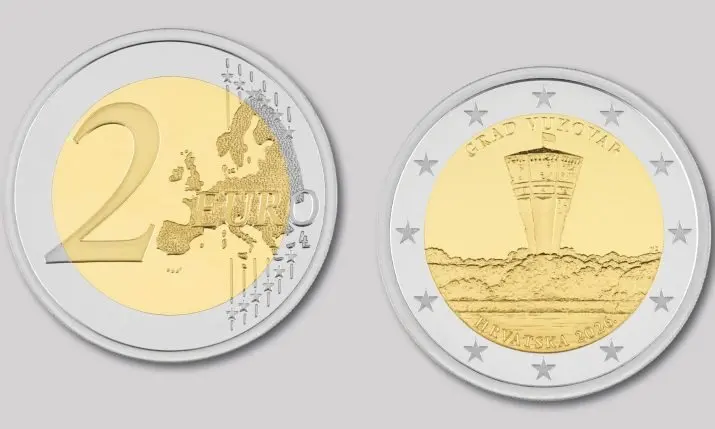
Croatia has a fresh commemorative €2 coin, and this one celebrates Vukovar, the Danube city in the country's far east. Issued by the Croatian National Bank as part of its "Croatian Cities" series, the coin entered circulation on 21 September 2026 and features the city's scarred-but-iconic water tower alongside the river that shapes it. The design came from academic sculptor Duje Matetić.
Up to 500,000 coins are being struck. Most — 490,000 — are standard uncirculated pieces you might simply receive in change, but 5,000 high-relief and 5,000 proof-quality versions are aimed squarely at collectors. Either way, it spends like any other €2 coin, which is part of the charm: since Croatia joined the euro in 2023, these national commemoratives have become a small, affordable souvenir for anyone passing through.
There's a catch if you want one deliberately. The HNB exchange system requires pre-registration, open until 5 October 2026, with a limit of five coins per person — and it's first come, first served within the available quantity. From 9 November, successful registrants can collect at the HNB in Zagreb, via post within Croatia, or at designated Fina branches. Nicely, a temporary counter opens in Vukovar itself on 10 November, so residents and visitors can pick up coins in the city they honour. Best of all, coins are exchanged at face value, not at a collector's premium.
Why does Vukovar get the nod? The city carries heavy historical weight as a symbol of Croatian resilience from the 1991 war, and its water tower — pockmarked and preserved — has become the country's most recognisable monument to that period. Standing at the confluence of the Vuka and Danube rivers, Vukovar is also one of Croatia's most atmospheric small cities, with baroque facades, riverside walks and the nearby Vučedol archaeological site, home of a Bronze Age culture.
For travellers, this is a neat excuse to look beyond the Dalmatian coast. Eastern Croatia — Slavonia and the Danube wine region around Ilok — sees far fewer visitors than Dubrovnik or Split, yet offers wine cellars, river cruises and genuinely warm small-city hospitality. Even if you miss the registration window, keep an eye on your change: a handful of these could cross your palm anywhere in the eurozone, and spotting one is half the fun. Collectors and casual visitors alike have taken note, with the issue drawing strong public interest since launch.
If you're planning a coin-hunting trip, the practical route is straightforward: register online with the HNB before 5 October, then pair a collection trip to Zagreb or Vukovar in November with a few days exploring a corner of Croatia most visitors never see. Full details on registration and collection are on the Croatian National Bank's site.
Story via Croatia Week.