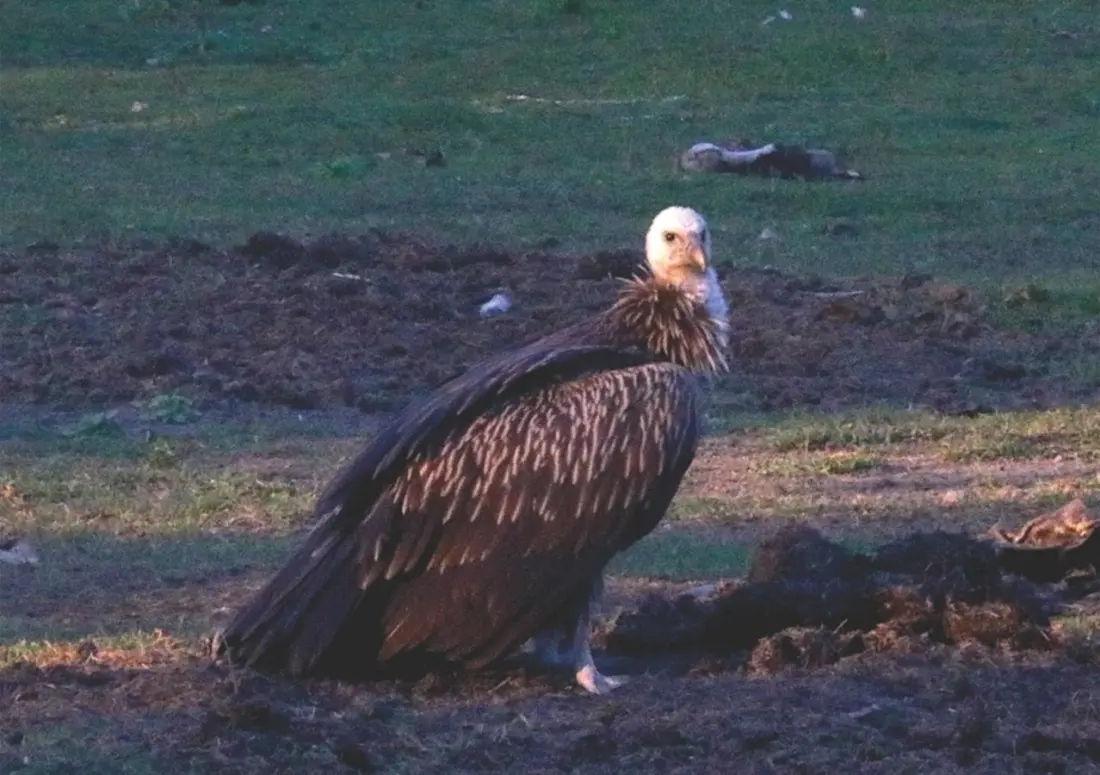
A conservation story decades in the making is unfolding in the hills outside Pokhara. Conservation biologist Munir Virani, who helped crack the mystery of South Asia's vanishing vultures, recently returned to Nepal after 23 years and saw something he hadn't witnessed since the late 1990s: white-rumped and red-headed vultures soaring overhead once again.
The backstory is dramatic. In the 1990s, three vulture species — the Oriental white-rumped, Indian long-billed and slender-billed — crashed by a staggering 95 percent across South Asia. Virani, then working with the Peregrine Fund, arrived in Nepal in 1999 (fulfilling a childhood dream sparked by a David Attenborough documentary) to help find out what was killing the birds. After monitoring nests with Bird Conservation Nepal and running diagnostic work in Pakistan, where export laws were looser, his team pinpointed the culprit in 2003: diclofenac, a common livestock painkiller. Vultures feeding on cattle carcasses were dying of kidney failure.
The fix — banning the drug and promoting safe alternatives — is now considered one of Asia's great conservation turnarounds. And it mattered far beyond the birds. With vultures gone, feral dog populations surged and rabies spread; researchers estimate the Indian vulture collapse contributed to around half a million human deaths, with India spending some $1.5 billion a year on rabies treatment that vultures once provided free.
For travellers, there's a direct way in: Thulakharka, a vulture restaurant and observation site about 45 minutes from Pokhara, run by Virani's former student Tulsi Subedi. It's regarded as one of the best spots to watch raptors migrating south from the Himalaya toward India. Twenty-six years ago the birds were nearly absent; now the skies are filling again.
Virani's broader message is also worth noting for anyone heading to wild places. He estimates ten million birds of prey are electrocuted on power lines globally each year, but says the fix is cheap — insulating poles costs about $40 each. In Mongolia, his team has already insulated 27,000 poles across 3,000km of line.
His advice to visitors is refreshingly simple: pack binoculars, look up, and connect with local bird groups. Nepal's raptor recovery means a trek or even a day trip from Pokhara now comes with the chance to see some of the world's rarest vultures back where they belong.