
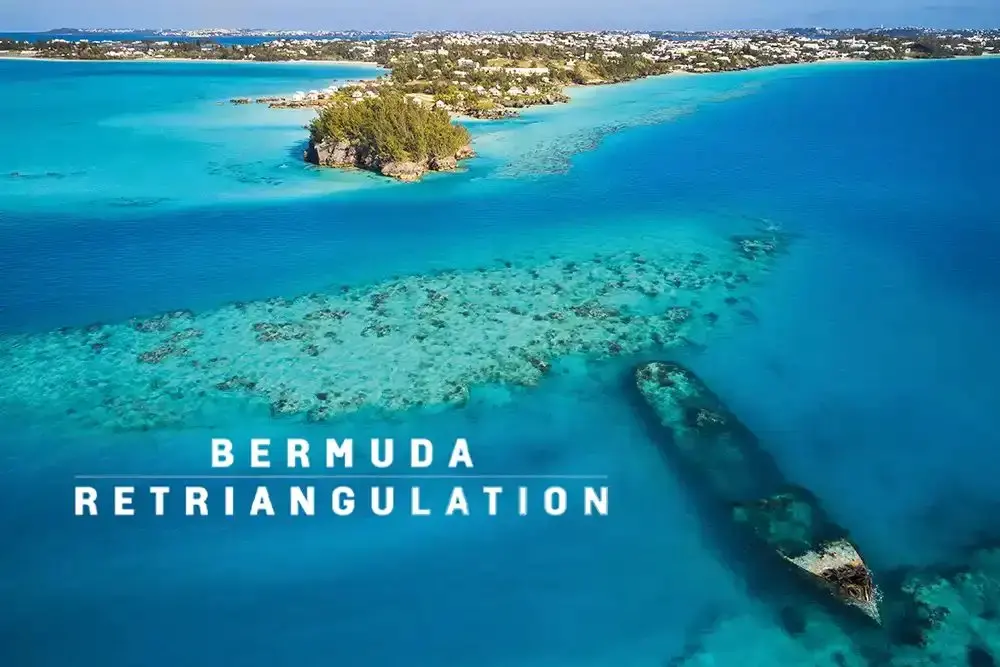
Bermuda has spent decades collecting bad press. The "Bermuda Triangle" label was only invented in 1964 by writer Vincent Gaddis, but the archipelago's reputation for swallowing ships goes back much further – and with more than 300 known wrecks scattered around its reefs, it has earned the title of shipwreck capital of the Atlantic.
The truth behind the legend is less spooky than it is practical. Bermuda sits on busy transatlantic shipping routes, ringed by hidden reefs that were lethal in the days of dead-reckoning navigation and celestial fixes. Dense mats of sargassum seaweed in the surrounding Sargasso Sea could foul a sailing ship's rudder, and the angle between true and magnetic north occasionally passes right through Bermudian waters, throwing compasses off. NOAA's verdict: disappearances happen no more often here than elsewhere, and Lloyd's of London doesn't charge extra premiums for crossing the Triangle. Roughly 50 ships and 20 aircraft have vanished within its half-million square miles, but that's what you'd expect from one of the world's busiest transport corridors.
For divers, all that maritime misfortune is the attraction. The reefs sit close to shore in exceptionally clear water – visibility can hit 60m in winter and stays above 30m in summer – filtered by the sargassum itself. Standout sites include Cathedral, a cave dive where sunlight shafts through the rock onto schools of sweepers, and the Pelinaion, a 117m steel cargo steamer built in Port Glasgow that ran aground in 1940 while carrying iron ore, its boilers, triple-expansion engine and a spare propeller still intact between 6m and 21m. Water sits around 21°C in April, warming to 28°C by late summer, so bring a thick wetsuit and hood outside the high season.
The islands themselves are a surprise to many first-timers. Bermuda isn't Caribbean at all – it lies about 1,050km east of the US mainland, well north of the Tropic of Cancer, with a distinctly British feel: red letterboxes, cricket greens and Britain's oldest remaining Overseas Territory status, dating to a 1609 shipwreck of the Sea Venture that accidentally founded the colony.
Off the water, the compact islands pack in sightseeing: the UNESCO-listed town of St George's, the Royal Naval Dockyard, and the Crystal and Fantasy caves. History buffs can seek out the recreated 19th-century perfume recovered from the wreck of the Confederate blockade runner Mary Celestia – notes of orange, bergamot and sandalwood, thankfully improved since a scientist described the original as smelling of dirty pirate's feet.
With a well-established dive industry, short boat rides to most sites, solid infrastructure and a low crime rate, Bermuda is an easy sell for divers of every level – and anyone curious about a mystery that turns out to be better than its explanation.