Few parts of France have the pull of the Dordogne. Set in the southwest between the Loire Valley and the Pyrenees, it pairs river gorges, vineyards and forests with a warm climate and one of the country's great food cultures. It's also one of the most popular regions in France for English-speaking buyers, and a recent look at the area by The Good Life France explains why.
The department divides into four distinct Périgords: Périgord Vert in the north, all green valleys and woodland; Périgord Blanc around the capital Périgueux; Périgord Noir to the southeast, the truffle heartland centred on Sarlat; and Périgord Pourpre around Bergerac, named for its grape-growing wine country. Between them they cover castles, prehistoric caves, circular fortified 'bastide' towns such as Monpazier (founded 1284, with more than thirty listed monuments), street markets and showstopping sites like Rocamadour.
The lifestyle pitch is simple: long outdoor seasons, unhurried meals and serious produce. Expect goose, duck, wild truffles and goat's cheese, washed down with local wines from the region's 12,000-plus hectares of vineyards. Agent Bruno, quoted in the piece, moved from a high-pressure Paris sales job in 1995 and never went back.
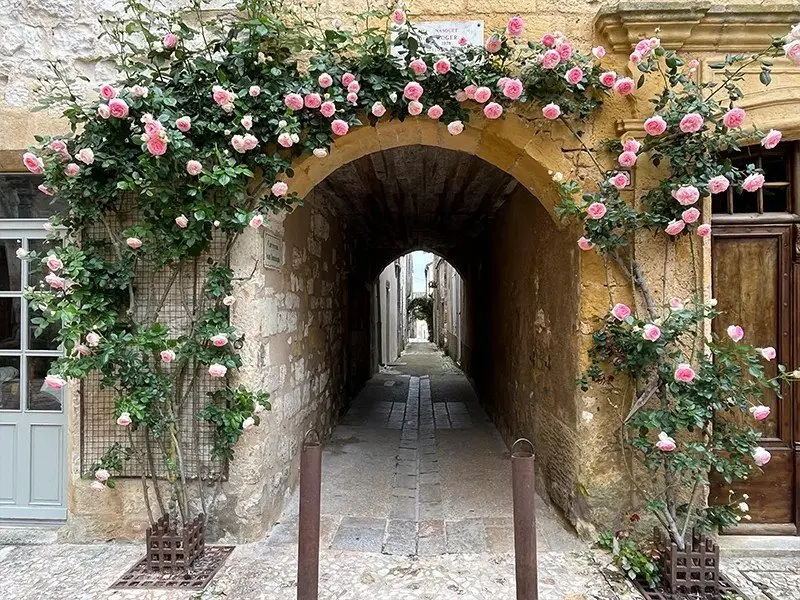
Property prices remain notably reasonable for France. Renovation projects start around €50,000, while €150,000 buys something that needs only light work. A move-in-ready village house near shops and schools runs about €250,000, and €350,000 gets a well-presented family home with a big garden and a pool or room for one. The local classic is the Périgourdine — exposed stone, gabled steep roof, south-facing — from €350,000, though they sell fast. Everything from cottages to manor houses, even small vineyards, is on the market.
For English speakers, certain villages act as soft landings. Eymet, 20 minutes from Bergerac, has a well-established British community of restaurants and businesses. Medieval Issigeac, southeast of Bergerac, draws crowds with its Sunday morning market and has schools, doctors and shops on hand. Lalinde, 25 minutes east, suits families and early retirees, with services, activities and rail links to Bordeaux and Sarlat-la-Canéda.
Bergerac itself — population around 30,000, second only to Périgueux in the department — is a practical base: an official 'Town of Art and History' on the Dordogne river, with museums, restaurants and property ranging from half-timbered houses to modern apartments, yet a villagey feel. Transport is better than you might expect: local airports at Bergerac, Brive and Limoges, motorways, and Bordeaux or Toulouse a couple of hours by car.
Who is it for? Remote workers priced out of cities, families wanting space and services, and retirees chasing mild winters and long summers all feature. With low living costs, robust air links and entry prices well below much of western Europe, the Dordogne makes the 'move to France' dream feel achievable rather than far-fetched — as long as you're prepared to slow down and eat well.