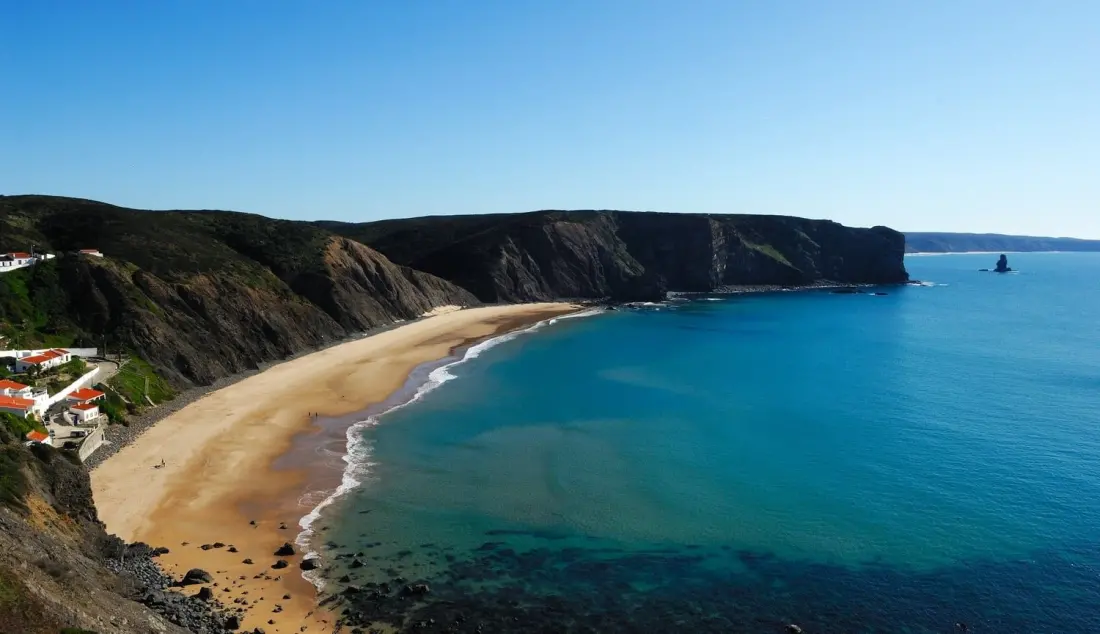
Arrifana, the surf-famous beach below the cliffs of Aljezur on Portugal's western Algarve, made the news this week for the wrong reasons. A fisherman out at dawn on Wednesday, September 23 spotted what he thought was suspicious activity on the sand and called the police — and the tip-off snowballed into a major operation by the GNR, Portugal's republican guard.
Officers from the GNR's territorial, coastal control and criminal investigation units moved in and identified twelve men. The first group included eight Spanish nationals and two Moroccan men; a further two Spaniards were later identified travelling in a foreign-registered car believed to be linked to the group. According to Correio da Manhã, the ten Spaniards were formally declared arguidos — formal suspects — on suspicion of supporting a drug trafficking operation. The two Moroccan men were detained for different reasons: they carried no identification documents and were allegedly in the country illegally.
What nobody has confirmed is what actually came ashore. The fisherman told police he suspected the group had arrived by high-speed vessel, a method long associated with smuggling along this stretch of coast, but the GNR has not said whether any boat was found or intercepted. No seizures of drugs, fuel or other contraband have been announced either. One thing police did rule out: this was not a migrant landing.
The incident fits a pattern. The Algarve's more remote beaches — especially on the wild, less-developed Costa Vicentina towards Aljezur — have repeatedly featured in investigations into maritime drug logistics, where fast boats can run in, unload and disappear before anyone notices. For locals, the fisherman's quick call was exactly the kind of vigilance authorities like to see; the coast here is patrolled, but it is long, dark and full of coves.
Should holidaymakers worry? Not especially. Arrifana remains one of the region's best-loved spots for surfing, seafood and sunset clifftop walks, and daytime life carries on as normal. But the story is a useful reminder that Portugal's prettiest beaches can have a second life after dark, and that if you're camping, surfing at dawn or walking the Rota Vicentina sections near Aljezur, it's worth knowing the local police (GNR) are approachable and responsive. Report anything odd — this whole case started with one phone call from one fisherman.
For travellers, the practical takeaway is simple: enjoy the west coast's raw beauty, keep to marked paths on the cliffs, and don't be surprised to see coastal patrols around remote beaches — that's a good thing, not a bad sign.
Reporting: Portugal Resident.