Some of England's prettiest villages have been loved to death. Dunster, on the eastern edge of Exmoor National Park in Somerset, has largely escaped that fate — Exmoor is one of the least-visited national parks in the country, which is exactly why it's worth putting on your West Country list.
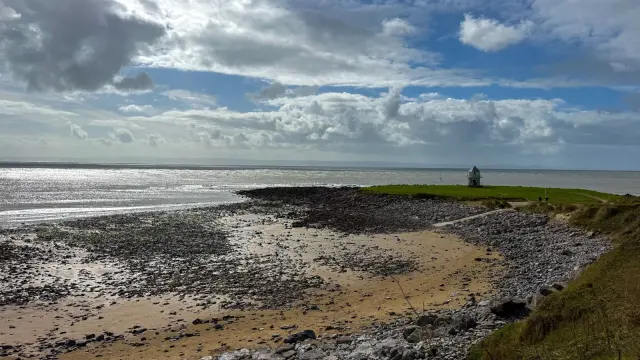
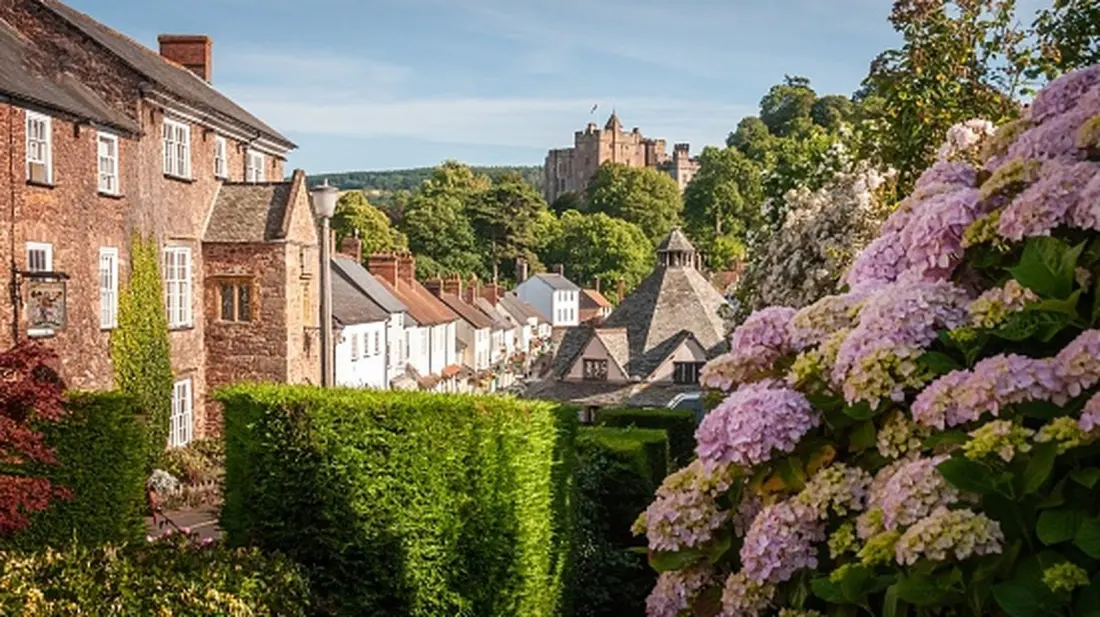
The village sits overlooking the Bristol Channel, with the River Exe running through the wider park. It's often counted among the best-preserved medieval settlements in England. Look out for the winding packhorse bridge, the tithe barn that once stored crops paid to the church as tax, and the 17th-century Yarn Market — an octagonal shelter built for trading wool that now anchors the main street. That High Street is lined with teashops, inns and independent shops, and it manages to feel charming without the tourist-trap energy of many picture-postcard villages.
The headliner is Dunster Castle, a Grade I listed building now run by the National Trust. Its story goes back to the Anglo-Saxons — an eighth-century commander named Dunna or Dunn gave the village its name — and the current stone structure blends eras: a fortress-like Great Gatehouse with square turrets, alongside manor-house comforts added during 600 years of Luttrell family ownership, including Rococo wallpaper and an ornate conservatory. Tickets cover the interiors, subtropical gardens where mild micro-climates let exotic plants flourish, and a working watermill. If you want a different angle, the castle runs ghost tours covering its long history of phantom noises and reported sightings.
The shopping is better than the average village gift run. Hall of Names will search a database of over a million surnames for your family history and coat of arms, then print it on plaques, mugs or glassware. The 5 Quarters sells crystals, fossils and gemstones organised around the classical elements, while Dunster Living stocks handcrafted toys, puzzles and nature prints. For food, The Deli on the High Street sells Somerset cheeses, charcuterie, local cider, gin-infused marmalade and jams made from whortleberries and damsons — plus homemade pies if you're peckish. Afterwards, settle into a proper country pub: The Stags Head and The Foresters Arms are both well-reviewed, with stone and timber interiors.
Practically, Dunster works best as a road-trip stop. Barnstaple, another handsome old town on the River Taw, is about an hour west by car, and Bristol — consistently rated one of the world's top places to visit — is roughly an hour and 45 minutes east. Public transport exists but isn't convenient, and the regional rail operator has a patchy reliability record, so driving is the safer bet.
For travellers who want the honey-stone England of brochures without the tour-bus queues, Dunster delivers: a castle, a medieval high street, decent pubs and a national park on the doorstep.