
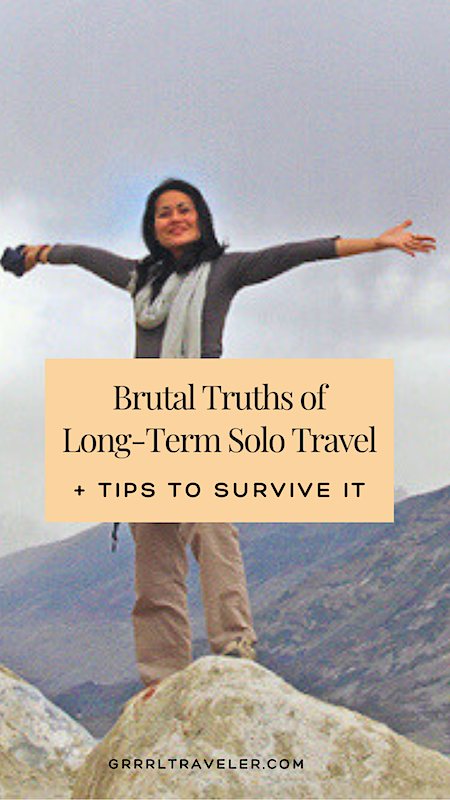
After seven-plus months moving through Southeast Asia and East Asia with no fixed plan, solo travel writer Christine Kaaloa has published an honest breakdown of what long-term travel actually does to you — and it's a long way from the sunsets-and-smoothies version sold online. Her verdict: with an open-ended ticket, every day becomes a series of decisions you alone must make, and that slowly grinds people down.
The core problem is decision fatigue. Every meal, bus, bed and border crossing is your call, every hour, indefinitely. Layer on the constant reset of arriving somewhere new — fresh rules, fresh etiquette, fresh stress that only eases once you've adapted, right before you move on again — and the emotional whiplash is relentless. Kaaloa describes hitting a low point watching a 4D movie in a luxury Bangkok cinema, surrounded by one of Asia's most exciting cities, yet feeling completely lost.
Physical logistics wear you down too. Packing, unpacking, overnight trains, tuk-tuk drivers swarming arrivals — being your own sherpa never got easier, and by month four she found herself craving something she'd never wanted before: roots. A closet. A cafe that knew her order. Around the same time came an existential dip: amazing experiences like scuba diving and hill-tribe treks started feeling empty without routine, work or a sense of purpose. And while solo travel is famously social, long-term road friendships have a built-in heartbreak — you bond fast, travel together for a week, then say goodbye. Hellos start feeling like goodbyes.
Money is the quiet eighth truth: your budget doesn't replenish itself. After a few months, travellers start cutting activities, downgrading lodgings and occasionally choosing cheaper — riskier — accommodation. Her fix is a daily spending allowance tracked in a spreadsheet, plus proper travel insurance such as SafetyWing, which can be activated mid-trip.
The recovery playbook is essentially slow travel. Stay two weeks minimum per place instead of two or three days, unpack fully, and build micro-routines like a regular local cafe. Drop the vacation mindset where you sprint through three cities in eight days — you can't run a marathon at sprint pace. Pick one small goal per day to shrink decision fatigue. Take week-long yoga retreats, cooking classes or a scuba certification to give your days structure and build a temporary community. Swap pricey tourist activities for local living: street food, public transport, homestays, even just watching local TV in an air-conditioned room without guilt. And pack lighter than you think you need to — she switched to a wheeled convertible backpack to spare her back and neck.
Why does this matter? Because the biggest trap for first-time long-term travellers isn't danger or cost — it's the mental game. If you're planning months on the road, the practical takeaway is simple: go slower than feels natural, budget in real time, insure yourself properly and treat rest as a legitimate activity. Anyone who has felt vaguely like a failure halfway through a big trip will find this reassuring reading.