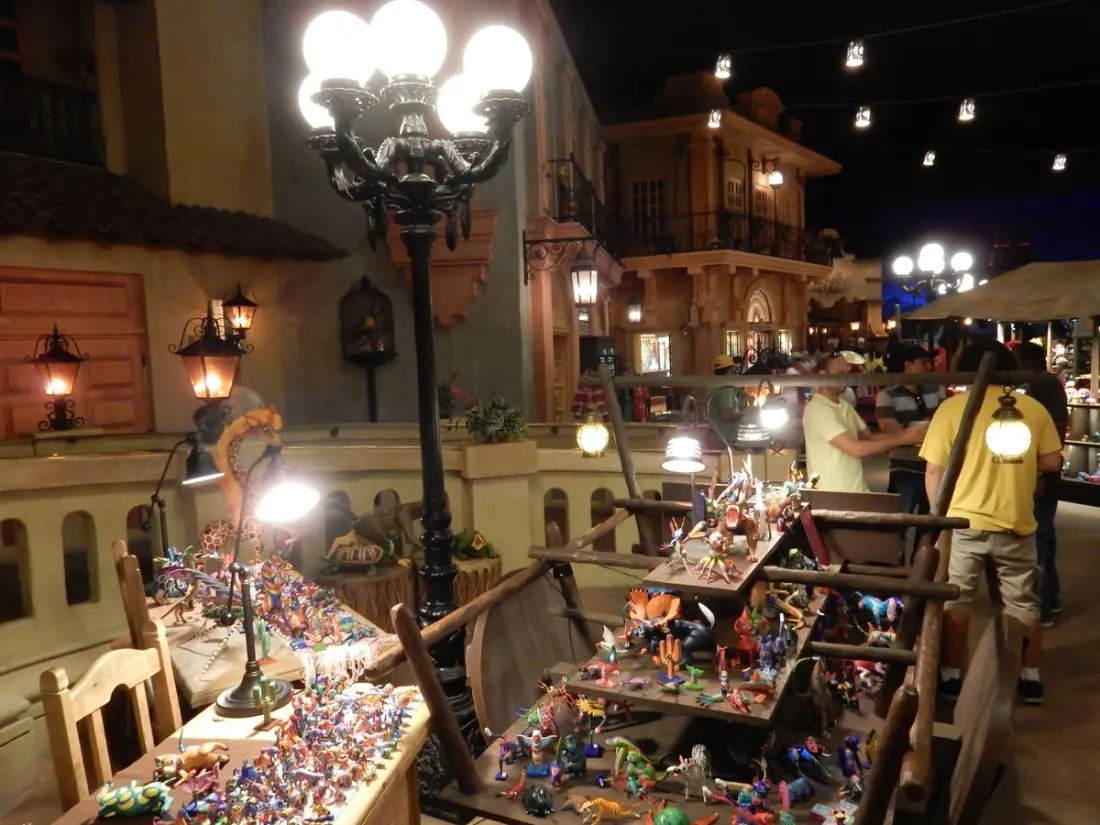
On Monday, August 31, Alba Hernandez Santiago painted her final alebrije at Walt Disney World. For 24 years, she stood in the Mexico pavilion at EPCOT's World Showcase, hand-decorating the whimsical Oaxacan animal carvings she had learned to make in Arrazola, the town most associated with the craft. Alongside her brother Marco and daughter Veronica, she sold the little painted creatures to guests in a corner of the pavilion's faux-zócalo. Disney gave visitors only days' notice of her departure and offered no explanation — though the suspicion is her workspace will become overflow space for a tequila bar queue.
Why does one artisan matter so much? Because EPCOT was built in 1982, at the time the most expensive construction project in the United States, on a specific promise: that Americans who couldn't afford to travel the world could still meet it. The park's opening promotion called it 'a permanent showcase of technology and world culture,' and for decades that meant people as much as products. An egg-painter working in the east German Sorbian style. A candy sculptor crafting animals on request for children. Shopkeepers in Morocco teaching you to write your name in Arabic.
Those connections have been quietly disappearing. Germany lost its resident artisan in 2012, when opening-day cast member Jutta Levasseur retired — her hand-painted eggs still sell for serious money among collectors. Japan's amezaiku master Miyuki Sugimori followed in 2013, reportedly after being barred from handing finished candy art directly to children; nobody replaced her. Morocco's royal family helped build that pavilion in 1984 and sent 21 master craftsmen to do it, but when the sponsorship deal ended in 2020, Disney closed the authentic souk shops and restaurant rather than sustaining them, repurposing the space for character meet-and-greets from a film set thousands of miles from Morocco.
The broader picture is similar. World Showcase was once largely staffed by young people from the countries the pavilions represent; those Cultural Representatives are now sparse, and you're more likely to buy your pint from a local Floridian than a Norwegian. Shopping aisles have shifted toward generic Disney merch — tartan Mickey for Canada, Olaf plushies for Norway, Guinness-branded shirts in the UK pavilion — with alcohol tasting stations added to shops throughout the park. Japan and China still have respectable boutiques, but even those lean mass-produced.
The contrast the author draws is telling: Dolly Parton's Dollywood, announced a year after EPCOT opened, still staffs its park with blacksmiths and candlemakers who bring Appalachian craft to life — and hasn't watered it down. Disney, meanwhile, replaces departing artists with sweatshirt racks.
For travellers, the takeaway is part eulogy, part heads-up. If you're planning an Orlando trip and EPCOT is on the list, go knowing the cultural demos that defined the park are nearly gone — Santiago was the last anchor artisan in a pavilion, so don't build a day around them. What remains is the food and drink scene, which Disney has leaned into heavily. It's still a fun day, especially around the festival seasons with their food booths. But if you remember the EPCOT where you could watch an artist work or chat with someone from Oaxaca, temper expectations: that version of the park has, this week, formally ended.