Argentina has just marked a heavy anniversary: 50 years since the 1976 military coup that brought General Jorge Rafael Videla to power and launched one of the darkest chapters in South American history. Under the junta, an estimated 30,000 people were forcibly disappeared, torture was systematic, and around 500 babies were taken from detained parents, according to the human rights group Grandmothers of Plaza de Mayo.
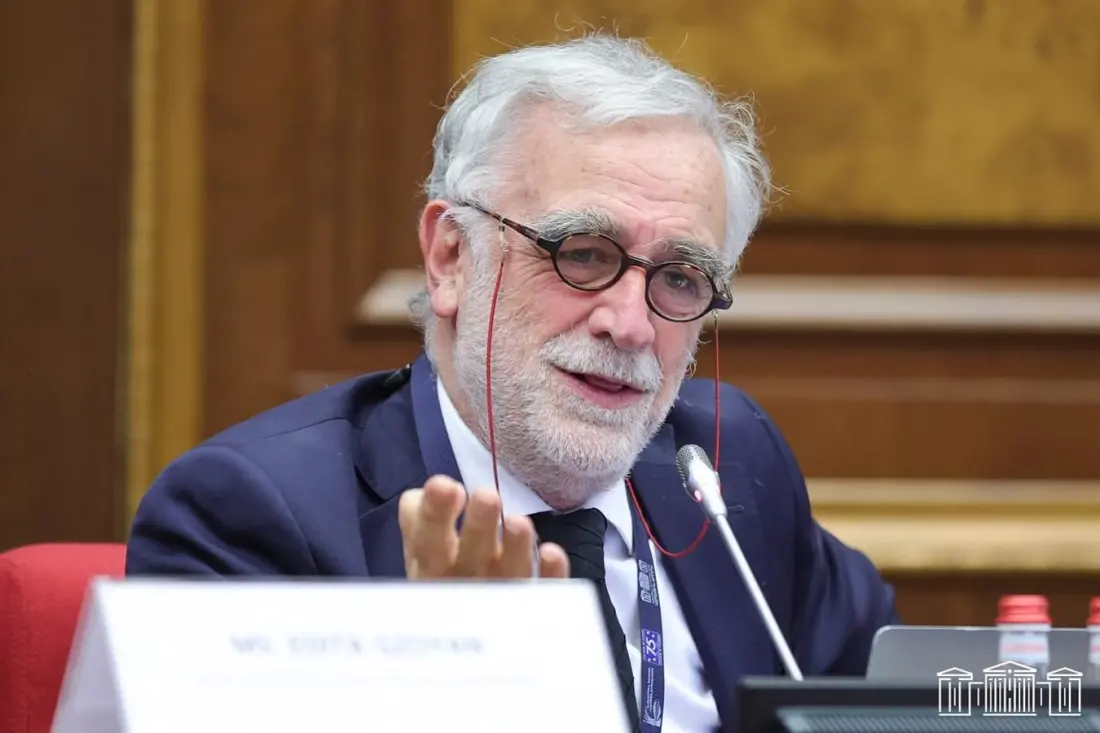
To mark the date, Argentina Reports sat down with Luis Moreno Ocampo, the lawyer who served as deputy prosecutor in the 1985 Trial of the Juntas — often called Argentina's Nuremberg Trial. In that landmark case, the new democratic government put the dictatorship's leaders on trial for crimes against humanity. It became a founding precedent for modern international criminal justice and helped pave the way for the International Criminal Court, where Moreno Ocampo later served as chief prosecutor.
His core argument: Argentina proved that societies can confront atrocities through courts rather than revenge. The junta's leaders received the fair trial their victims never got, and the country processed its trauma without sliding back into violence. Compare that, he says, with the modern approach — treating terrorists and rival states as enemies to be eliminated rather than criminals to be prosecuted. He traces the shift to the post-9/11 war on terror, arguing the wars in Afghanistan and Iraq achieved nothing lasting, and sees the same self-defeating logic in Ukraine, Gaza and Iran.
The international system designed to offer an alternative has struggled. Moreno Ocampo describes the ICC as 'a global Wi-Fi: some countries are connected, others are not' — and the US, Russia and China aren't members. With the UN Security Council paralysed by vetoes, he warns that in an era of nuclear weapons and cyberattacks, settling disputes by war is a method humanity can no longer afford.
For travellers, this isn't just abstract history — it's written into Buenos Aires itself. The ESMA former detention centre, now a museum and UNESCO World Heritage site, the weekly March of the Grandmothers at Plaza de Mayo, and the memorials scattered across the capital all tell this story first-hand. Understanding the 1976–1983 dictatorship and the 1985 trial transforms a visit to Buenos Aires from a city of steakhouses and tango into something far deeper: a rare place where a nation chose justice over revenge and built public memory around it.
Moreno Ocampo's warning doubles as a reason to go while these sites remain vivid and their custodians are still around to tell the story. Few countries anywhere have turned their own darkest decade into such a careful, honest public record — and that, he argues, is precisely the model the world keeps refusing to learn from.
First published by Argentina Reports.