
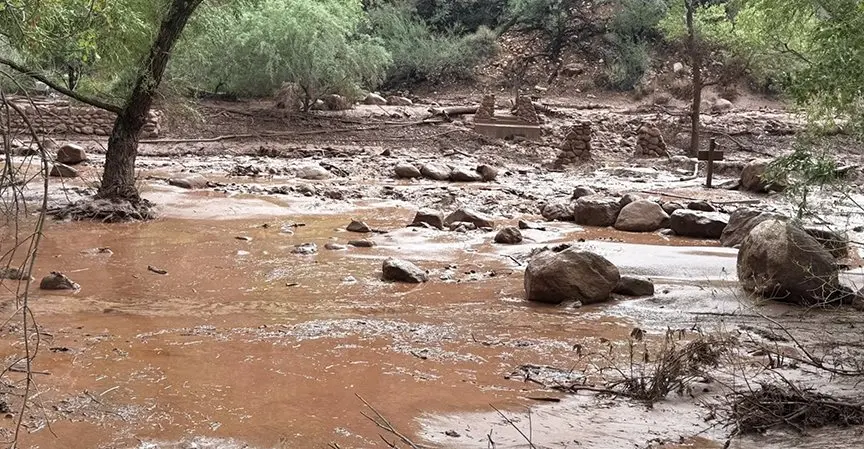
A weekend of violent storms has turned parts of Grand Canyon National Park into a disaster zone. Flash floods on August 29 killed two people, left 15 others missing, and forced the park into sweeping closures and water rationing that will affect anyone planning a trip to the South Rim or the inner canyon.
The flooding hit around 2:30 pm on August 29 in Bright Angel Canyon and at Phantom Ranch, the only lodging below the canyon rim, reachable only on foot or by mule. Bright Angel Campground nearby has 30 individual sites plus group camping. Rangers airlifted 62 people out by helicopter by the next morning; all escaped injury. But the damage was severe — every footbridge in Bright Angel Canyon was hit, and debris and metal structures were swept into the Colorado River, which is now closed to all rafting groups until further notice.
Closed for now: Phantom Ranch, Bright Angel Campground, the Phantom Ranch Canteen and cabins, and the entire North Kaibab Trail from its trailhead down to Phantom Ranch. A 46-year-old man's body was recovered near Crystal Rapids on August 31, with a second victim found later. The National Park Service had put out a public appeal to help locate the 15 missing hikers.
The floods also wrecked the Transcanyon Waterline, which pipes water up from the canyon to the park. That triggered stage 4 water restrictions from August 31: every overnight stay in park accommodation is cancelled — including El Tovar, Bright Angel Lodge, Maswik Lodge, Yavapai Lodge, Phantom Ranch and Trailer Village. Campers will have no water access, spigots across the South Rim are being shut off, and all fires on the South Rim and in the inner canyon are banned.
If you're wondering how a desert can flood this badly: it's exactly the point. The National Park Service notes that arid, sparsely vegetated terrain absorbs very little rain, so runoff tears through narrow canyons fast. Even small storms can turn dry streambeds into torrents within minutes, and flash floods are possible year-round. The National Weather Service had flash flood warnings up for the park and much of northern and central Arizona through the evening of August 31, warning that saturated soils raised the risk through Monday, and urging people to stay out of slot canyons and dry washes.
Why it matters: the Grand Canyon is one of the most visited parks in the US, and these closures cut right through its core experiences — rim lodges, the river, and the classic North Kaibab-to-Phantom Ranch route. If you have a trip booked in the coming days or weeks, check the park's site and your accommodation provider before travelling, keep to marked trails away from washes and slot canyons during storm season, and expect water restrictions even after lodges reopen. Late summer is monsoon season in Arizona, so anyone hiking below the rim should carry extra water, watch the sky, and treat any approaching storm as a reason to climb out immediately.
This article first appeared on GearJunkie via ExplorersWeb.