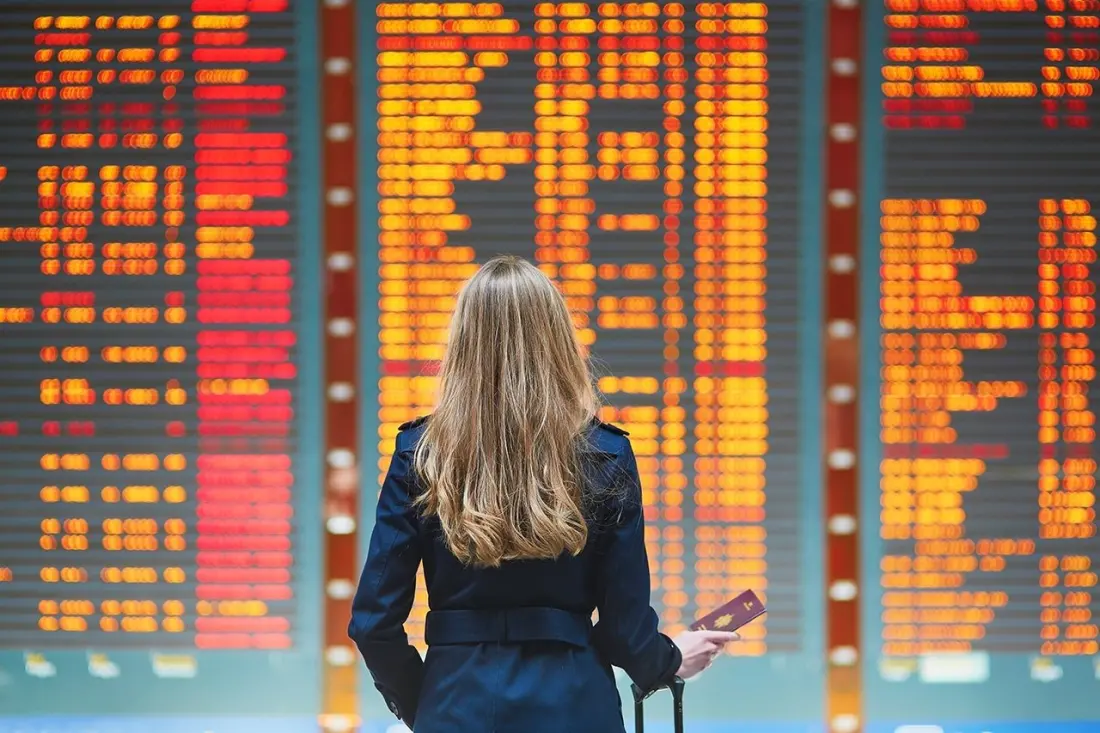
Roughly 2% of US flights have been scrapped since January, the worst pace since 2022, and about one in four summer departures ran late. Add in an air traffic control outage that snarled Northeast hubs and an unusually early Nor'easter threatening the mid-Atlantic and New England, and it's a good moment to brush up on disruption strategy.
Track your plane before the airline tells you anything. FlightAware's MiseryMap shows where delays are piling up nationwide, and the Flighty app's "Where's My Plane?" feature starts tracking your inbound aircraft 25 hours before departure. Your airline's app often beats the airport departure boards for accuracy — and if your plane is sitting in a snowstorm elsewhere, expect your flight to slip no matter how clear the sky is above you.
If your flight shows delayed, still aim to be at the airport at the original time. Statuses change, and flights sometimes leave earlier than the revised time, leaving latecomers behind. Ground stops can lift with little warning, and airlines then push everything out fast.
Know what you're owed. Under current DOT rules, you can get an automatic refund — cash, not a voucher — if you cancel because your domestic flight slips three or more hours, or an international one by six or more. Refunds are due within seven days for card purchases and 20 for cash. For "controllable" disruptions (weather doesn't count), flightrights.gov lists exactly what each airline promises: hotel nights, meals, ground transport, rebooking on partners. If the airline doesn't deliver, you can complain to the DOT.
When weather looms, act early. Watch the forecast a few days out, and if a storm is coming, ask for an earlier flight or travel the night before. Airlines issue travel advisories ahead of severe weather that let even basic economy passengers rebook fee-free, sometimes several days in either direction. No advisory? You may have to cover fare differences yourself.
If your flight dies mid-trip, skip the queue. The airline app is usually the fastest rebooking tool — it may even route you via a different nearby city. If automated options are red-eyes or days away, find an actual ticket agent (check the uniform), try an international call-center number for shorter holds, or message the airline on X. Lounge members can often get rebooking help at United Club or Delta Sky Club desks with shorter lines. One example that worked: a TPG editor missed a connection, reached American Airlines via X and got rebooked without facing an airport scrum.
Sometimes the only way home within a day is booking a new ticket on another carrier yourself. You likely won't get reimbursed for the new fare — credit card trip delay coverage rarely covers it — but you can usually refund the original ticket, which softens the blow. Finally, if you're facing a long overnight wait, check airport hotels before prices spike with everyone else's cancelled plans.
Anyone flying in the next few months — especially through East Coast hubs or on basic economy fares — should save flightrights.gov and download their airline's app before departure day.