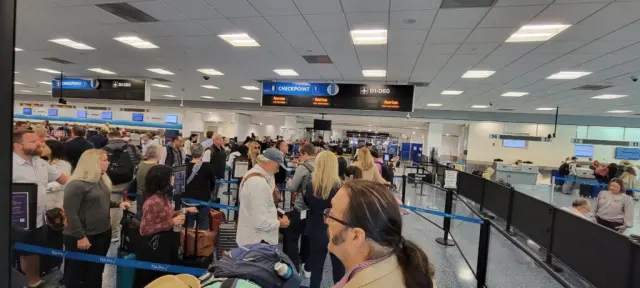
Fresh air traffic control problems at Nats' Prestwick centre have again left UK passengers facing delays and cancellations, and the obvious question: who pays? The answer depends heavily on which airline you're flying and where you took off from, so it's worth knowing the rules before you queue at the service desk.
**The core rules.** Flights departing UK or EU/EEA airports — plus any flight on a British or European airline, wherever it starts — fall under Europe's passenger rights regime. If your flight is cancelled with less than two weeks' notice and no close alternative is offered, you're presumptively owed £220–£520 in cash, on top of a rerouted flight. Delays hitting three hours or more at your final destination trigger the same payouts. The amounts scale with distance: £220 for short hops like London–Barcelona, £350 for mid-haul such as Manchester–Lisbon, and £520 for long routes like Birmingham–Dubai (halved if a long-haul arrival is three to four hours late).
**The get-out clause.** Airlines escape paying by proving "extraordinary circumstances" — weather, security risks, strikes and the like. Crucially, courts have ruled that technical faults do not count: mechanical failures are considered part of an airline's normal business, so you're owed compensation. But the CAA expects the recent Nats glitch to fall under extraordinary circumstances, meaning tens of thousands affected by it likely won't get a payout. Crew sickness remains a legal grey area; unofficial walkouts aren't covered, but the airline's own official strikes are.
**Care, whatever the cause.** Even when no cash is due, airlines must look after you. Refreshments kick in after two hours on short flights, three on mid-haul and four on long ones. Overnight delays oblige the carrier to provide a hotel — though many will tell you to book your own and reclaim, which technically falls short of the rules. If a delay hits five hours and you give up, you're entitled to a full refund within a week. Missed connections count too: if you arrive at your final ticketed destination three-plus hours late due to the airline, compensation still applies, even when the delay was on the first leg.
**Making the claim.** Every major airline has an online claims form (BA, easyJet, Ryanair and Wizz Air all publish them). Compensation must be paid in cash by bank transfer unless you agree in writing to vouchers — a voucher deal can sometimes be worth taking if you'll fly the same airline again, but most carriers offer no uplift, so hold out for money. If a valid claim is refused, a Letter Before Action threatening Money Claim Online works for UK flights (£50 fee, refunded if you win). Since Brexit, UK travellers can't use the EU small claims process for flights leaving EU airports, so a claims firm like AirHelp may be the pragmatic route — at the cost of 35–50% of your payout. Travel insurance generally won't help unless you're on a non-European airline flying from outside Europe, where statutory rights don't apply at all.
For anyone flying this summer, the takeaway is simple: know your route's protections before you fly, document everything, and don't accept the first "extraordinary circumstances" answer without a push.
Reporting by The Independent Travel.