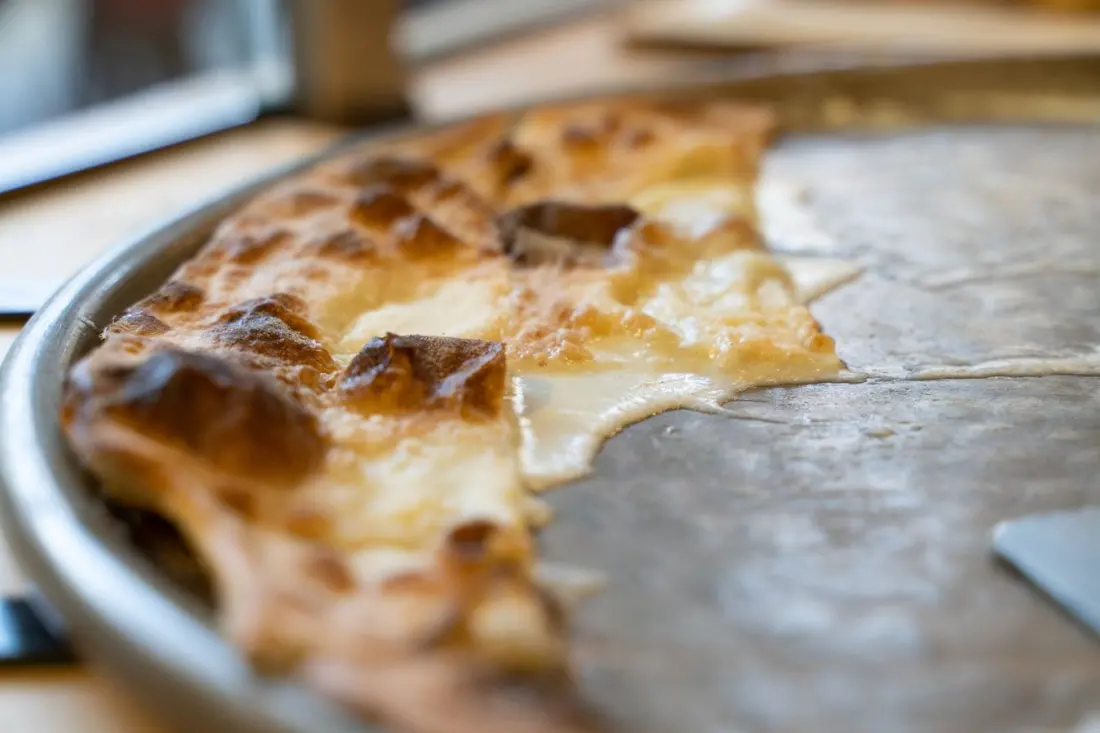
Forget the soft, olive-oil dimpled focaccia you know. In the small seaside town of Recco, on Italy's Ligurian coast, the local version is something else entirely: two sheets of yeast-free dough stretched paper-thin, layered with creamy crescenza or stracchino cheese, and blasted in a fierce oven until the top turns golden and crisp. Bite in and the cheese squeaks. Locals eat it all day, every day.
This isn't just a regional quirk. Focaccia di Recco holds Protected Geographical Indication status from the EU, one of only four Ligurian foods with the designation (alongside anchovies, basil and olive oil). Authentic versions can legally be made only in Recco and the neighbouring towns of Camogli, Sori and Avegno. Anywhere else, it must be labelled focaccia col formaggio. The Consorzio della Focaccia di Recco, which counts 12 members across 19 bakeries and restaurants, has spent two decades defending the recipe and runs an annual Recco Focaccia Festival.
The bread's backstory is genuinely old. The consortium traces a version of it to 1189, when it allegedly fed medieval knights before the Third Crusade. Its modern form emerged around the 16th century, when villagers fleeing Saracen pirate raids cooked flour, oil and cheese over slate in the mountains. By the late 1800s it was a fixture at local bakeries, sold especially around All Souls' Day on 2 November.
A few names matter if you're going. Panificio Moltedo in Recco has been making it for 150 years and was the first bakery to sell it; it bakes its focaccia directly on the oven deck like a pizza for extra crunch. Manuelina, named for a tavern keeper who popularised serving it daily in the late 19th century, opened its focacceria in 1983. In Camogli, Revello Camogli has been baking it since 1964. Chef Fabrizio Passano at Recco's Alfredo Ristorante stretches his dough in the air before it hits the oven. One writer's honest warning: molten cheese straight from the oven can blister the roof of your mouth. It's still worth it.
The makers insist home reproduction is possible: strong Italian Type 0 flour, no yeast, low-fat crescenza so the filling stays creamy rather than runny, dough stretched thin enough to see through, and heat mostly from above. A pizza oven at around 570°F is ideal; a home oven at max heat works but bakes longer and dries the dough slightly.
For travellers, this is a perfect excuse to string together a slow few days on the Riviera di Levante: Recco and Camogli sit between Genoa and the Portofino peninsula, and the ideal version, per Revello, is eaten on the beach with your hands, sea in front of you. If the Italian Riviera isn't on the cards, a handful of US restaurants serve their own takes, including Chi Spacca in Los Angeles, Rosie Cannonball in Houston and Keste in New York.
Story via Smithsonian Travel.