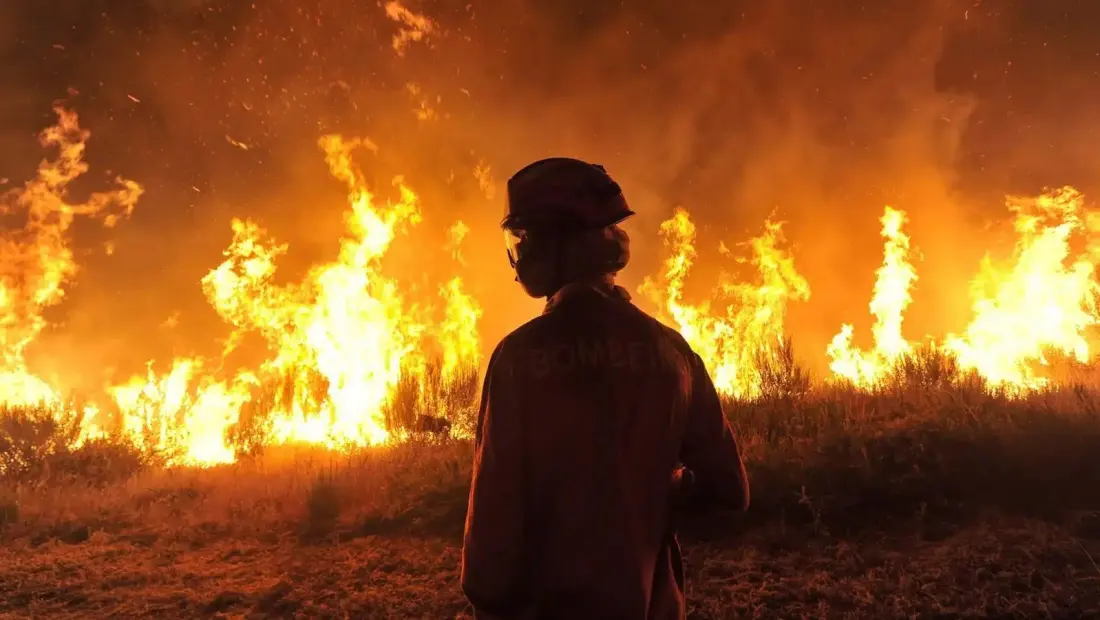
A serious wildfire that started in Arganil, in Portugal's Coimbra district, spread quickly across four municipalities on Monday evening, with flames reaching Vila Nova de Poiares, Lousã, Arganil and Góis. By nightfall around 760 firefighters and more than 240 vehicles were battling the blaze, which civil protection described as still advancing fast.
What made this fire unusually dangerous was the way it began: three separate fires ignited close together in the early afternoon, then merged. The convection created when they combined released far more energy than a single fire would have, according to Carlos Tavares, commander of the Coimbra Region Sub-regional Civil Protection Command. Two fires roughly five kilometres apart simply joined up as wind shifted and strengthened.
At least six firefighters were injured, including one commander hit by a police vehicle during the operation. Villages under direct threat included Chapinheira, Arroças and Vila Nova de Ceira, on the boundary between Arganil and Góis. Authorities said protecting residents had so far succeeded, but the terrain worked against them: the area has not burned in years, is thick with eucalyptus, pine and scrub, and lacks forest management — conditions the commander called "arduous" combined with the heat and wind.
Aerial firefighting had to stop at nightfall, with ground crews reinforced from 9pm in an effort to reduce intensity and bring the fire under control overnight.
Why this matters to travellers: central Portugal's Arganil, Lousã and Góis area — part of the schist villages region popular for hiking and rural escapes — is prone to summer wildfires, and conditions can change in hours. If you're travelling in the Coimbra district during fire season, check the Portuguese civil protection alerts (Proteção Civil) and local news daily, follow any evacuation instructions immediately, and expect road closures on rural routes. Smoke can affect air quality well beyond the fire perimeter. The wider lesson from this fire is that multiple ignitions in a single afternoon can overwhelm resources fast, so a flexible itinerary is wise in July and August.