A Cyprus Mail travel writer recently packed six days into China, flying from Larnaca via Qatar to Beijing Daxing, and the trip turned out to be as much about the people as the sights. Within minutes of arrival came two surprises: smiling locals and rows of brightly coloured rental bikes you can hire for around 20 cents an hour — an easy way to move through a city of 22 million, where traffic, oddly, flows without chaos.
The classic sights deliver too. The Forbidden City, built between 1406 and 1420 and home to 24 emperors until 1912, covers over 720,000 square metres — the world's largest preserved imperial palace compound — yet entry queues move with surprising efficiency. Out at the Great Wall, the writer had the experience many Western visitors report: being politely asked for photos by curious Chinese tourists, including a nervous five-year-old who asked in perfect English.
From Beijing, a two-hour flight leads to Xi'an, home of the Terracotta Army — which, fun fact for Cypriot readers, has a genuine island connection. Xi'an is Paphos' sister city, and Cyprus has its own miniature terracotta army: some 2,000 clay figures, including chariots and sphinxes, found at Ayia Irini in 1929 by Swedish archaeologists, with around 500 now in the Cyprus Museum in Nicosia. In Xi'an itself, roughly 8,000 restored soldiers from around 200BC stand on display, each with a unique face, their original red and blue paint long faded. Restoration continues on site.
Xi'an, a city of 13 million, blends ancient and ultramodern — its inland 'dry port' runs rail freight as far as Europe, Kazakhstan and Azerbaijan. Culturally, the standout is The Song of Everlasting Sorrow, an outdoor two-hour drama staged on water at the foot of a mountain, complete with fire and pyrotechnics. It retells the Tang Dynasty romance of Emperor Xuanzong and his concubine Yang Guifei, a story one guide called the Chinese Romeo and Juliet.
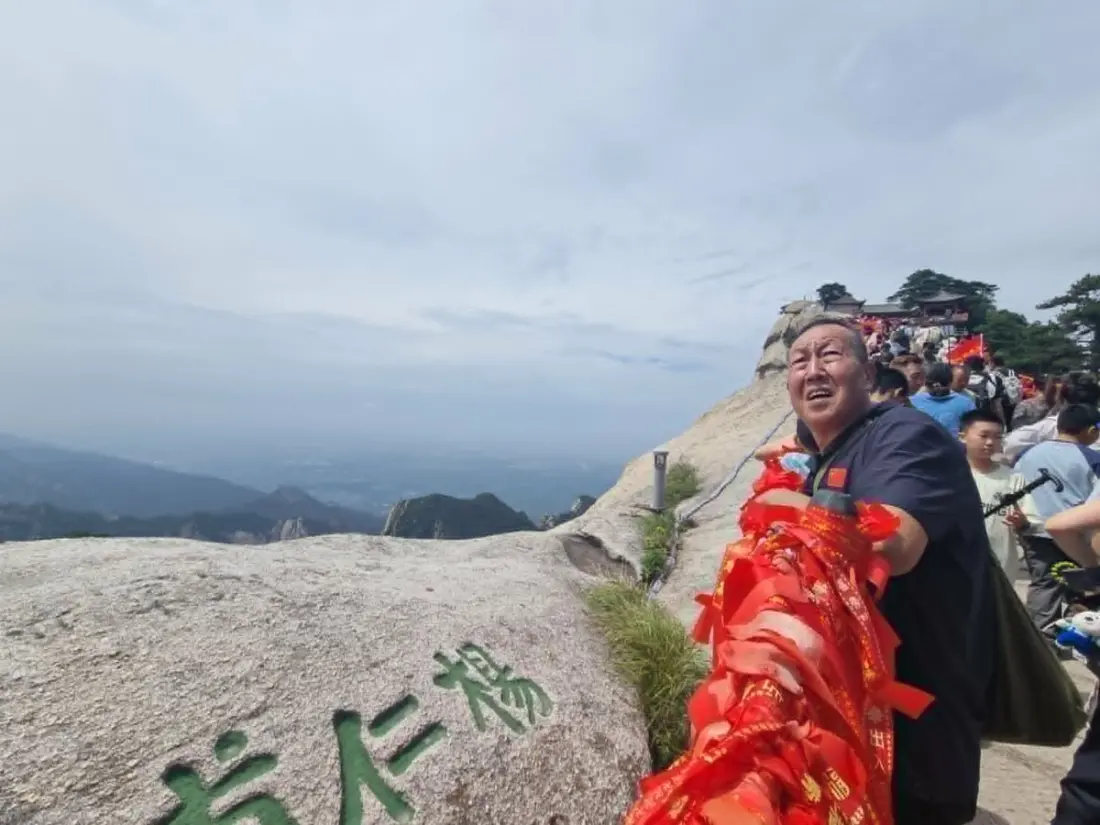
The high-speed rail is worth the ticket alone: 60 kilometres to nearby Weinan in 15 minutes. From there, visitors can tackle Mount Hua — the highest of China's Five Sacred Mountains at 2,150m, a summit hike of around 20 hours, or a 20-minute cable car — or take it easy at a modern winery whose vineyards are so vast staff use a golf cart to get around. Its wine stays local for now, despite a European export licence.
What stuck most from the whirlwind week wasn't the skylines or palaces. It was the small stuff: rotating lazy Susans turning every meal into a shared event, two pairs of chopsticks with different jobs, locals sipping hot water even in summer heat — and above all, an unusual feeling of safety, never once needing to guard your belongings. For travellers weighing up China, that everyday ease may be the best reason to go.