root
paragraph
text
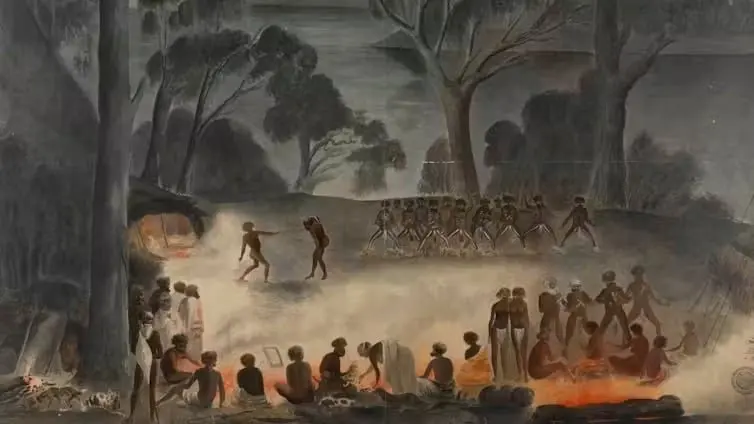
For nearly a century, the textbook figure for Australia's pre-colonial Indigenous population was about 300,000 people. New research says that number was off by a factor of roughly seven. Using three independent methods, a team of Australian researchers has calculated that around 2.22 million Indigenous people were living on the continent in 1788 — with a plausible range between one and four million. The findings, published in Nature Human Behaviour and reported by Australian Geographic, dramatically change the scale of what happened after British colonisation.
paragraph
text
The old 1930 estimate came from anthropologist Alfred Registon Radcliffe-Brown, who relied on colonial-era observations — a serious flaw, since no comprehensive census of Indigenous Australians existed until 1971. Colonial records counted only fragments of the population: people at ration depots, on missions, or on pastoral stations, and often excluded those of mixed ancestry. By the time anyone was counting systematically, disease and dispossession had already reshaped everything. A smallpox epidemic hit the Sydney region just 15 months after the First Fleet arrived, and modelling suggests it alone killed up to 220,000 people in south-eastern Australia.
paragraph
text
To sidestep the biased colonial data, the researchers triangulated three approaches: over 5,000 archaeological radiocarbon dates, genetic evidence on ancestral population size, and environmental modelling of how many people Australia's landscapes could support without agriculture. All three pointed to similar answers. The team then modelled the aftermath: comparing the 2.22 million baseline with the roughly 180,000 people recorded in 1861 implies around 28,200 excess deaths per year over 73 years — about 2.06 million in total, leaving just 7% of the original population.
paragraph
text
For travellers, the finding adds real depth to any trip through the country. Populations of two or three million people were actively managing Country — practising cultural burning, tending resources, maintaining vast knowledge networks — for thousands of years. That's why so much of the Australian bush that visitors assume is untouched wilderness is, in fact, a long-managed landscape. Growing numbers of Indigenous-led tours, ranger programs and cultural experiences across the continent offer a way to see that history first-hand, and the researchers argue supporting these practices is key to restoring land management built over millennia. It's also a story of survival: 812,728 people identified as Aboriginal or Torres Strait Islander in the 2021 census, and cultures, languages and connections to Country endure despite everything. Understanding the true scale of the past makes any encounter with living Indigenous culture in Australia — from rock art in Arnhem Land to a smoking ceremony in Sydney — far more meaningful. Story via Australian Geographic.