Taiwan's youngest airline is making a very deliberate bet on premium long-haul travel. STARLUX, which only flew its first revenue flights in 2020, has taken delivery of the first of 18 Airbus A350-1000s — the first carrier on the island to operate the type — and its cabin layout says a lot about who it's going after.
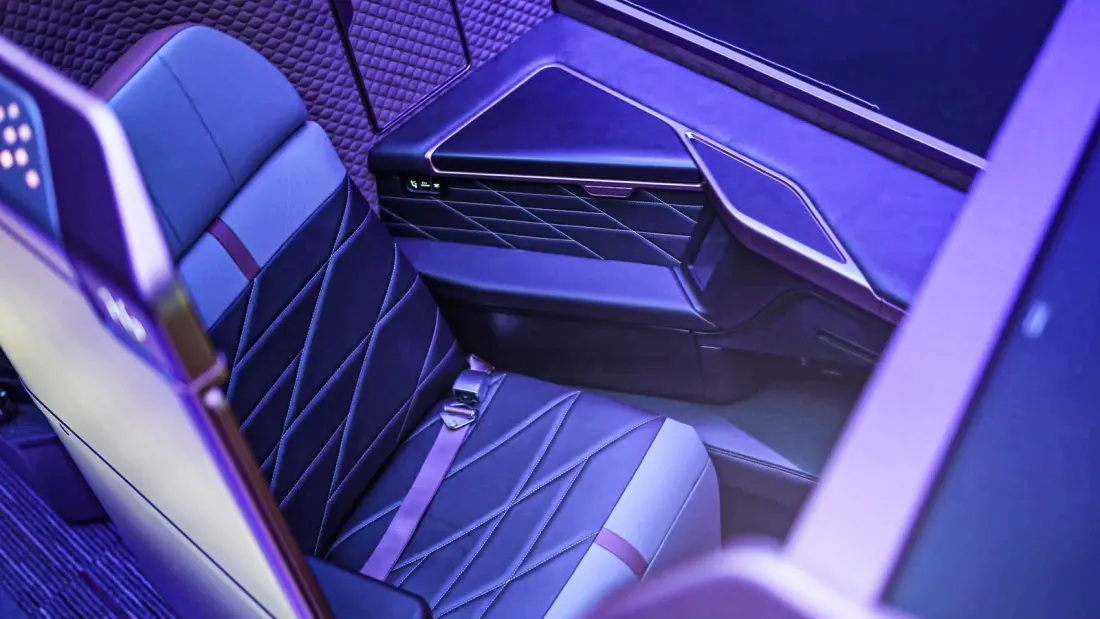
The stretched A350-1000s seat 350 passengers: four first-class suites, 40 business seats, 36 in premium economy and 270 in economy. That means roughly 23% of the cabin is premium, one of the highest ratios among Asian airlines. Compared with STARLUX's smaller A350-900s (306 seats, 26 in business), the new jet adds 54% more business-class seats plus 30 extra economy seats. The four first-class suites are less about volume and more about branding — at a time when most airlines are cutting or dropping first class entirely, STARLUX keeps it as a luxury flagship product. It's also the only Taiwanese airline still selling first-class fares.
The target is clear: EVA Air, the incumbent in Taiwan's premium long-haul market. EVA's Boeing 777-300ERs carry 38-39 Royal Laurel business seats, and its A350-1000s aren't due until 2027. China Airlines is also in the race — its A350-900s carry 28-40 business seats, with a cabin refresh of 15 aircraft planned for 2027-2028 — but STARLUX positions itself as the boutique luxury option, with one of the world's youngest fleets (36 aircraft averaging just 3.2 years). By 2033 it plans to grow to 76 aircraft, closing in on EVA (89) and China Airlines (85).
The A350-1000's advertised 8,400 nautical mile range puts the US East Coast — New York, Boston — within nonstop reach of Taipei. So far STARLUX hasn't announced any East Coast routes, but its current North American network covers Los Angeles, San Francisco, Seattle, Ontario (California) and a new Phoenix service. In Europe, its first A350-1000 route to Prague launched in August 2026, with Barcelona and Zurich slated for 2027, plus Sydney and Auckland. New York looks like the obvious next move.
For travellers, this is genuinely good news. More premium-heavy aircraft on transpacific and Europe routes means more award space competition, sharper business-class fares and a fresh alternative to the two established Taiwanese carriers. If you've been eyeing a lie-flat seat to Asia or Europe via Taipei, the timing for 2027 onward looks promising.