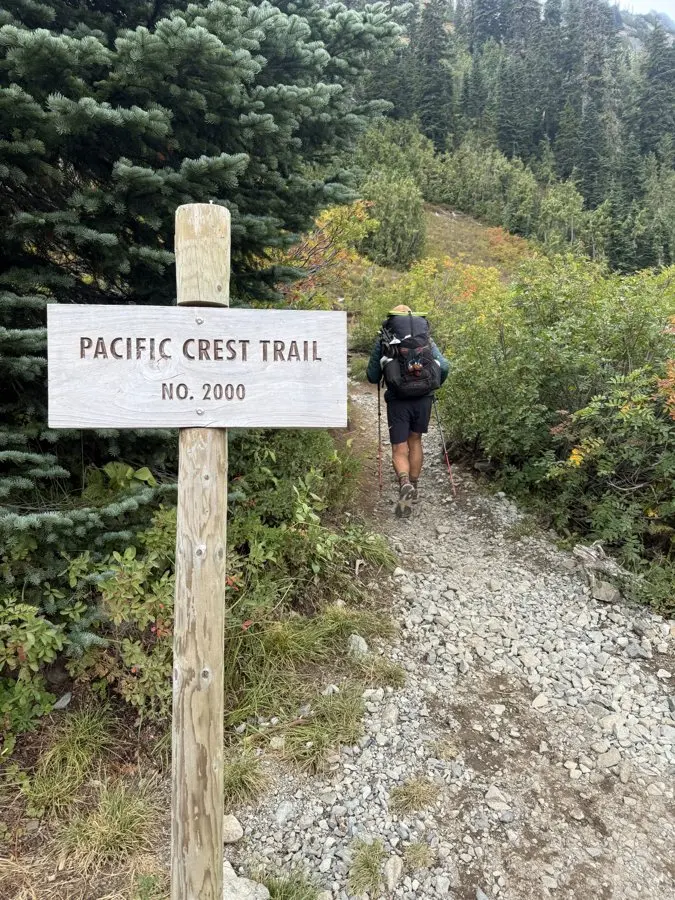
Somewhere on the Pacific Crest Trail, just short of Mt Rainier National Park, a thru-hiker woke up to a world with no view at all. The coldest night of the trip so far — every warm layer on and still shivering — gave way to fog so dense that the small lake beside camp simply vanished, the white cloud on its surface turning the whole scene into what the hiker described as one seamless waterfall of fog.
The plan for the day was simple: cross into the edges of Mt Rainier National Park and finally get those postcard views of the mountain itself. Nature had other ideas. Fog filled the valleys from morning to evening, and the famous volcano stayed hidden the entire time. The one reprieve came after lunch, when the clouds briefly parted over a meadow and offered ten precious minutes of sunshine — enough of a morale boost to power through the rest of a damp, cold afternoon.
Camp that night was a lesson in flexibility. A clifftop site meant for a single tent somehow squeezed in three, shared with a hiking partner known on trail as Drom and another walker. Cozy is one word for it.
Beyond the weather, there's a bigger story unfolding. Day hikers out on the trail kept asking the same question: are you walking all the way to Canada? The honest answer is no — not this time. Trail closures have forced the hiker to accept that this section will end short of the border, with a return trip needed to finish the PCT properly. Saying it out loud to strangers, outside the supportive bubble of the long-distance hiking community, made the disappointment feel more real. But the trail community showed up anyway: one woman and her two kids cheered the hiker onward, insisting the finish is possible. With only a few days of walking left in this section, that encouragement counts for a lot.
For travellers, this is a good reminder of what the Pacific Crest Trail actually feels like day to day — not just the highlight-reel mountain vistas, but cold nights, dense fog, improvised campsites and plans that change on the fly. Mt Rainier's surrounding wilderness is spectacular, but the mountain famously hides behind cloud, so anyone hiking or even day-walking these trails should pack warm layers year-round and treat any promised view as a bonus, not a guarantee.
If you're inspired but not ready for a months-long thru-hike, the sections around Mt Rainier work well as shorter trips, with the park's day-hike network offering a taste of the same terrain. And if you meet a long-distance hiker on the way — the ones asking about Canada — a bit of encouragement goes further than you'd think.