
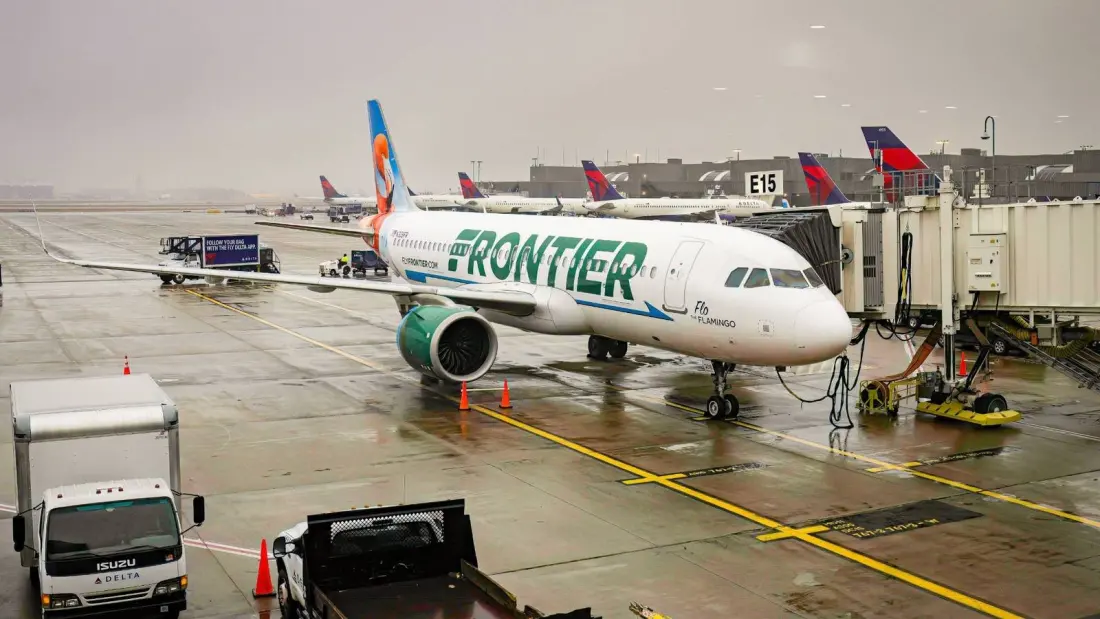
A Frontier Airlines flight from Detroit to Atlanta ended with an unplanned night in Tennessee. Flight 3409 was diverted to McGhee Tyson Airport in Knoxville on Friday after storms made Hartsfield-Jackson, the busiest airport in the US, temporarily unusable. The plane landed safely, but the crew then hit its legally permitted duty-time limit before the flight could continue, forcing the airline to cancel the leg outright and strand passengers in a city Frontier barely serves.
The airline's response: $150 vouchers for ground transportation to passengers' final destinations, hotel vouchers on request, and a $100 Frontier travel voucher per passenger as a goodwill gesture. A spokesperson confirmed the sequence of events — weather diversion first, cancellation due to legal crew-time constraints second.
Why couldn't the pilots just finish the job? US flight and duty-time rules exist to prevent fatigued crews from operating, and airlines cannot override them. Once the clock runs out mid-trip, a flight needs a fresh crew — something a low-cost carrier like Frontier doesn't keep sitting around at an airport where it has no operations. Knoxville is an especially awkward place for this to happen: Frontier announced in July that it was temporarily suspending scheduled service there, with its last Knoxville-Denver departure planned for August 17. With no local staff, spare aircraft, or regular departures to lean on, rebooking and recovery get far harder.
It's also not a one-off pattern for this route. A 2015 Frontier flight from Denver to Atlanta was diverted to Knoxville for weather in almost identical fashion, and that crew ran out of duty time too. A 2016 disruption in Cleveland left travellers in a similar bind. The useful takeaway is that a diversion is not the end of a disruption — it can be the start of a longer ordeal. Even after the weather clears, refuelling, ground handling, new clearances and crew rest rules all have to line up before anyone flies again.
If you fly budget carriers in the US, this story is worth a moment of your attention. Weather cancellations are usually outside an airline's control, but how quickly you get reaccommodated depends heavily on whether the airline has infrastructure at the airport you land at. When booking, it pays to know your rights: airlines aren't federally required to cover hotels for weather-related issues, so a carrier offering hotel and ground transport vouchers — as Frontier did here — is making a goodwill choice, not meeting a legal obligation. Travel insurance or a credit card with trip-delay protection can fill the gap when an airline doesn't.
Practical tip: keep essentials (medications, chargers, a change of clothes) in your carry-on, since diversions can leave you overnight with only what's at your seat. And if your flight diverts somewhere off the airline's route map, expect the recovery to take longer than at a major hub — and plan your ground options accordingly.
Simple Flying