
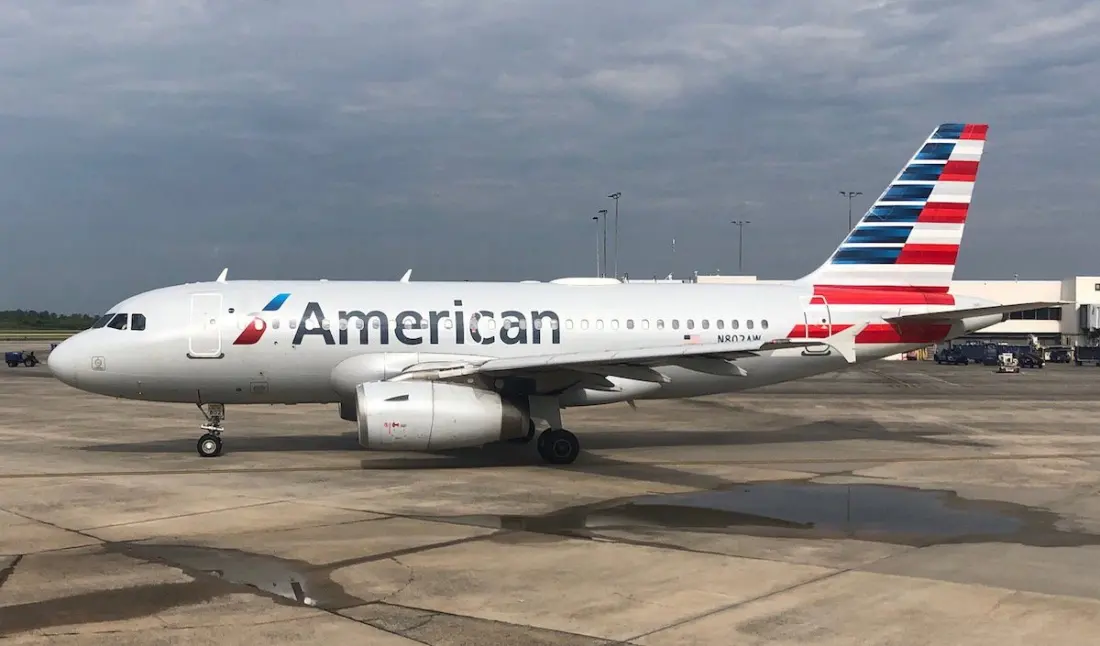
Hartsfield-Jackson Atlanta is the busiest airport in the world, so when a pilot and a tower controller clash on frequency, plenty of people hear it. That's what happened on a Sunday morning flight AA1428, an American Airlines Airbus A319 bound for Philadelphia, and the exchange ended with the pilots being handed a phone number for a possible pilot deviation — a formal complaint that can follow a crew for a while.
The setup was routine. The American jet was told to line up and wait on runway 27R just after a Delta Boeing 757 ahead of it began its takeoff roll. Seconds later, the tower cleared the American crew for takeoff. The pilot then asked for a bit more spacing behind the 757, citing wake turbulence — the churning air a heavy aircraft leaves in its path, which can genuinely be uncomfortable or even hazardous for a lighter plane following too closely.
Rather than hold the American jet for an extra half-minute, the controller pulled the takeoff clearance entirely, made the crew vacate the runway, and sent a Frontier aircraft out instead. The controller then reminded the pilots to flag any non-standard separation needs before entering the runway. A pilot pushed back, pointing out that flight decks don't carry ATC separation manuals and that calm winds behind a 757's rotation didn't look like proper wake turbulence spacing to him. Told there was "no wake turbulence separation," the pilot replied with a pointed "let us fly the airplane, you guys can do your job." The controller responded with the deviation phone number.
The strangest moment came courtesy of the Frontier crew, who piped up on frequency to compliment the controller's handling. The controller accepted graciously, noting 26 years on the job and that he didn't "need some pilot telling me how to do my job."
Who was right? Honestly, both sides have a case. Pilots are ultimately responsible for their aircraft, and asking for a bit more room behind a heavy is reasonable and takes seconds. Controllers, meanwhile, manage an enormous volume of traffic and can't have every crew second-guessing spacing on an open frequency. The real failure here was escalation: holding the American plane an extra 20-30 seconds would have cost almost nothing, and labelling the exchange a possible pilot deviation — rather than an informal chat after landing — struck many observers as heavy-handed.
Why should a traveller care? Mostly reassurance. This exchange, awkward as it was, shows the safety system working: crews speak up, spacing gets sorted, and everyone lands. The practical impact for passengers was a couple of minutes lost at one of the most efficient airports on earth. For aviation enthusiasts, though, the full radio transcripts of incidents like this are reliably entertaining reading.
Story via One Mile at a Time.