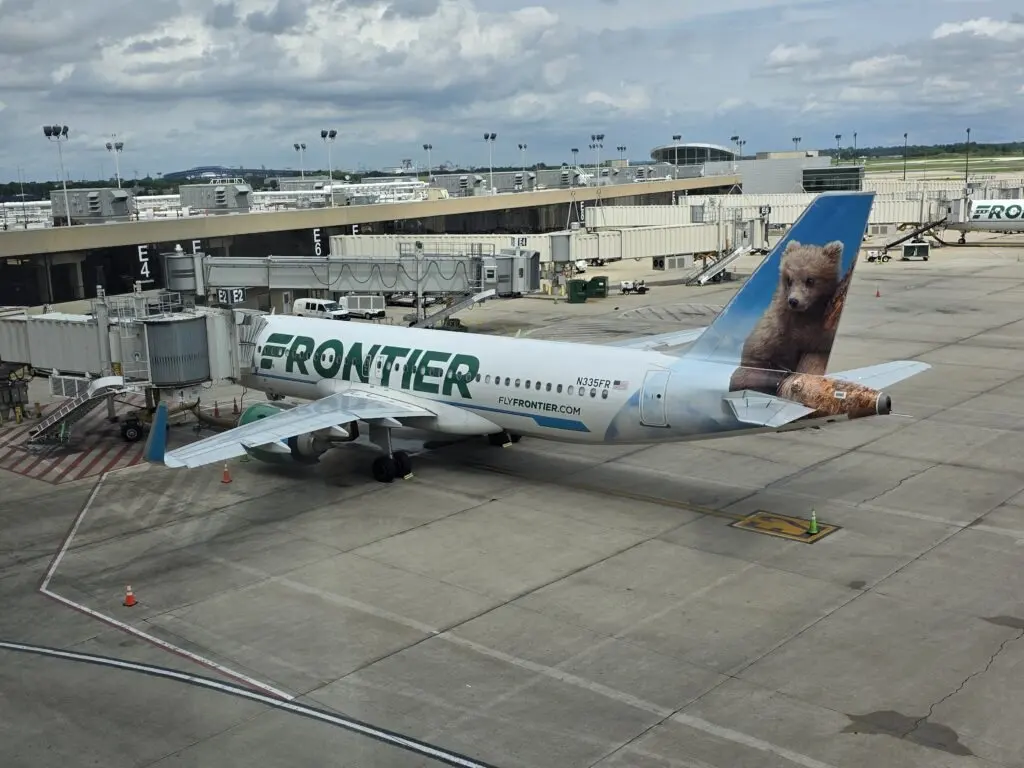
Frontier's CEO Jimmy Dempsey has a theory about why the ultra-low-cost model is struggling: the big US airlines, he argues, use billions in credit card revenue to undercut him on basic fares. Speaking on the Airlines Confidential podcast with Scott McCartney, he pointed to carriers like Delta, whose American Express partnership brought in $4.1 billion back in 2019 and hit $8.2 billion in 2025. The problem with that story, as travel analysts have been quick to point out, is timing — card economics weren't new when Frontier swung from profit to loss after the pandemic.
The more convincing explanation is simpler: passengers started wanting more, and legacy carriers had something to sell them. Loyalty programmes and premium cabins aren't a subsidy bolted onto flying — they're the same business. A route that looks weak on ticket sales can still make money by winning cardholders and their everyday spending. And selling miles quietly through award seats lets airlines fill empty planes without slashing the cash fare for everyone.
Basic economy itself is nothing new. American Airlines was restricting cheap fares with advance-purchase and Saturday-night-stay rules back in 1977 and 1985, designed to separate leisure travellers from business travellers on the same flight. Low-cost carriers like Frontier broke that trick by selling cheap one-ways with no strings — so the majors reinvented the fare fence as a product difference: less legroom, no flexibility, no seat choice, unless you pay.
Which brings us to Frontier's own U-turn. The airline is adding UpFront Plus (a blocked middle seat with extra legroom, reportedly doubling revenue per square foot), a first class cabin, and Starlink wifi. Former CEO Barry Biffle admitted as much when he noted that affluent leisure travellers want a better product. But the upgrade is moving slowly — first class slipped past its launch date, wifi doesn't arrive until next year, and the 'first class' food and drink will still cost extra, because galleys lack ovens. There are no lie-flat seats, no global award network, nothing to truly match United or Delta.
Meanwhile, Frontier just made its own loyalty programme less appealing: regular members now earn 1 mile per dollar on base fares instead of 10, and elite upgrades from 2027 require buying ancillary bundles. For an airline whose chief complaint is that rivals' credit cards are too attractive, that's a curious move.
For travellers, the practical takeaway: the seat-only race to the bottom is ending, at least at Frontier. If you fly budget carriers, expect to pay more for anything approaching comfort — and expect the gap between a $49 basic fare and a legacy carrier's equivalent to matter less when the majors match the price. When delays hit, rebooking and app quality still favour the big networks, which is part of why many people will pay slightly more for them.
Frontier isn't wrong that low fares still matter. It's wrong about why it's losing: at the same price, plenty of flyers would simply rather be somewhere else.
Story via View from the Wing