
Taormina and Palermo get the crowds, but some of Sicily's most striking places sit hours away from them. Think of a town buried under a giant white concrete artwork, thousands of tombs cut into canyon walls, and hiking trails that get redrawn every time Europe's most active volcano erupts.
Start with the Belice Valley in the west, where the 1968 earthquake flattened entire towns and some were simply left as they fell. Poggioreale Vecchia is the most haunting: streets still follow their original grid, with collapsed churches and broken balconies over cracked stone roads, and guided visits usually start near the old municipal building on Piazza Elimo. Nearby, the original Gibellina lies under the Cretto di Burri, Alberto Burri's vast land art piece where white concrete paths trace the outlines of the vanished streets. On a hot day the reflected heat makes walking it an experience in itself.
In the island's centre, Enna perches high above the countryside with staircases climbing to Castello di Lombardia, one of Italy's largest medieval fortresses. On clear days you can spot Mount Etna from the Rocca di Cerere. Further south, Piazza Armerina is known for the Roman mosaics at Villa Romana del Casale, but the older streets behind Piazza Garibaldi, lined with faded aristocratic buildings, get far fewer footsteps. Public transport in this region is patchy, so a rental car or a small group tour is the practical way to reach sites like the ongoing excavations at Morgantina near Aidone.
East of Syracuse, Pantalica hides in a limestone canyon between Syracuse and Sortino. Thousands of prehistoric tombs, some over 3,000 years old, are carved into the cliff walls above the Anapo and Calcinara rivers. The trail from Sortino near Via Pantalica drops steeply to river crossings, and in summer locals swim in the pools beneath old railway bridges; part of the abandoned tunnel is still walkable, though it turns slippery after rain.
For volcano country, most visitors stop at Rifugio Sapienza, but the northern Alcantara side feels like a different mountain. Roads near Linguaglossa pass black stone walls and vineyards planted in hardened lava, while trails from Piano Provenzana run through chestnut and pine forest before opening onto ash fields. Routes near Monte Nero degli Zappini change after every eruption, and local guides check conditions daily since paths close without warning.
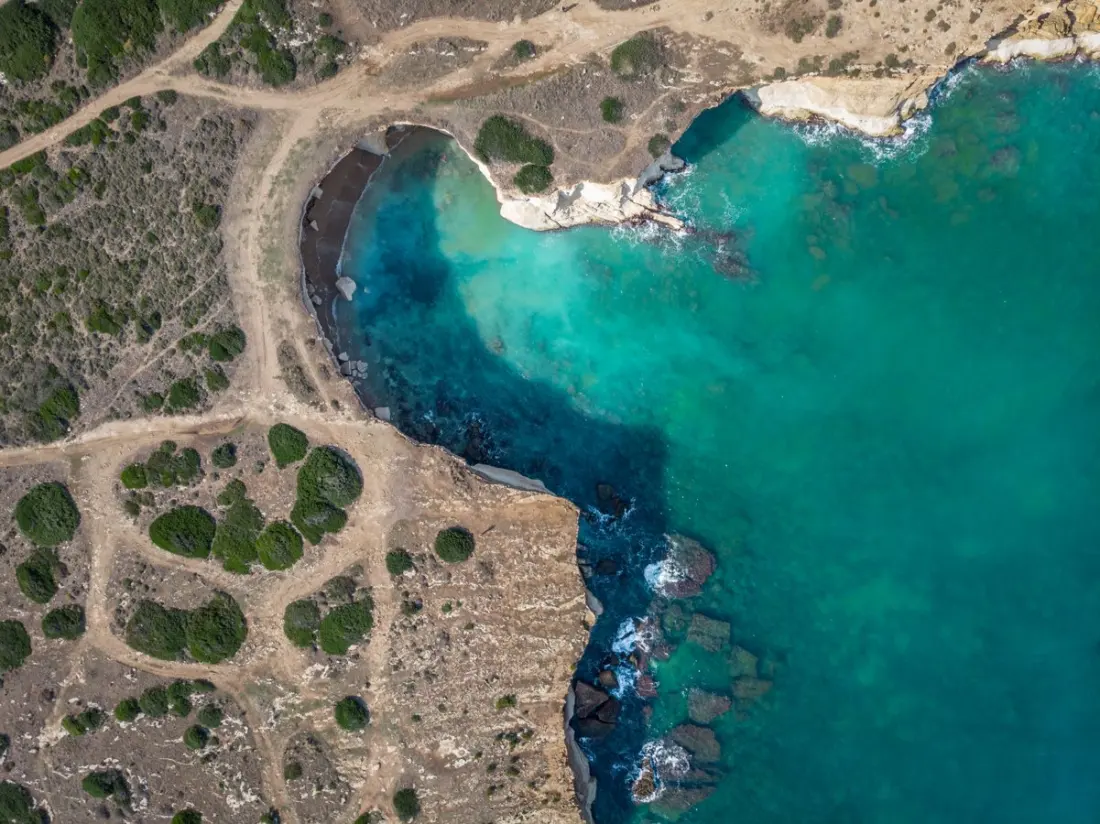
Even Syracuse's coastline has a quiet stretch: south of the city, the Plemmirio Marine Reserve hides rocky coves below limestone cliffs, and the sea caves around Capo Murro di Porco — some with Roman-era cuttings in the stone — are reachable only by boat or kayak.
These spots suit travellers who've already done Sicily's greatest hits, or anyone who'd rather walk an empty lava field than queue for a viewpoint. Pack sturdy shoes, rent a car, and leave a day or two of slack for closures.
Story via Unusual Places.