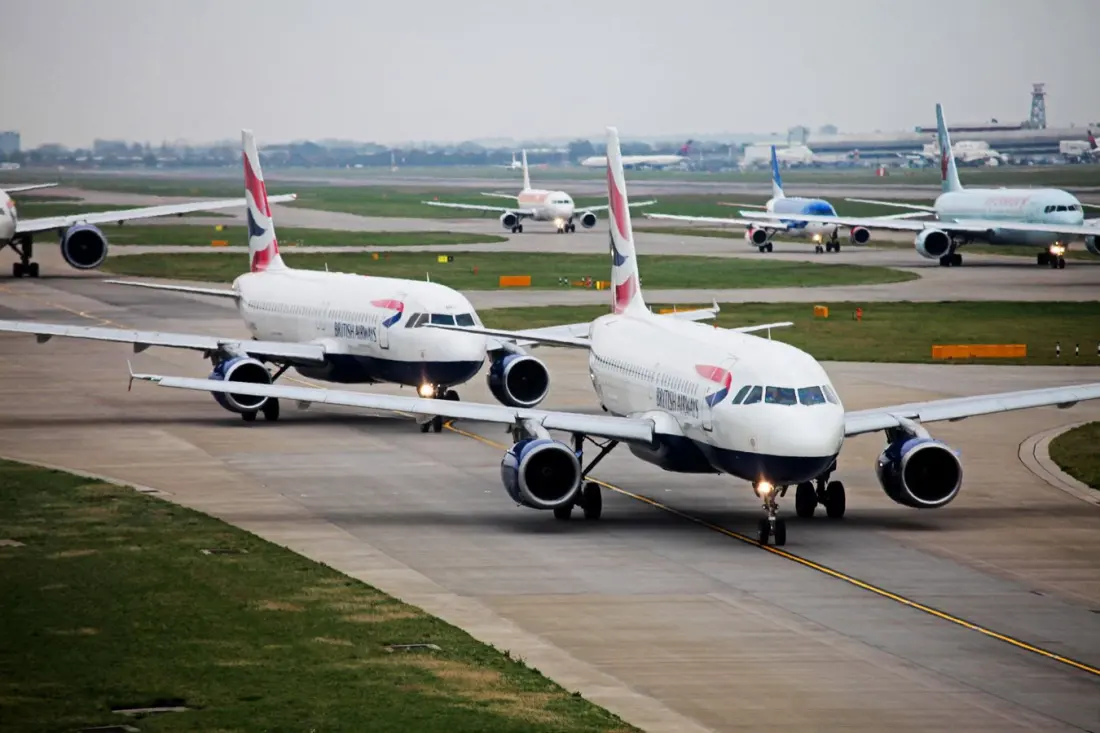
The UK's independent climate advisers have thrown a spanner into Heathrow's long-gestating third runway, arguing the government should legally oblige airlines to cover the cost of removing the CO2 their flights produce — and the industry is already warning that passengers would end up footing the bill.
A third runway has been debated since 2003 and approved twice, and the current government wants it open by 2035. The plan, priced at roughly £33 billion, involves a new 3,500-metre runway and terminal northwest of today's site, the demolition of 750 homes across at least three villages, and a diversion of the M25. Capacity at the hub would jump by about 58%, from 480,000 flights a year to as many as 756,000.
Government backers argue the maths works: expansion could add around £40 billion to the economy and support up to 60,000 local jobs, with £219 million already earmarked for sustainable aviation fuel production and another £43 million for cleaner aviation technology. The Department for Transport insists the project can sit within net-zero commitments.
The Climate Change Committee disagrees. Its chair, Nigel Topping, says the extra flights would blow through the UK's carbon budgets and make the 2050 net-zero target unreachable unless the aviation industry is legally required to deal with every tonne of its emissions — through more sustainable aviation fuel and by paying for engineered carbon removal and storage. His position is blunt: the runway should not go ahead unless there's a credible guarantee aviation emissions hit zero by 2050. Environmental group Transport & Environment backs that line, invoking the polluter-pays principle.
Airlines UK pushed back hard. Chief executive Tim Alderslade said forcing carriers to buy permanent carbon removals would "put holidays out of reach for millions," returning flying to something only the wealthy can afford. He'd rather see cheaper sustainable fuel, more direct routes and scaled-up removals on the industry's own terms. Heathrow, for its part, says growth and net zero aren't mutually exclusive and points out passengers already pay billions in carbon taxes that could be redirected.
Why should holidaymakers care? Because this fight will shape the price and availability of flights from the UK's biggest hub for decades. If the CCC's approach becomes law, the cost of long-haul trips could rise; if it doesn't, Heathrow could add hundreds of thousands of annual flights and more route options from the late 2030s. Either way, the outcome lands in your booking basket.