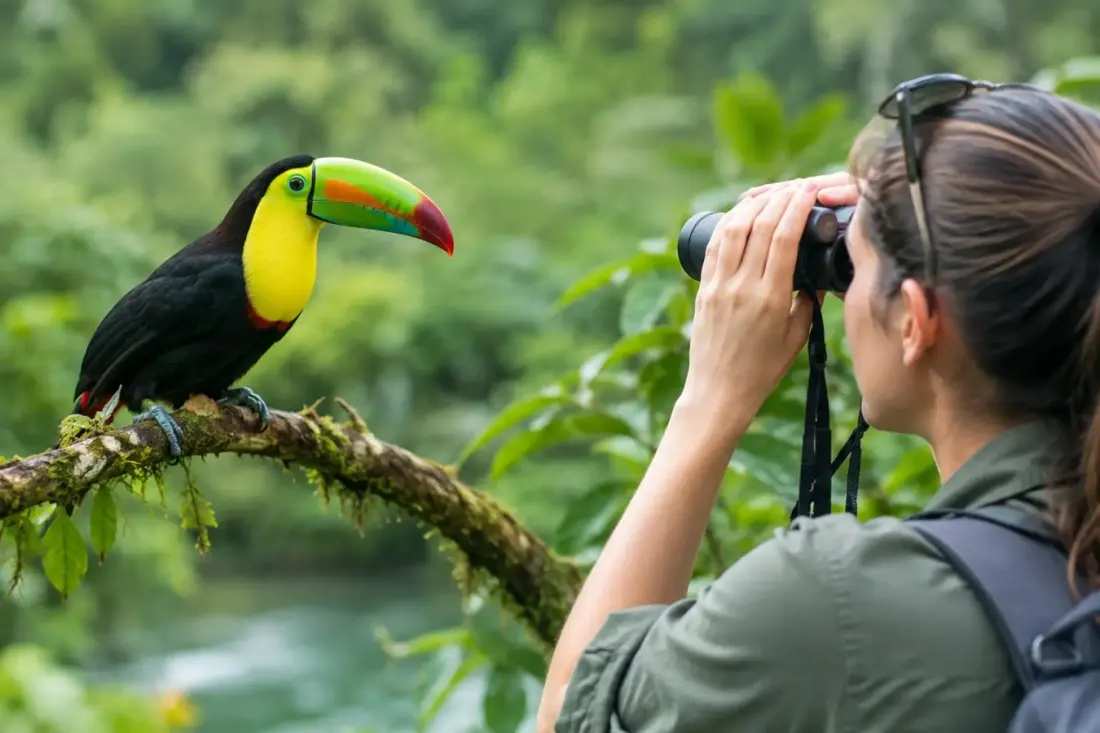
The howler monkeys will announce themselves before sunrise — their roar carries so far it can sound like it's coming from the roof of your rental when the troop is actually trees away. Everything else in Costa Rica takes more work. The country's animals are camouflage experts, many species have near-identical cousins, and what you'll see in Guanacaste bears little resemblance to what's hiding in the Osa Peninsula.
The trick, according to a new field guide from Howler Costa Rica, is to stop guessing and start collecting clues. With four monkey species in the country, "monkey" tells you nothing. Habitat narrows things down fast: a dry forest trail near Tamarindo, a cloud forest ridge in Monteverde and a Tortuguero canal each support a different cast. Then shape and behaviour — an animal descending a trunk headfirst, hovering at a flower, or draped motionless over a branch — say more than colour ever will, since tropical light can turn an olive bird yellow or a green iguana a strange blue.
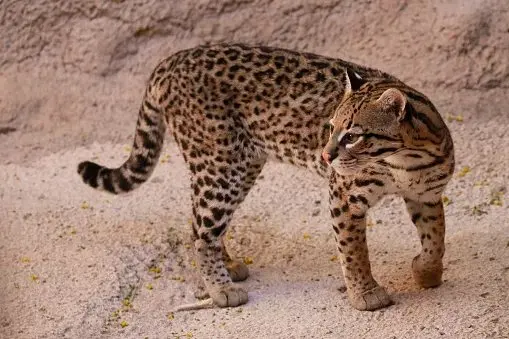
Each region rewards a different kind of patience. The Pacific dry forests of Guanacaste and the Nicoya Peninsula shed their leaves in the dry season, making capuchins, howlers, coatis and iguanas far easier to find. Coatis are routinely mistaken for raccoons — look for the long snout and upright ringed tail — and however charming they are, feeding them makes future encounters dangerous. In the lowland rainforests of the Osa, Sarapiquí and the southern Caribbean, the red-eyed tree frog is the prize most visitors chase; its neon colours stay hidden while it sleeps, so a night walk is your best bet for those orange toes and crimson eyes. Mammals often announce themselves by tracks instead: peccary prints are compact and cloven, while tapir prints look uncannily like small human handprints. That cat-shaped blur near your lodge is far more likely an ocelot or margay than a jaguar.
Up in the highlands around Monteverde and San Gerardo de Dota, the resplendent quetzal is the headline act, but only males carry the full helmet crest, red breast and flowing tail coverts — females are a subtler grey-brown. The highlands are also the place to learn birds by ear; the three-wattled bellbird's call sounds like a hammer on metal, and once heard, never forgotten. Hiring a local naturalist for even a single morning, the guide notes, will change how you hear the forest for the rest of your trip.
A few safety notes worth keeping. Crocodiles and spectacled caimans overlap in appearance, so give every large reptile in the water wide space. The fer-de-lance, locally called terciopelo, is common in lowlands and almost invisible among brown leaves — never step where you can't see, and never move closer to a snake for a photo. Apps are fine as a first draft, but a dark, half-hidden photo will fool them; noting time, elevation and habitat alongside your shots makes any later identification far easier.
Finally, etiquette is part of the skill. Keep your voice down, skip the flash at night, never handle frogs or turtles, and if an animal stops feeding or moves away because of you, you're too close. The best sightings tend to happen when you stop chasing them.