Hilton has published a clean-energy brand blueprint that shows how its hotels could run entirely on renewable power, with modelling suggesting energy bills could fall between 18% and 40%, and efficiency improve by as much as 30% each year.
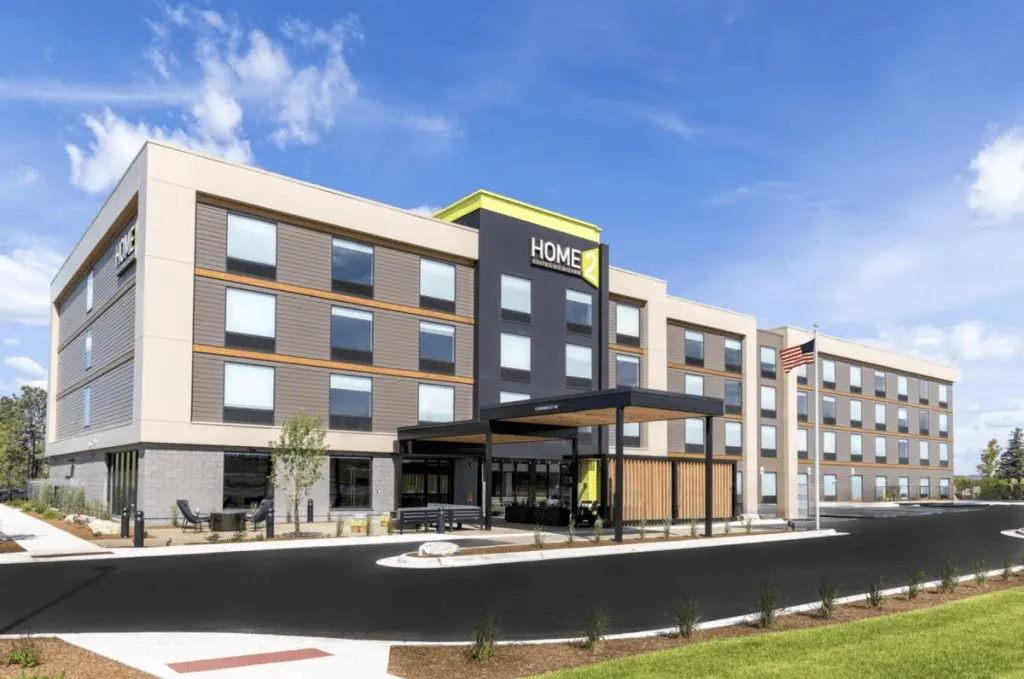
The blueprint centres on Home2 Suites, Hilton's extended-stay brand and, according to the company, the fastest-growing hotel brand in the United States — not just within Hilton's own portfolio but across the whole US hospitality sector. That scale is the point: if one of the country's most rapidly expanding brands is built to an all-electric, renewably powered standard from day one, the carbon savings multiply quickly across hundreds of new properties.
The prototype was modelled across 13 US cities, picked deliberately for their spread of climates, electricity grid structures and fuel mixes. That means the design has to work in cold states and hot ones, on grids powered mostly by gas and on grids with lots of renewables already baked in — a practical test rather than a single showcase building.
Under the recommended blueprint, new hotels would be fully electric, with no gas on site, and paired with 100% renewable energy. Where a property suits it, that power is generated on site — think solar panels on the roof and over parking canopies, a natural fit for the sprawling surface lots you find at extended-stay hotels. Where on-site generation falls short, Hilton tops up off-site, mainly through green renewable energy certificates.
Why does this matter if you're the one booking the room? For a start, the hotels this blueprint shapes are the ones travellers will actually stay in over the next decade: all-electric rooms with heat pumps and induction everything, quieter heating and cooling, and a lower carbon footprint per night — increasingly a factor for travellers weighing up where to book. Home2 Suites is aimed at road-trippers and longer stays, with kitchenettes and free breakfast, so this is mainstream mid-market travel, not a niche eco-resort play. It also signals where the whole sector is heading: as chains standardise clean-energy designs for new builds, greener stays stop being a premium add-on and become simply how hotels are built.
There's a business case running alongside the environmental one, and Hilton isn't shy about it. Energy savings of up to 40% on the bills, and year-on-year efficiency gains, make the pitch to franchisees and developers easier — which is exactly how a recommended blueprint becomes the default. The hope, per Hilton, is a win-win-win: cheaper to run, better for emissions, and a draw for guests who care where their power comes from.
The next time you check into a Home2 Suites and the parking canopy overhead is quietly generating the electricity for your air conditioning, this is why.
Skift