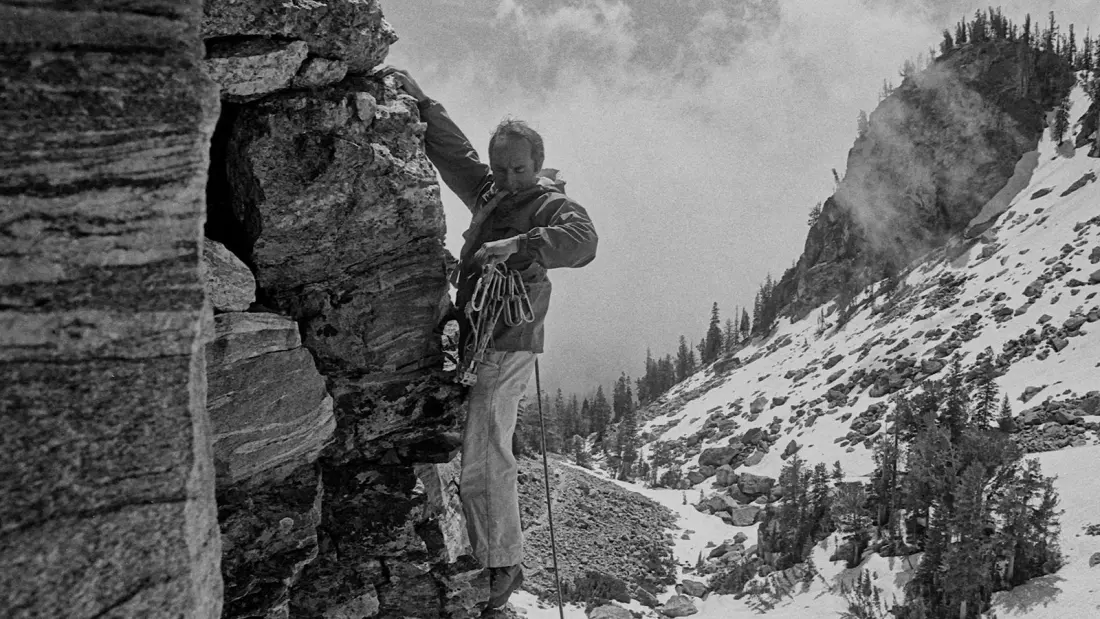
Before Patagonia was a global clothing brand, it was one man with a coal-fired forge and an anvil, hand-making climbing gear between surf sessions. A new book excerpt by filmmaker Jimmy Chin profiles Yvon Chouinard, and it's a genuinely useful read for anyone drawn to the outdoors — because Chouinard didn't just climb in Yosemite's golden age of the 1950s and 60s, he rewrote how the whole game is played.
The gear story alone is remarkable. European pitons were too soft for Yosemite granite, so Chouinard forged his own from old Ford Model A axles, and his hardware helped enable the 1964 first ascent of the North America Wall on El Capitan — then considered the hardest climb in the world. But then came the twist: he realised pitons were scarring the cracks they were hammered into. Influenced by British climbers using aluminium nuts jammed into cracks by hand, he made landmark clean ascents — including the Nose on El Capitan with no pitons at all — to prove it could be done. His 1972 catalogue essay on 'clean climbing' effectively launched the ethic the sport still runs on today: leave the rock as you found it, even if it means more risk.
Chin's profile also traces how that philosophy shaped the wider outdoor culture we now take for granted. Chouinard refined crampons and ice axes, wrote the book that defined modern ice climbing, and in the early 1980s turned the Patagonia catalogue into something like a yearbook for the 'dirtbag' lifestyle — real people using gear on real expeditions. In 1968 he drove a white Ford van from Ventura, California more than 10,000 miles to Patagonia with The North Face founder Doug Tompkins and friends, surfing and skiing along the way and making a first ascent of Mount Fitz Roy. The film of that trip, Mountain of Storms, remains a touchstone for anyone fantasising about the open road.
The personal details are what stick, though. Chouinard, a lifelong student of Zen Buddhism, runs on a simple credo: focus on intent, not profit, and do things the right way. He talks about how climbing gave purpose to a difficult childhood, and how simplicity forces creativity — illustrated by an Italian fisherman who ties his own horsehair flies and reads a river without polarised glasses. And true to form, he owns neither a cell phone nor a computer. 'It's so easy to complicate your life. It's so much harder to simplify it.'
Why does this matter to travellers? Because the culture of national parks, sustainable gear brands, road-trip wanderlust and 'leave no trace' ethics all trace back, in large part, to this one stubborn craftsman. If you're planning a Yosemite trip, or any big outdoor adventure, understanding where that ethos came from adds real depth to the experience. The excerpt is from Chin's forthcoming book Rules to Live By (Celadon Books), and it doubles as a manifesto for travelling lighter and meaning it.
Story via Outside Online