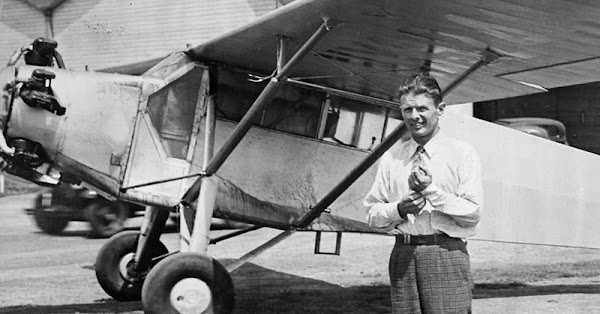
On 18 July 1938, a tired, fuel-stained pilot climbed out of a battered Curtiss Robin at Baldonnel Airfield near Dublin and claimed he'd simply misread his compass. He had left New York the previous day, officially bound for California. Twenty-eight hours later he was on the far side of the Atlantic. Nobody bought the story — but the public adored it, and Douglas Corrigan became forever known as 'Wrong Way' Corrigan.
The flight was the payoff of an obsession that started in the 1920s. Corrigan, born in Galveston, Texas in 1907, caught the flying bug at eighteen after paying $2.50 for a ride in a Curtiss Jenny near Los Angeles. He soloed in March 1926, then joined Ryan Aeronautical in San Diego just in time to help build a plane for an airmail pilot named Charles Lindbergh. Corrigan assembled the wing, installed the fuel tanks and instrument panel of the Spirit of St. Louis, and watched Lindbergh's New York-to-Paris flight make history in May 1927. He decided he'd cross the Atlantic too.
There was just one problem: officials said no, repeatedly. In 1933 he bought a used Curtiss Robin and spent years rebuilding it himself — a 165hp Wright J6-5 radial engine, auxiliary fuel tanks, and a cockpit so crowded with fuel that he sometimes had to lean out the side window to see ahead. His applications for a transatlantic flight permit were rejected year after year, and after Amelia Earhart's 1937 disappearance, regulators got stricter still and declined to renew his aircraft's licence.
So he improvised. In 1938 he secured an experimental licence for a return flight to New York — with the explicit condition that he fly back to California. After a rough 27-hour eastbound crossing (thunderstorms, turbulence, and a gasoline leak he chose not to fix), he reached Floyd Bennett Field in Brooklyn, filed a flight plan for California, and took off before dawn on 17 July. Then he turned east.
Over the Atlantic, the unrepaired leak returned around the ten-hour mark, soaking his shoes and filling the cockpit with fumes. Corrigan punched a hole in the cockpit floor with a screwdriver to drain the fuel away from the exhaust, and ran the engine hard to burn fuel before it could leak out. He landed at Baldonnel with fuel still in the tanks.
His 'wrong way' act convinced no one, but it made him a star. Crowds mobbed him in Dublin; congratulations poured in from Henry Ford and Howard Hughes. Back home he got ticker-tape parades, published a memoir cheekily titled That's My Story, and played himself in the 1939 film The Flying Irishman. He retired from aviation in 1950, ran an orange grove in Santa Ana, and died in 1995 at 88.
For travellers, the story adds texture to a Dublin visit — Baldonnel Aerodrome still operates southwest of the city, and Corrigan's legend is part of Irish-American aviation folklore. It's a reminder that some of the best travel tales started as glorious rule-breaking. — Amusing Planet