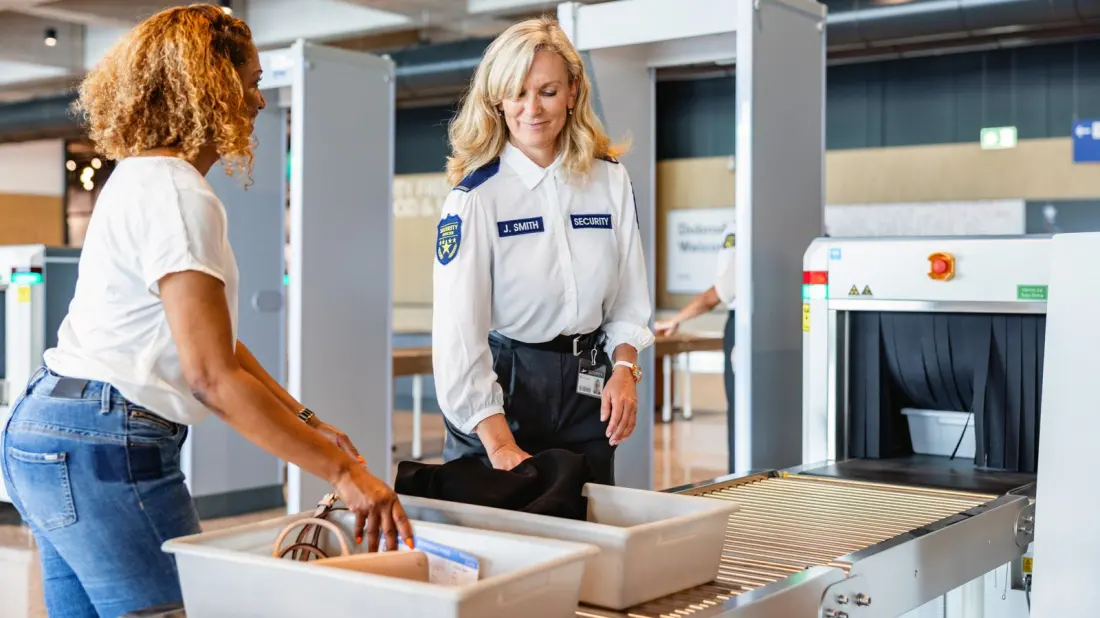
It happens to the best of us: you've already walked through the body scanner when you realise your watch is still on, your belt is still fastened, or there's a handful of coins rattling around in your pocket. The temptation is to just flick them onto the X-ray belt and keep moving. According to TSA guidance, that's exactly the wrong move — loose items should always go in a bin, every time.
The reasoning is more practical than bureaucratic. Items placed directly on the conveyer belt are far more likely to be forgotten, knocked off, or even swiped, since they don't stay contained the way they do in a plastic tray. Small objects can slip into gaps in the machinery, making them effectively impossible to retrieve, and they can damage the scanning equipment itself. A dropped phone or a scattered pile of change doesn't just slow you down; it stalls the whole line behind you.
Frequent flyers point out that the stakes can be personal, too. Dean Rotchin, CEO of private jet company BlackJet, has noted that small accessories — think jewellery, pins, medication — are easily lost or damaged when they're not secured properly. Passports and phones deserve the same caution. The TSA's actual preference? Skip the drama entirely by putting these objects inside your carry-on bag before you reach the scanner, so there's nothing loose to deal with at all.
There's an etiquette angle here as well. Airport security runs on everyone doing their bit, and travellers have plenty of opinions about small courtesy slips — like the polarising habit of "belt bumping," where someone empties their bin but leaves it sitting at the end of the conveyer instead of returning it to the stack. Skipping the bin altogether falls into the same category: a tiny shortcut that creates friction for dozens of people you'll never meet.
So the next time you get flagged for something you forgot to remove, the protocol is simple. Step back, grab a bin, and place your items in it with a bit of care rather than tossing them onto the belt. Better yet, do a quick pocket check — wallet, watch, keys, change — before you even join the queue, and slide anything small into your bag ahead of time. It's a thirty-second habit that keeps your belongings safe and keeps the line moving for everyone.
For anyone who flies even a couple of times a year, this is one of those low-effort fixes that genuinely pays off. No one wants to start a holiday chasing a lost passport along a conveyer belt or waiting while staff fish a ring out of a scanner.