
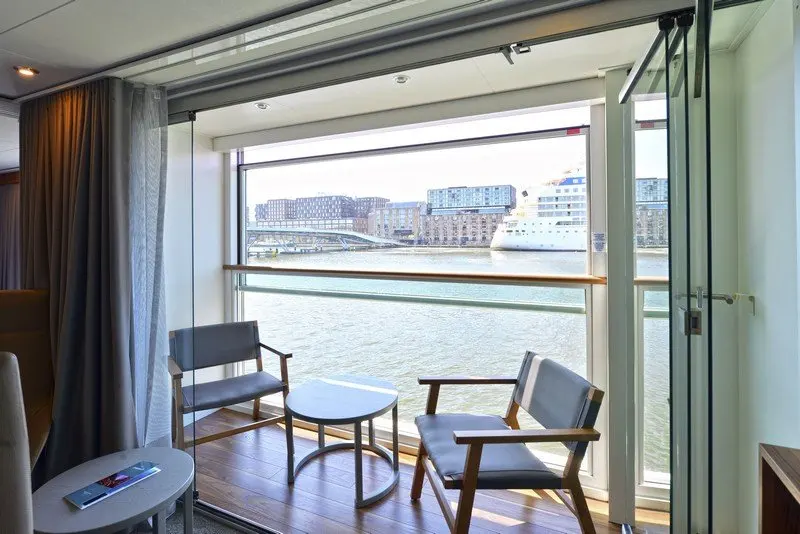
River cruise ships have quietly undergone a design revolution, and it's most visible in the glass. Where ships once had small portholes — originally cut into hulls for cannons, later sealed and reused as the naval guns gave way to passengers — today's European river vessels feature vast floor-to-ceiling windows designed to dissolve the barrier between cabin and scenery.
One family-run Dutch firm has been central to that shift. Metaglas, based in Tiel in the Netherlands, started 50 years ago making slim aluminium window and facade systems for buildings, then moved into the maritime world in 2010, beginning with refurbishments of older river cruise ships. Its glazing now features on more than 100 vessels, and the company's focus has moved mainly to newbuild projects.
The passenger experience is the driving force. Cruise operators want cabins, restaurants and lounges to feel open and tied to the landscape the ship is gliding through, according to Erik Rekveld, technical commercial advisor at Metaglas. One of the company's most in-demand products is a vertical sliding window system for cabins: two glass panels, where the upper one slides down to provide ventilation while the lower one stays fixed as a transparent balustrade. The result is something like an open balcony — without the extra weight or footprint a traditional balcony requires.
There's serious engineering behind the aesthetics. Rekveld says the core challenge is balancing maximum transparency against weight and structural strength, while accounting for the constant movement and forces a ship endures — something a static building never deals with. Thicker frames and more material would be simpler, but that undermines the twin goals of clear sightlines and low weight. Metaglas is developing thinner glass compositions and slimmer aluminium profiles that cut mass without sacrificing insulation or safety. Since aluminium is endlessly recyclable, every kilogram trimmed from the superstructure translates into lower fuel use — a win for both operating costs and emissions.
The product range now extends well beyond cabin windows to horizontal sliding windows, glass balconies, walkable rooflights, electric entrance doors, folding walls and bonded glazing for onboard restaurants, all engineered in-house with shipyards and technical partners. Refurbishment work remains part of the business too: re-glazing an older ship can noticeably lift its comfort and looks without a full rebuild.
For travellers, this is why modern river cruise cabins feel so different from the dark, small-portoled staterooms of the past. If you're choosing between river cruise lines, the amount and quality of glass — opening windows, panoramic lounges, glass balconies — is now one of the clearest markers of a newer, more comfortable ship. And because lighter ships burn less fuel, the view you're enjoying is also a slightly greener one.
Cruise Industry News