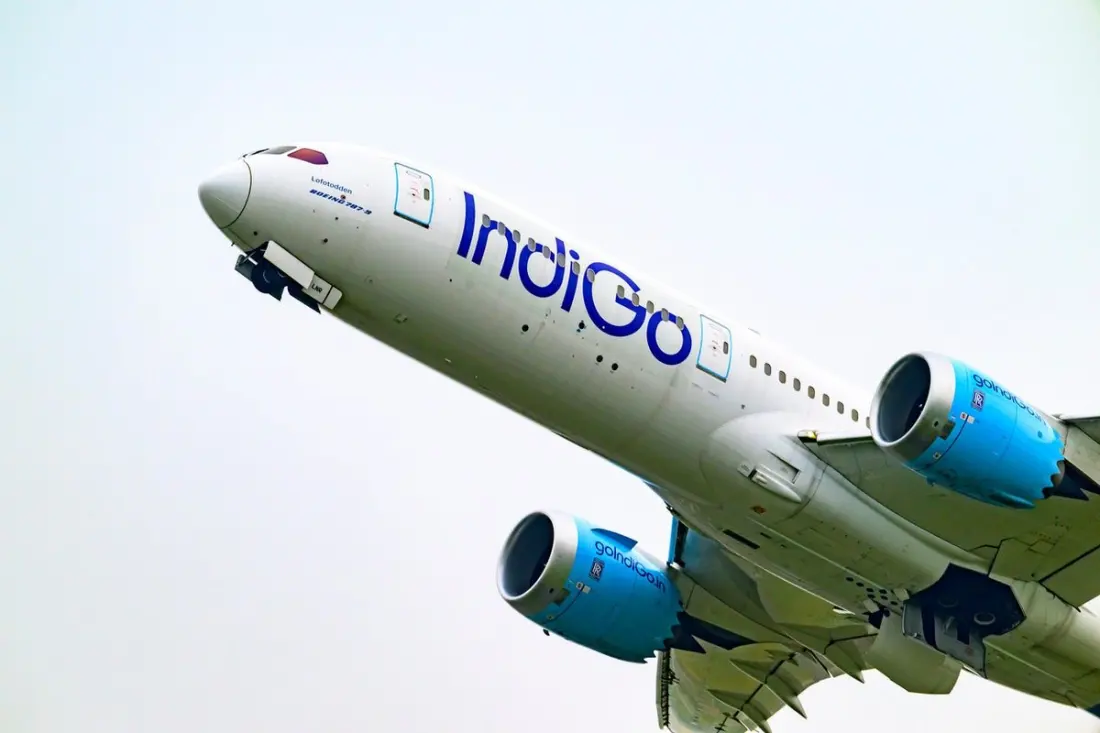
An IndiGo flight from London Heathrow to Delhi made an abrupt return to London on Tuesday 22 September, less than an hour after leaving the runway. The aircraft, a Boeing 787 operating as flight 6E4, departed at 8.39pm for what should have been a journey of almost 10 hours. Roughly 20 minutes in, after crossing the Channel and before reaching Belgian airspace, the pilots turned the plane around and transmitted squawk code 7700 — the universal transponder signal that tells air traffic control a plane needs priority handling, prompting the airport to clear its runway and have emergency services on standby.
The flight touched back down at Heathrow around 9.20pm. In a statement, IndiGo confirmed a technical issue had been detected shortly after take-off and that the crew turned back "following standard operating procedures". The airline stressed the aircraft landed safely, is now undergoing maintenance checks, and will only return to service once all necessary clearances are secured. Passengers were put up in hotel accommodation overnight and rebooked onto the next available flights to Delhi.
It is not the only in-flight emergency to end at Heathrow recently. Earlier in September, a British Airways service from Dublin — already scheduled to land there — also transmitted squawk 7700 after a technical issue, though the airline described it as minor and the landing was uneventful.
Why should travellers care? First, it's a useful reminder of how these situations typically play out. A squawk 7700 is dramatic-sounding, but it's a standard procedure: pilots use it to get priority handling and a clear runway, and most emergencies of this kind end in an ordinary, safe landing. Airlines are also generally obliged to look after passengers when things go wrong — as IndiGo did here with hotels and rebooking, in line with the UK's rules for flights departing UK airports.
Second, it highlights how disruption can cascade on long-haul routes. A Delhi flight cancelled 20 minutes in means a full aircraft of passengers all competing for seats on subsequent services, and on a busy Heathrow–India corridor, the next available flight might not be until the following day. If you're on a long-haul flight that diverts or cancels, keep documentation, ask the airline directly about hotel and meal entitlements, and check rebooking options on partner carriers if the airline's own next departure is full.
Finally, for anyone booked on IndiGo's Heathrow–Delhi route, the aircraft involved was grounded for maintenance checks, so some short-term schedule shuffling is possible while checks and clearances are completed. It's worth keeping an eye on your flight status before heading to the airport.
The incident ended without injury, and IndiGo reiterated that the safety of customers, crew and aircraft is its top priority — a boilerplate line, but in this case backed by a textbook response.