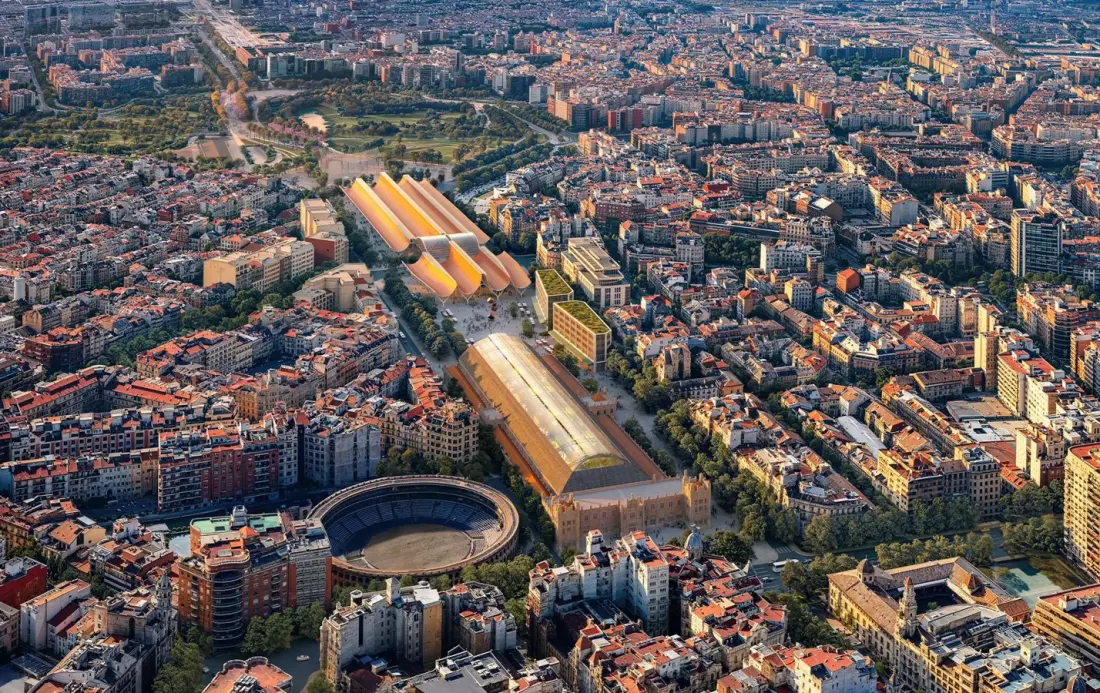
Valencia is getting a new Central Station, and the plan is ambitious: bury the tracks, put a string of green public spaces on top, and finally let trains run straight through the city instead of dead-ending in it. Spain's railway authority, Adif, picked a three-way team to deliver it — British practice RSHP (the studio behind major rail projects like Crossrail's stations), Valencia-based ERRE, and engineering group Sener.
The big functional change is connectivity. Right now, Valencia's rail set-up is a classic terminus: trains arrive and have to reverse out. The new underground station will link to the historic Estación del Norte so services can pass through from north to south. High-speed trains, commuter rail and the metro will all sit in the same buried complex, cutting transfer friction for anyone hopping off an AVE from Madrid and straight onto a coastal or regional connection.
Underground doesn't mean gloomy here. The design calls for sweeping, light-flooded roofs that nod to the ornate Estación del Norte — a listed heritage building whose façades the architects have pledged not to touch. ERRE's team say the whole concept grew out of respect for that Art Nouveau landmark, so expect a station that feels airy rather than cave-like, with daylight and sightlines even at platform level.
The real payoff is above ground. The land freed up by sinking the railway becomes a green axis for walking, cycling and public space, stitching the new station to the refurbished Estación del Norte and Valencia's future Central Park. That's a chunk of central Valencia returned to residents and visitors rather than to trains.
There's no construction timeline yet, but RSHP plans to use a lightweight modular canopy to speed up the build and reduce its footprint. Don't plan a trip around it — this will take years — but if you're the type who chooses destinations by rail links, Valencia is quietly becoming one of Spain's smarter bets: high-speed connections improving, a city park growing, and a station that's being designed for people rather than just platforms.