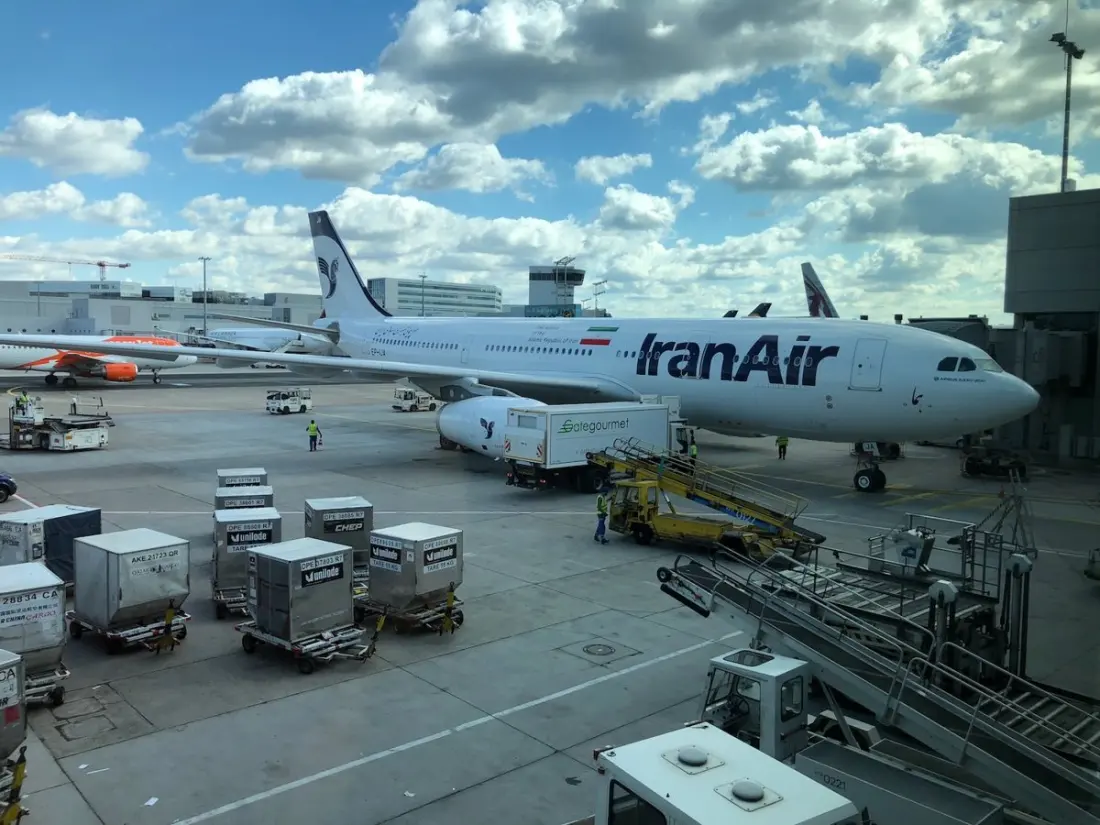
Iranian carriers are being squeezed out of airports across the region. The United Arab Emirates has suspended all flights by Iranian airlines until further notice, Iraq has halted Iranian service at four of its airports, and restrictions have also hit routes to Oman, Georgia, Azerbaijan and Turkmenistan.
The cause is a fresh round of U.S. Treasury sanctions aimed at Iran's aviation sector. Washington alleges Iran uses its airlines to move weapons, personnel and illicit cargo, and this time it is targeting not just the carriers themselves but the foreign companies that service, fuel and handle their aircraft. That is the key to the pressure campaign: the U.S. cannot close other countries' airspace, but an international flight becomes impossible when an airport's ground handlers refuse to touch a sanctioned aircraft.
Iraq shows the knock-on effect most clearly. Iranian flights have stopped at Baghdad, Najaf, Erbil and Sulaimaniyah, and the Iraqi prime minister's office is now asking Washington for exemptions so travel for medical treatment, education, religious visits and other civilian purposes can resume. No exemption has been announced so far.
Najaf is the sharpest case. Its shrines draw large numbers of Iranian visitors, while Iraqis travel the other way for pilgrimage, study and medical care. With the air link cut, some passengers now face overland trips of twelve hours or more.
The picture varies by country, and not every restriction amounts to a formal government ban. Turkey has seen some cancellations by Iranian carriers but no outright ban. What is consistent is the impact on ordinary travellers: patients, students and pilgrims with nothing to do with the conduct the sanctions are meant to punish are left with much longer journeys and no firm date for flights to return.
For holiday planners, the practical takeaway is straightforward: there is currently no reliable air connection between Iran and several neighbouring countries, including the UAE, a major regional hub and connecting point for Iranian travellers. Anyone with a booking involving an Iranian carrier in the region should check directly with the airline, since routes can change with little notice. Whether Iraq's exemption request succeeds, and whether ground handling companies would even be willing to service flights under an exemption, remains an open question.
Story via Live and Let's Fly.