
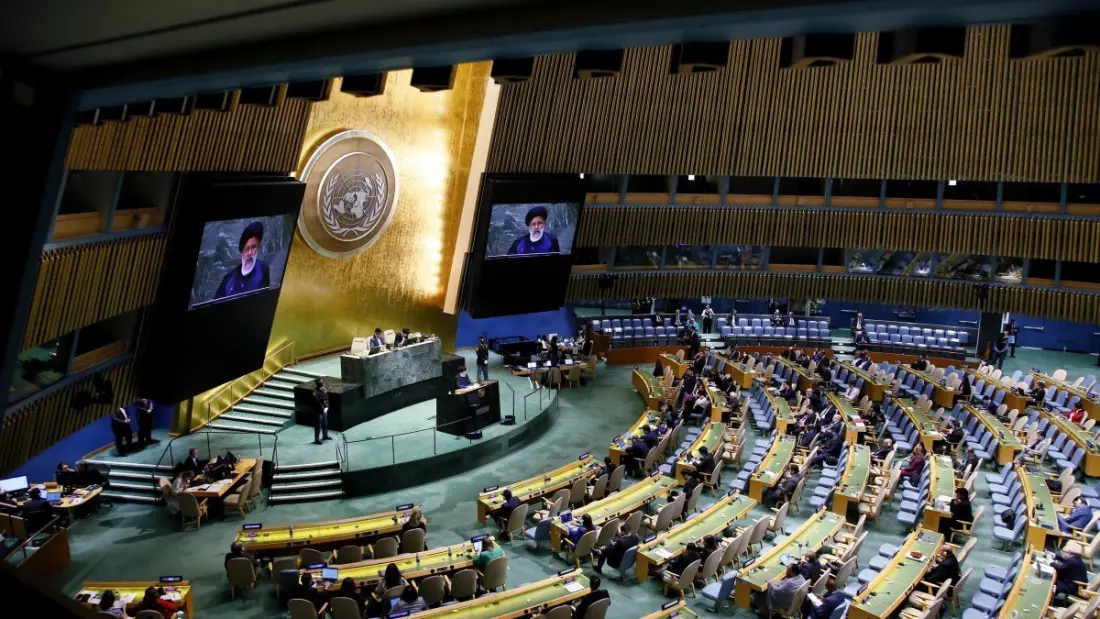
The US State Department has issued visas to Iran's core diplomatic delegation — President Masoud Pezeshkian and Foreign Minister Abbas Araghchi among them — allowing them to attend next week's high-level meetings of the UN General Assembly in New York. That's a notable call, given Washington and Tehran have been in open conflict since late February, with no movement on reopening the Strait of Hormuz or restarting nuclear talks.
As the UN's host country, the United States is largely obligated to admit accredited delegations, but it keeps a tight leash. The Iranian delegation will be smaller than last year's, face travel restrictions within New York City and be barred from buying luxury goods. Last year's restrictions went as far as banning officials from shopping at wholesale clubs like Costco and Sam's Club — a reminder of how granular the rules can get.
The approval contrasts sharply with the decision a day earlier to deny visas to Palestinian President Mahmoud Abbas and his delegation. The State Department justified that refusal by accusing the Palestinian Authority of trying to internationalise the Gaza war through the International Court of Justice and International Criminal Court, and of continuing payments to prisoners held in Israel. The Palestinian Authority condemned the move, calling punitive restrictions counterproductive to peace efforts and defending its push for recognition through international bodies. The US does not recognise the Palestinian Authority as a full UN member, even though the General Assembly itself does.
The wider backdrop matters for anyone travelling in or around the region. Houthi attacks on Saudi infrastructure and Red Sea shipping continue, and disruptions on those routes have pushed global oil prices up — a cost that tends to filter through to airfares and fuel surcharges. US sanctions on Iran have also intensified, with a new campaign targeting what officials describe as the country's financial lifelines.
Why does any of this matter to travellers? Every September, UNGA high-level week turns a swathe of Manhattan into a security zone: road closures, motorcade gridlock, airspace restrictions and hotel blocks taken over by delegations. With an active US–Iran conflict in the mix, expect heavier security than usual around UN headquarters, the Iranian mission and midtown east. If you're visiting New York during the General Assembly, build in extra time, avoid driving anywhere near First Avenue, and check for street closures before booking hotels or restaurants in the Turtle Bay area. For trips further afield, keep an eye on Red Sea shipping news if you have regional flights or cruises booked — the knock-on effects are real.
Daily Sabah Travel